 Degchi
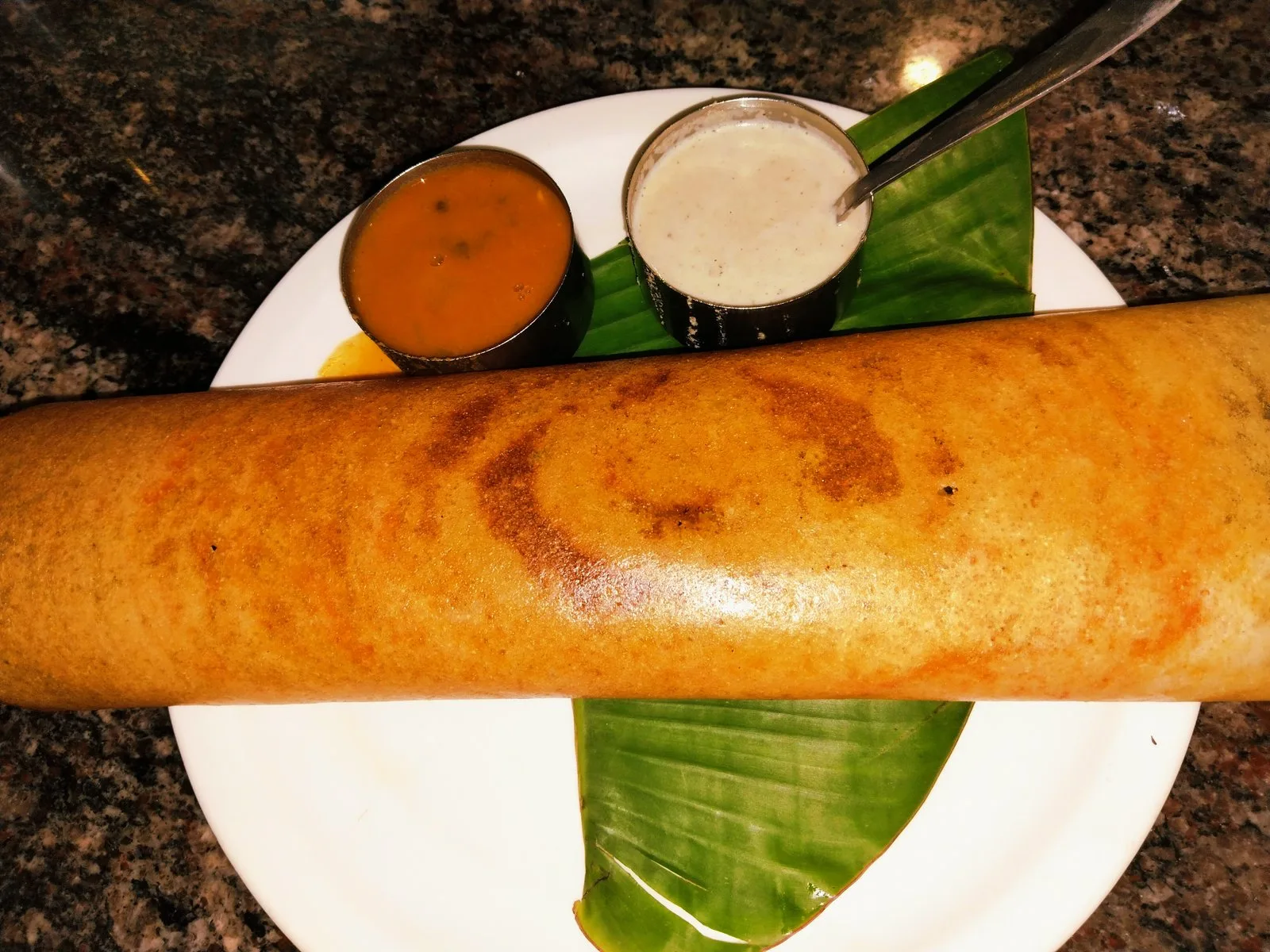
Photo: Yakshitha / CC BY-SA 4.0
Why Does My Dosa Stick or Tear on the Tawa?
The batter hits the tawa, you start spreading, and half of it comes up with the back of the ladle. Or it stays put, welds itself to the iron and tears when the spatula goes in. If you keep asking why does my dosa stick or tear on the tawa, the answer is nearly always one of four things: the pan temperature, the batter, the surface, or how you spread. Fix them in that order.
Is the pan too cold or too hot?
Both cause sticking, which is why the advice sounds contradictory. A cold pan lets the batter sit and bond to the metal before it sets. A scorching pan sets the underside instantly, so the batter seizes before you can spread it and rips as you drag the ladle.
Our Masala Dosa recipe gives a test that works: heat the griddle over medium-high until a few drops of water sizzle and vanish at once. Then pour, spread thin, and drop the heat to medium. If water beads and skates around, it is hotter than you want; wait a minute off the flame.
The recipe's own tip covers the first-dosa problem: if the first one sticks or tears, wipe the surface with a halved onion or a damp cloth, give the pan a minute to recover, and try again. The wipe cools the surface a touch and leaves a thin film of moisture and oil. Treat the first dosa as a thermometer, not a failure.
Batter too thick, too thin, or too sour
Dosa batter should pour in a ribbon, closer to pancake batter than to idli batter. Too thick and it will not spread, so you press harder and tear it. Too thin and it runs, goes lacy, and breaks when lifted.
- Thick: stir in water a tablespoon at a time. The recipe suggests a splash.
- Thin: let it stand uncovered for 10 minutes, or stir in a spoonful of rice flour. <!-- VERIFY: rice flour as a thickener is a common home fix; not in our recipe data. -->
- Over-fermented: very sour batter browns fast and can stick. A short rest in the fridge slows it down. <!-- VERIFY: general cooking experience, no source opened. -->
Cold batter straight from the fridge also behaves badly on a hot pan. Let it sit on the counter for 20 to 30 minutes first.
If your batter never rose properly to begin with, read why idli batter is not fermenting first, because dosa uses the same rice and urad base: 300 g (10.5 oz) soaked rice to 100 g (3.5 oz) whole urad in our recipe.
Salt timing and the rice to urad ratio
Our recipe stirs the 1.5 tsp of salt into the batter by hand before the overnight ferment, and the tip says to do exactly that. That matters here, because salt added late can leave pockets of unsalted batter that behave differently on the pan.
On ratio: three parts rice to one part urad, as in the recipe, gives a dosa that crisps well. More urad makes a softer, spongier batter that tears less easily at the edges but browns more slowly. Neither is wrong. If your dosas are always fragile and pale, you may have too much urad or too little rice. <!-- VERIFY: the effect of urad proportion is general cooking knowledge, not from our recipe data. -->
The surface matters more than people say
Seasoned cast iron or heavy iron is forgiving once it is properly seasoned. A new or freshly scrubbed iron tawa will grab batter every time. Our guide on seasoning and cleaning an iron tawa walks through that, and tawa types compared covers when a non-stick pan is the better choice.
Two habits that wreck a non-stick surface: metal spatulas and heat that is too high. Keep it at medium throughout.
How to pour and spread without tearing
- Pour a ladle of batter into the centre of the pan, not near the edge.
- Using the base of the ladle, spread in a spiral from the centre outward, with light pressure and one smooth pass. Do not go back over it.
- Drizzle oil around the edge, as the recipe says. It helps the crust release.
- Leave it alone for about 2 minutes (the recipe's timer). The dosa tells you when: the edges curl slightly and the surface looks dry.
- Slide the spatula under from the edge. A dosa that is ready lifts without resistance.
If you cannot spread thin, the batter is too thick. Do not fight it with a pan that is also too hot.
Fast fixes by symptom
| What you see | Likely cause | Try this |
|---|---|---|
| Sticks and tears when lifted | Pan too cold or dry surface | Wipe with onion, reheat, add oil at the edges |
| Seizes while spreading | Pan too hot | Pull off heat for a minute, wipe with a damp cloth |
| Lacy holes, breaks easily | Batter too thin | Thicken slightly, rest 10 minutes |
| Spongy, pale, will not crisp | Too much urad, or pan too cool | Raise heat to medium-high, spread thinner |
| Burns before crisping | Heat too high, very sour batter | Lower to medium, use fresher batter |
Next steps
Once the pan behaves, the filling is easy: the recipe's potato mix takes about 6 minutes (4 minutes frying onion, 2 minutes with potato), and you can pair the dosa with our Rasam or a bowl of Curd Rice. For what makes a dosa shatter instead of fold, see crispy masala dosa at home. If your batter is ready tonight and you are not sure what else the pantry can cover, Degchi's pantry matcher shows what you can cook with what you already have.
Related recipes
Related posts
Medu Vada Oily, Flat or Won't Hold a Hole? Fixes
Medu vada fails in three ways: it soaks up oil, it spreads flat, or it will not keep its hole. Each one traces back to the batter.
Why Is My Upma Lumpy or Sticky? Rava and Water Fixes
Upma is five ingredients and about 20 minutes, yet it turns into paste in many kitchens. Roasting, water and how you stir decide everything.
Why Is My Idli Batter Not Fermenting? Causes and Fixes
Flat batter after a full night is almost always a warmth problem, sometimes salt or water. Here is how to read what you see and what to do next.