 Degchi
Why Is My Upma Lumpy or Sticky? Rava and Water Fixes
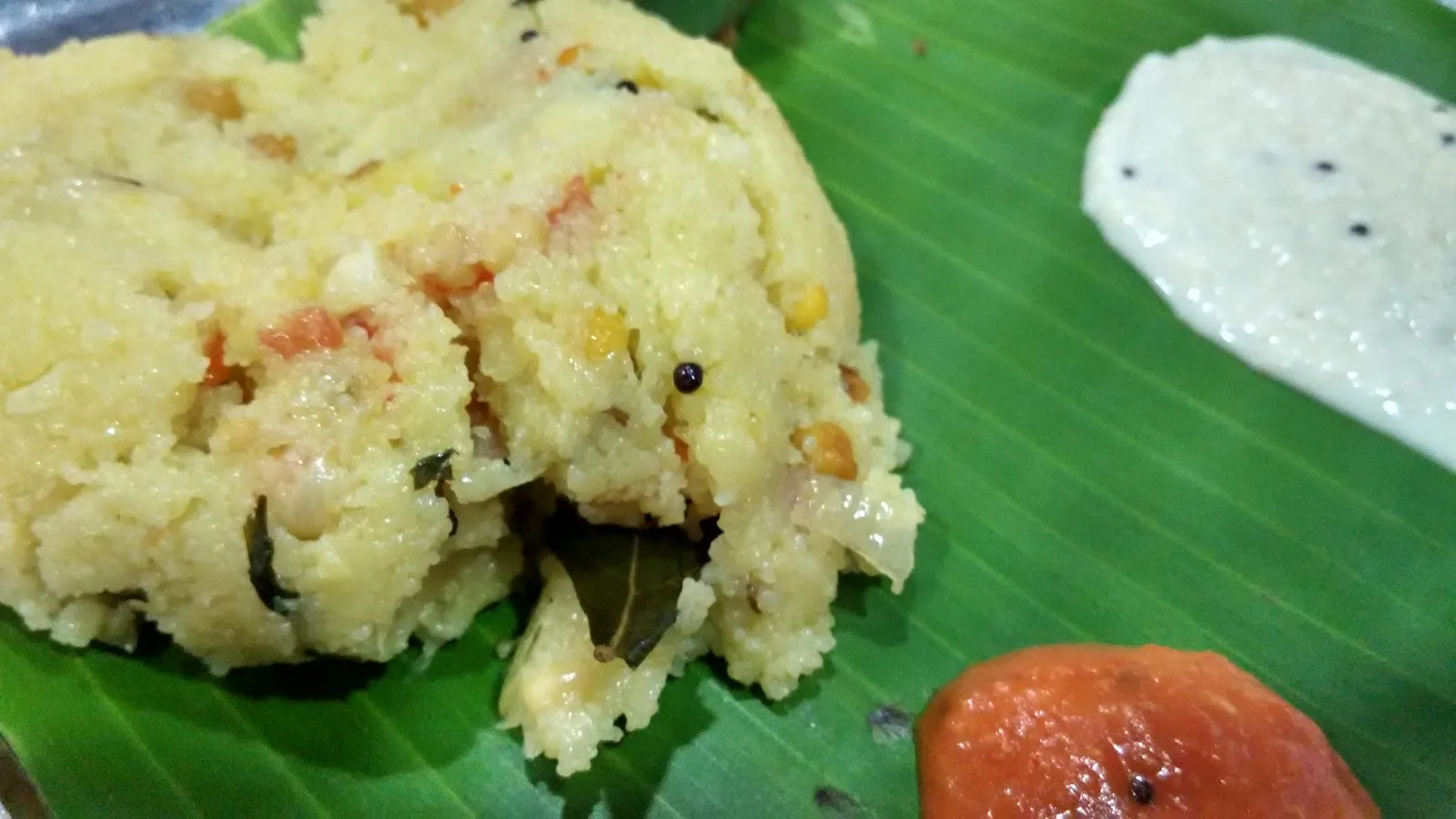
Upma should be loose and fluffy, each grain separate and soft, almost like couscous with a mustard-seed crackle. If yours comes out as a single wet lump that you could slice with a knife, or a sticky paste that clings to the pot, you are not alone. The question people type is why is my upma lumpy, and the answer sits in three places: the roast, the water and the stir.
Roast the semolina first
Our Upma recipe starts with 200 g (7 oz) of semolina (suji or rava) dry-roasted in a pan on low heat for about 5 minutes, until lightly golden and fragrant. Set it aside before you do anything else.
This step does two jobs. It dries the surface of each grain so it absorbs water more slowly, which cuts clumping. And it adds a toasty smell that raw semolina does not have. Skipping it is the single most common cause of a gluey result. <!-- VERIFY: explanation that roasting slows water uptake is general cooking knowledge, not from a source we opened. -->
If you buy ready-roasted rava, you can shorten this, but a minute or two in the pan still wakes up the flavour.
Get the water right
The recipe uses 4 cups of water (about 950 ml) to 200 g of semolina, with the vegetables in the pot. In volume terms, 200 g is roughly 1.25 cups, so you are near 3 parts water to 1 part semolina. <!-- VERIFY: 200 g semolina ~ 1.25 US cups is an approximation, check against the recipe page's own US amount. -->
Too much water gives a wet porridge. Too little gives a dry, crumbly bowl that scorches. The fix is not guesswork: bring the water to a full boil before the semolina goes in, because lukewarm water makes the grains swell unevenly.
Some cooks like a looser, softer upma and add a splash more; if you do, add it at the end, not at the start.
Pour in a thin stream while stirring
This is the step the recipe tip insists on: lower the heat, then slowly stir in the roasted semolina in a thin stream, stirring constantly. "Never dump it all at once," says the tip. When semolina lands in one heap, the outside gels instantly and seals the dry centre inside a lump.
Practical method:
- Boil the water with the salt (1 tsp) and vegetables.
- Drop the heat to low.
- Hold the semolina in your left hand, a spoon in your right, and let it rain in a thin stream while you stir in circles.
- Keep stirring for another 30 seconds after the last of it goes in.
A fork or whisk breaks up small lumps better than a spoon does.
Cover and rest
Once all the semolina is in, cover and cook on low for 3 minutes, as the recipe says, until the water is absorbed. Then switch off and let it sit covered for a couple of minutes. The steam finishes the grains without further stirring. Over-stirring after this point is what makes upma sticky.
If it looks dry and the grains are still hard, sprinkle a tablespoon or two of hot water over the top, cover, and give it another minute.
The tempering is where the flavour lives
Heat 3 tbsp oil, add 1 tsp mustard seeds and about 10 curry leaves until they crackle (the recipe times this at 1 minute), then add the finely chopped onion and green chilli and fry for 3 minutes. Carrot and peas go in for another 3 minutes. If this layer is rushed, upma tastes flat however well the semolina behaves. For more on the logic, see what tadka is.
Finish with lemon juice. It lifts the whole bowl and cuts the oil. The recipe uses 1 tbsp.
What goes wrong, in a table
| Problem | Why it happens | Next time |
|---|---|---|
| Hard lumps | Semolina added all at once | Pour in a thin stream, stir constantly |
| Sticky, gluey | Not roasted, or over-stirred | Roast 5 minutes, stop stirring after absorbing |
| Dry and crumbly | Too little water | Add a splash of hot water, cover 1 minute |
| Bland | Rushed tempering | Let the mustard seeds pop and the onion soften |
| Burnt bottom | Heat too high | Keep it low once the semolina is in |
Make it a full breakfast
Upma holds well for a school or office lunchbox for a few hours; for storage rules see our food safety basics. Serve with coconut chutney, a mug of chai, or alongside Idli Sambar. For a cousin dish with rice instead of semolina, try Lemon Rice, or cool it down with Curd Rice.
If there is half a bag of semolina in your cupboard and you are not sure how else to use it, our post on what to cook with a cup of semolina has more ideas, and the Suji Halwa uses the same grain in a very different way. Degchi's try-it page shows which of your pantry staples already cover the upma ingredients.
Related recipes
Related posts
Medu Vada Oily, Flat or Won't Hold a Hole? Fixes
Medu vada fails in three ways: it soaks up oil, it spreads flat, or it will not keep its hole. Each one traces back to the batter.

Why Does My Dosa Stick or Tear on the Tawa?
The first dosa always fights back. Usually it is pan heat or batter thickness, rarely the recipe itself. Here is how to read what the pan is telling you.
Why Is My Idli Batter Not Fermenting? Causes and Fixes
Flat batter after a full night is almost always a warmth problem, sometimes salt or water. Here is how to read what you see and what to do next.