 Degchi
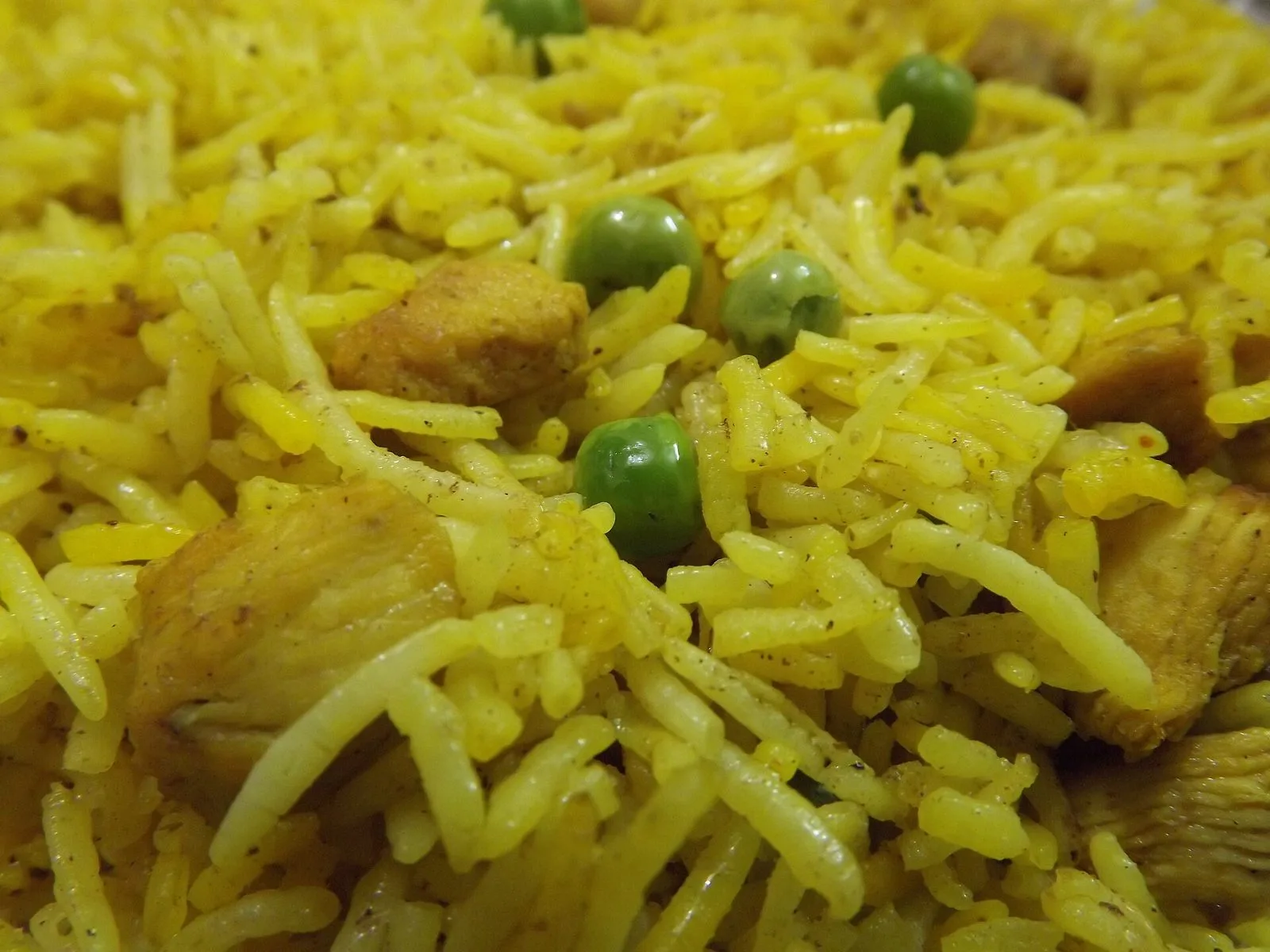
Photo: Sumit Surai / CC BY-SA 4.0
Pulao vs Biryani: What Is the Difference?
Two pots, both with chicken and basmati, both served with raita. One is ready in about an hour and the other takes most of an afternoon. That gap is the practical answer to pulao vs biryani, and it comes from one decision: where the rice gets cooked.
The short answer: where the rice cooks
In a pulao, raw rice goes into a pot with a measured amount of flavoured liquid, and it cooks by absorbing that liquid. Nothing is drained.
In a biryani, rice is boiled separately in salted water to about 70 percent, drained, then layered over a thick gravy and sealed. The steam finishes it. The method is called dum, a slow, sealed steam.
You can see both in our own recipes. Chicken pulao braises chicken with yogurt and whole spices, measures the liquid left in the pot, tops it up to roughly 1.5 times the rice volume, adds the soaked rice and steams on low. Chicken biryani cooks a thick gravy, boils the rice for 5 to 6 minutes, drains it and layers it on top.
A word on yakhni
Yakhni means stock. A yakhni pulao is one where the rice is cooked in meat stock instead of plain water, so the flavour comes from the broth. Our chicken pulao follows that logic, since the rice cooks in the chicken's own liquid, although the recipe does not use the word. We use the name here to describe the method. Cooks in different regions label these dishes differently, so expect some variation in what a restaurant calls them.
Side by side, from our recipes
| Chicken pulao | Chicken biryani | |
|---|---|---|
| Serves | 4 | 5 |
| Level | Medium | Hard |
| Time | 70 min (20 prep, 50 cook) | 105 min (30 prep, 75 cook) |
| Chicken | 700 g (1.5 lb), bone-in | 800 g (1.75 lb), bone-in |
| Basmati | 400 g (2 cups), soaked 20 min | 450 g (2.25 cups), soaked 30 min |
| Yogurt | 100 g (0.4 cup) | 200 g (0.8 cup) |
| Fat | 4 tbsp ghee | 6 tbsp oil |
| Spice | 1.5 tsp garam masala | 2.5 tbsp biryani masala |
| Rice cooked | In the pot, 1.5 times rice volume of liquid | Parboiled 5 to 6 min, drained |
| Steam | About 20 min on low | 3 min medium, then 20 min lowest |
| Rest | Optional 10 min tip | 10 min covered |
Read down the rows and the character of each dish shows. Pulao is the quieter, lighter one. Our description calls it lighter than biryani and quicker to make, a favourite for family lunches. Biryani is the festive one, with more chicken, double the yogurt, much more spice and a long list of extras.
The masala gap
Pulao uses a modest spoon of garam masala, a bay leaf, cardamom and cinnamon. The onions are sliced and fried golden, then they go into the base. There are no tomatoes, no mint or green chillies in our pulao.
Biryani gets 2.5 tablespoons of biryani masala, plus two tomatoes, three green chillies, coriander, optional mint, and three onions fried crisp. Half of those onions go on top as garnish. The result is that biryani tastes sharper and hotter, and pulao tastes rounder.
Texture: what you should feel on the fork
A pulao should give you soft, separate, fragrant grains with a slight stickiness from the stock. Our recipe tip is to measure the liquid after the chicken is cooked, so the ratio is exact and the grains do not go mushy.
A biryani should have layers. The rice nearest the gravy takes on its colour and flavour, while the top is milder, and you fold the layers together gently before serving. If the whole pot is mush, read why your biryani rice turns mushy.
Which one tonight?
- Weeknight, 4 people, 70 minutes: pulao. For a vegetarian version try matar pulao, which takes 55 minutes and is rated Easy.
- A guest meal or a weekend: biryani.
- One pot and no tawa: pulao is more forgiving, since there is no sealing drama.
- A big raw-meat dish with a long dum: the kacchi style, like our Hyderabadi biryani. It layers raw marinated chicken under half-cooked rice and needs about 40 minutes of dum.
For the same comparison among Bangladeshi dishes, see beef tehari vs biryani vs polao, which adds tehari to the mix.
Both are served with raita in our recipes, which tells you something about how similar the occasions are. The difference is time and effort, not cuisine.
Two traps shared by both
- Rice that is not washed and soaked. Both of our recipes soak basmati, 20 minutes for pulao and 30 for biryani. Our rice guide has the details.
- Opening the lid early. Both rely on trapped steam. Our biryani tip says that escaping steam disrupts the slow cooking, and the pulao needs a tight cover as well.
Choose by what is in the pantry
A short decision list for the week:
- Chicken, yogurt, basmati and whole spices but only an hour? Pulao.
- Same, with an afternoon and a heavy pot? Biryani.
- Only peas and onions? Matar pulao.
Degchi's pantry sandbox on the home page can show which of these your cupboard already covers.
Related recipes
Related posts
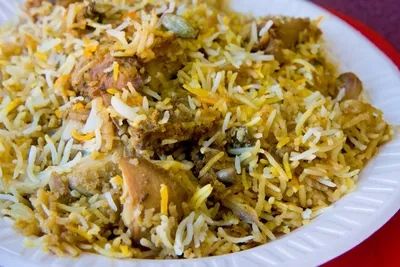
Hyderabadi, Bombay, Dhaka and Karachi Biryani Compared
Kacchi or pakki, potato or none, yogurt or tomato. This is how four regional biryanis differ in the pot, using amounts from our own recipes.
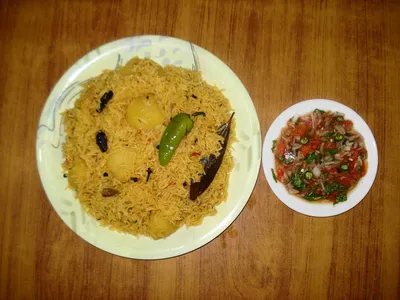
Beef Tehari vs Biryani vs Polao: How They Differ
Tehari, biryani and polao all put meat and rice on one plate. The difference is in the method. Here is a plain comparison, with amounts and timings from our own recipes.
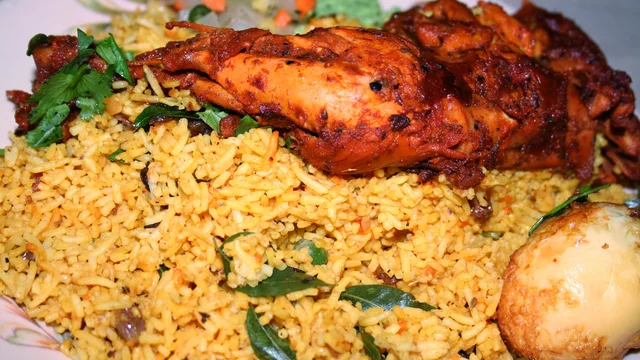
Indian vs Pakistani Biryani: What's Actually Different
Biryani is claimed proudly by both countries, and both are right to claim it. Here's what actually differs between the common Pakistani styles and the many regional Indian ones — without picking a winner.