 Degchi
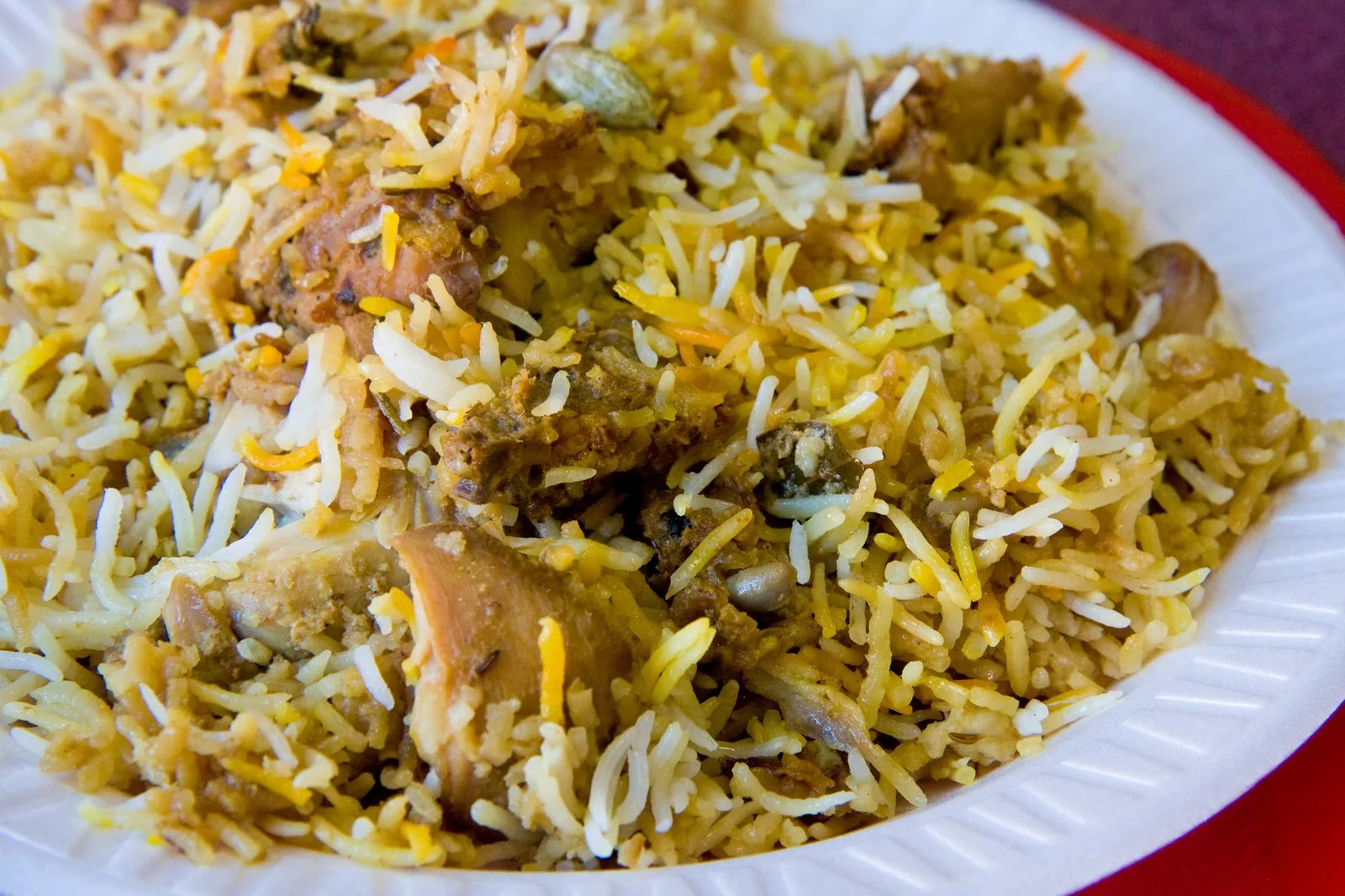
Why Is My Biryani Rice Mushy? Causes and Fixes
You lift the lid, the smell is right, and then the spoon goes in and the rice folds over like porridge. It is deflating, and it is fixable next time. The question "why is my biryani rice mushy" has more than one answer, so start with what you see in the pot.
Symptom one: soft and broken all through
Cause: the rice was boiled too far before layering. Biryani rice has two cooking stages, a boil and a steam. If the boil does the whole job, the steam only has overcooked grains to work on.
Our chicken biryani says to boil for 5 to 6 minutes, until about 70 percent cooked: the grain snaps when pressed but still has a white core. The Hyderabadi recipe puts it at about three-quarters. Its tips are blunt about the failure: rice cooked past three-quarters turns mushy.
Fix: set a timer, then pinch a grain at 5 minutes. If it is soft with no white core, you are late. Drain immediately and do not rinse.
Symptom two: wet and mushy at the bottom, fine on top
Cause: too much liquid under the rice, usually from a loose gravy. Rice resting on thin gravy sits in water instead of steaming above it.
The recipe's gravy step runs about 20 minutes covered, until the chicken is roughly 80 percent cooked, the gravy is thick and oil floats on top. That oil is your signal.
Fix: if the gravy is still runny when the chicken is done, take the lid off and cook it down before the rice goes in. Also drain the rice well. Rice carrying a cup of water into the pot adds it to the bottom.
Symptom three: sticky clumps on top
Cause: surface starch, or hot rice left piled in the colander. Starch from unwashed rice coats the grains and, as the rice sits, glues them.
Our recipe has you wash the rice in several changes until the water runs almost clear, then soak 30 minutes. For the full routine see how to cook basmati rice so the grains stay separate.
Fix: rinse properly, and layer the rice straight from the pot to the drain to the biryani. Spread it evenly, and do not press it down. Our Hyderabadi recipe says to place it without pressing.
Symptom four: soft outside, hard core
Cause: the seal leaked, or the dum was too short or too cold. Steam did not build, so the grains did not finish.
The chicken biryani calls for 3 minutes on medium until steam escapes, then 20 minutes on the lowest heat without opening the lid. The Hyderabadi version, with raw chicken underneath, needs 5 minutes on medium and then 40 minutes on low. Dhaka-style kacchi biryani needs about 75 minutes for 1 kg of bone-in mutton.
Fix: seal the rim with foil, a strip of dough or a snug lid. Our Dhaka recipe adds a rule worth stealing: if the meat is still firm when you open the pot, reseal and give it 15 more minutes. For a pot you can trust, check the order of work in the chicken biryani walkthrough.
Symptom five: scorched base and wet middle
Cause: a thin-bottomed pot on direct heat. The base burns while the rest stays under-steamed. The Hyderabadi tips list a thin base as a common mistake.
Fix: a heavy pot, and put a tawa or flat griddle under it for the dum. Heat is the lowest setting, not low-medium.
Symptom six: bland, even when it is not mushy
Cause: under-salted boiling water. The Hyderabadi tips say to salt the rice water well so the rice is not bland, and the chicken biryani adds that the gravy should taste slightly stronger than usual.
Fix: the water should taste properly salty before the rice goes in. Taste the gravy before layering.
Can you save a mushy pot?
You cannot firm rice back up. You can change what it is.
- Cool it and fry it. Overcooked rice that has been chilled can still go into fried rice. Our egg fried rice is built on cold rice, and its tips say fresh, soft rice turns mushy in the wok, so cold and slightly drier helps. Mushy biryani will clump, so break it up on a tray first.
- Make curd rice. Curd rice is cooked soft on purpose: the rice is boiled until very soft, mashed lightly, then mixed with milk and yogurt. A spiced biryani is the wrong flavour base, but plain rice that overcooked works well.
- Store it carefully. The same rules apply as for any rice. Cool within about an hour and eat within a day, as our cooling and reheating guide explains.
Mixing the layers gently also matters. Fold from the side with a wide spoon and avoid stirring from the middle, which breaks the grains.
A quick diagnosis list for next time
- Rice boiled past 6 minutes? Next time 5, then check a grain.
- Gravy loose? Reduce until oil floats.
- Rice drained quickly and well?
- Rim sealed, heat on the lowest setting, tawa under the pot?
- Lid kept shut for the full dum?
- Water salted until you can taste it?
If most answers are yes and it is still wrong, change one thing at a time. The step timers in Degchi's cook mode cover the 5-to-6-minute boil and the 20-minute dum, so you are not watching the clock. The chicken biryani page has them.
Related recipes


Related posts

Why Is My Biryani Bland? Salt, Masala and Layering
Biryani goes bland when the salt, the masala and the steam are not working together. Check each layer in the pot, from marinade to rest, and fix the one that is weak.
Chicken Biryani Recipe at Home: Layers, Dum, No Mush
A chicken biryani recipe at home comes down to three things: a thick gravy, rice boiled only to 70 percent, and a tight seal. Here is the order of work with amounts and timings from our recipe.
Basmati vs Sella Rice: Which One Should You Cook With at Home?
Both bags say basmati, but one stays fluffy for biryani and the other forgives a late dinner. Here is how to pick, cook and store each.
Rice Cooker Desi Meals: One-Pot Dinners Beyond Plain Rice
A rice cooker is the most underused desi kitchen tool. It can make basmati, khichdi and simple pulao while you handle everything else.