 Degchi
Indian vs Pakistani Biryani: What's Actually Different
One dish, two countries, and a shared ancestor
Biryani didn't start as either "Indian" or "Pakistani" — it developed over centuries across the Indian subcontinent, shaped by Mughal kitchens, Persian rice-cooking techniques, and strong regional traditions long before the 1947 partition drew a border through biryani's own heartland. Punjab and Sindh, now in Pakistan, and Hyderabad, Lucknow, and Kolkata, in India, were never cooking in isolation from each other. So the honest framing isn't "whose biryani is better" — it's "which regional habits ended up more common on which side of the border."
With that said, there are real, describable differences between what a biryani most commonly looks like on a Pakistani table versus the most common Indian styles — and they come down to three things: how spicy the masala runs, how the rice is handled, and which whole aromatics show up most often.
How the two broad styles differ
Spice level and tomato
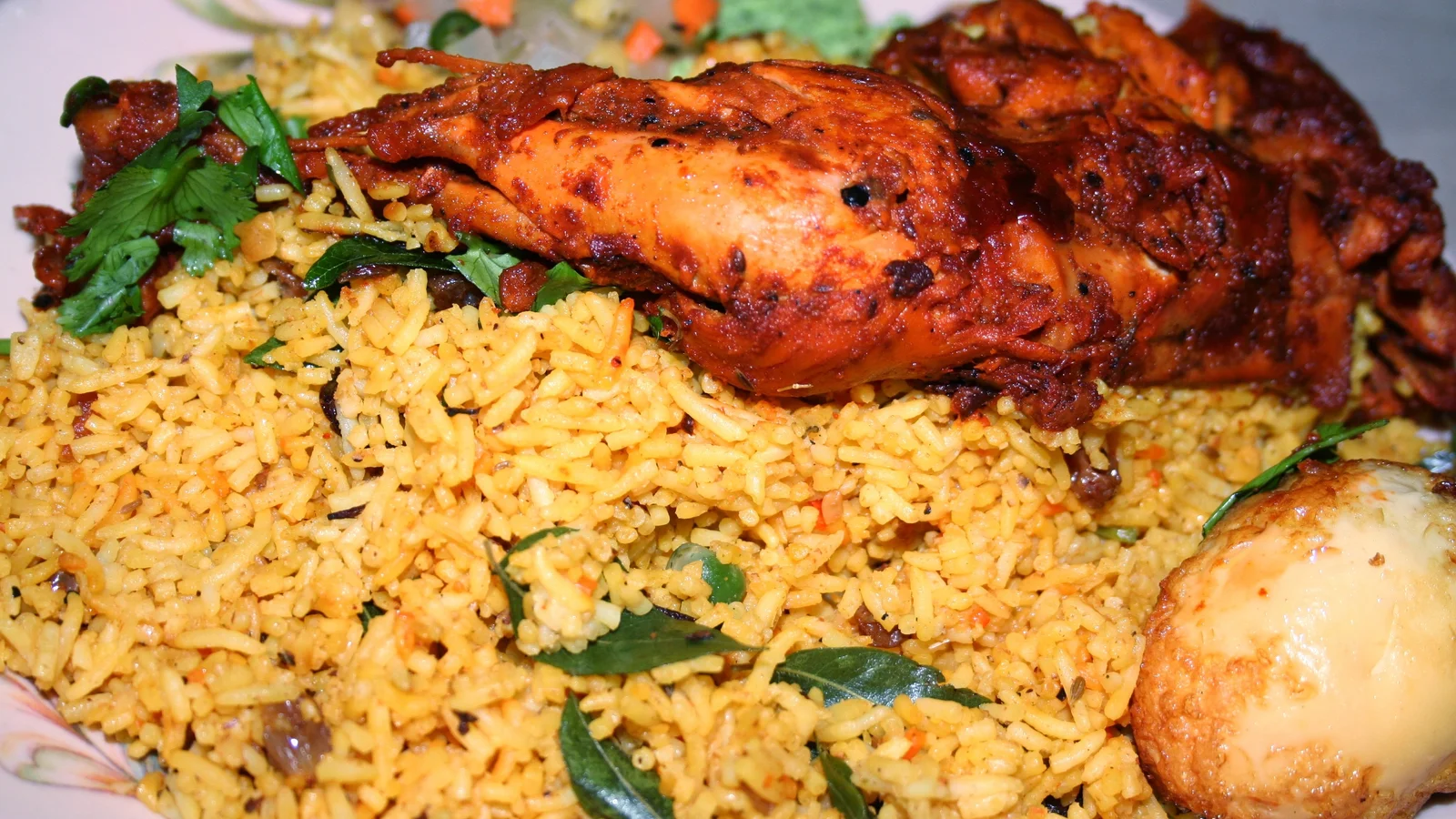
The most common Pakistani style — heavily influenced by Sindhi biryani — leans tomato-forward and noticeably spicier, with the gravy built up until it's thick and the chicken or meat is almost fully cooked in it before the rice goes on top. Many Indian biryani styles, Hyderabadi in particular, use less tomato and build flavour instead through yogurt, fried onions, and a heavier hand with whole spices like star anise, mace, and stone flower (kalpasi) — ingredients far less common in a typical Pakistani masala.
Kachi vs pakki: raw versus cooked marination
This is probably the biggest technical fork in the road. Kachi (raw) biryani — strongly associated with Hyderabadi cooking — layers raw, marinated meat directly under parboiled rice, and everything finishes cooking together on dum. It demands precise timing, since the meat and rice must reach doneness at the same moment. Pakki (cooked) biryani — the more common approach in most Pakistani kitchens — cooks the meat into a gravy first, then layers it under rice for a shorter dum, mainly to let the flavours meld rather than to finish cooking the meat. Pakki is more forgiving for home cooks, which is part of why it's the default across most Pakistani households.
Rice texture and colour
Indian biryanis, especially Hyderabadi and Lucknowi (Awadhi) styles, often aim for long, fully separate grains with a more fragrant, lightly perfumed rice (kewra water, saffron milk drizzled in careful streaks for colour variation). Pakistani biryani, particularly Sindhi-style, tends to have rice that's more deeply coloured throughout from the tomato-heavy gravy soaking upward during the dum stage, rather than streaked.
Regional variety within each country
Neither side is one thing. Within India alone, Hyderabadi, Lucknowi, Kolkata (which famously adds potato, a Nawabi-era addition when meat was scarce), and Malabar biryani are all distinct enough to be considered separate styles. Within Pakistan, Sindhi biryani (tomato-forward, tangy, often with a few whole dried plums or aloo bukhara) sits alongside milder Memoni and Bohri styles. So "Indian biryani" and "Pakistani biryani" are really umbrella terms for clusters of regional cooking, not single fixed recipes.
What they share
More than what separates them: basmati rice, the dum technique of sealing and slow-steaming, a whole-spice base (bay leaf, cardamom, cinnamon, cloves), fried onions for both flavour and garnish, and the cultural role of biryani as the dish for weddings, Eid, and big family gatherings on both sides of the border. The dum method itself — sealing a pot so the rice finishes in trapped steam and absorbed gravy flavour — is the one technique almost no regional style skips, Indian or Pakistani.
Garnish and accompaniments: another quiet divider
What a biryani is served alongside often tracks the same regional lines as the biryani itself. Pakistani households commonly pair biryani with raita (a cooling yogurt side, sometimes with cucumber or boondi) and a simple kachumber salad of onion, tomato, and lime. Many Indian regional styles lean more heavily on a boiled egg tucked into the serving, a side of mirchi ka salan (a tangy chilli-and-peanut curry, strongly associated with Hyderabadi meals), or a sweet element like a side of shahi tukda at celebratory meals. None of these are strict rules — they're habits, and like the biryani itself, they vary from one family's kitchen to the next more than any single write-up can fully capture.
Trying the comparison at home
The easiest way to actually taste the difference rather than just read about it is to cook the version most common in Pakistani homes once, side by side with notes on the two technical forks above (kachi vs pakki, tomato-forward vs yogurt-forward). Degchi's Chicken Biryani recipe follows the pakki, Sindhi-leaning style described here — built-in timers for the gravy stage and the dum stage make it a reasonable first attempt even if you've never layered a biryani before.
FAQ
Is Hyderabadi biryani Indian or does Pakistan have a version too?
Hyderabadi biryani is specifically associated with Hyderabad, India, and its kachi (raw-marination) method — it isn't the common style in Pakistani homes, though some Pakistani restaurants do serve a Hyderabadi-style biryani as a distinct menu item.
Which style is spicier, generally?
There's no universal rule, but the common Pakistani Sindhi style and Kolkata-adjacent styles both tend to run hotter and more tomato-forward than Lucknowi (Awadhi) biryani, which is traditionally the mildest and most fragrance-forward of the major regional styles.
Why does Kolkata biryani have potato in it?
It's usually explained as a 19th-century adaptation from Awadh's exiled Nawab Wajid Ali Shah's cooks, who stretched a limited meat supply with potato — it became such a defining feature that Kolkata biryani is now recognisable by the potato alone.
Is it fair to say one country's biryani is "the real one"?
Not really — biryani's roots predate the modern border entirely, and both countries have genuine, long-standing regional traditions rather than one borrowing from the other. The more useful question is which specific regional style (Sindhi, Hyderabadi, Lucknowi, Kolkata) you're comparing, not which country as a whole.
Related recipes
Related posts
Hyderabadi, Bombay, Dhaka and Karachi Biryani Compared
Kacchi or pakki, potato or none, yogurt or tomato. This is how four regional biryanis differ in the pot, using amounts from our own recipes.
Pulao vs Biryani: What Is the Difference?
Pulao cooks the rice in the flavoured liquid. Biryani boils the rice first, layers it over a thick gravy and steams it. Here is the comparison with our own recipe numbers.
Beef Tehari vs Biryani vs Polao: How They Differ
Tehari, biryani and polao all put meat and rice on one plate. The difference is in the method. Here is a plain comparison, with amounts and timings from our own recipes.