 Degchi
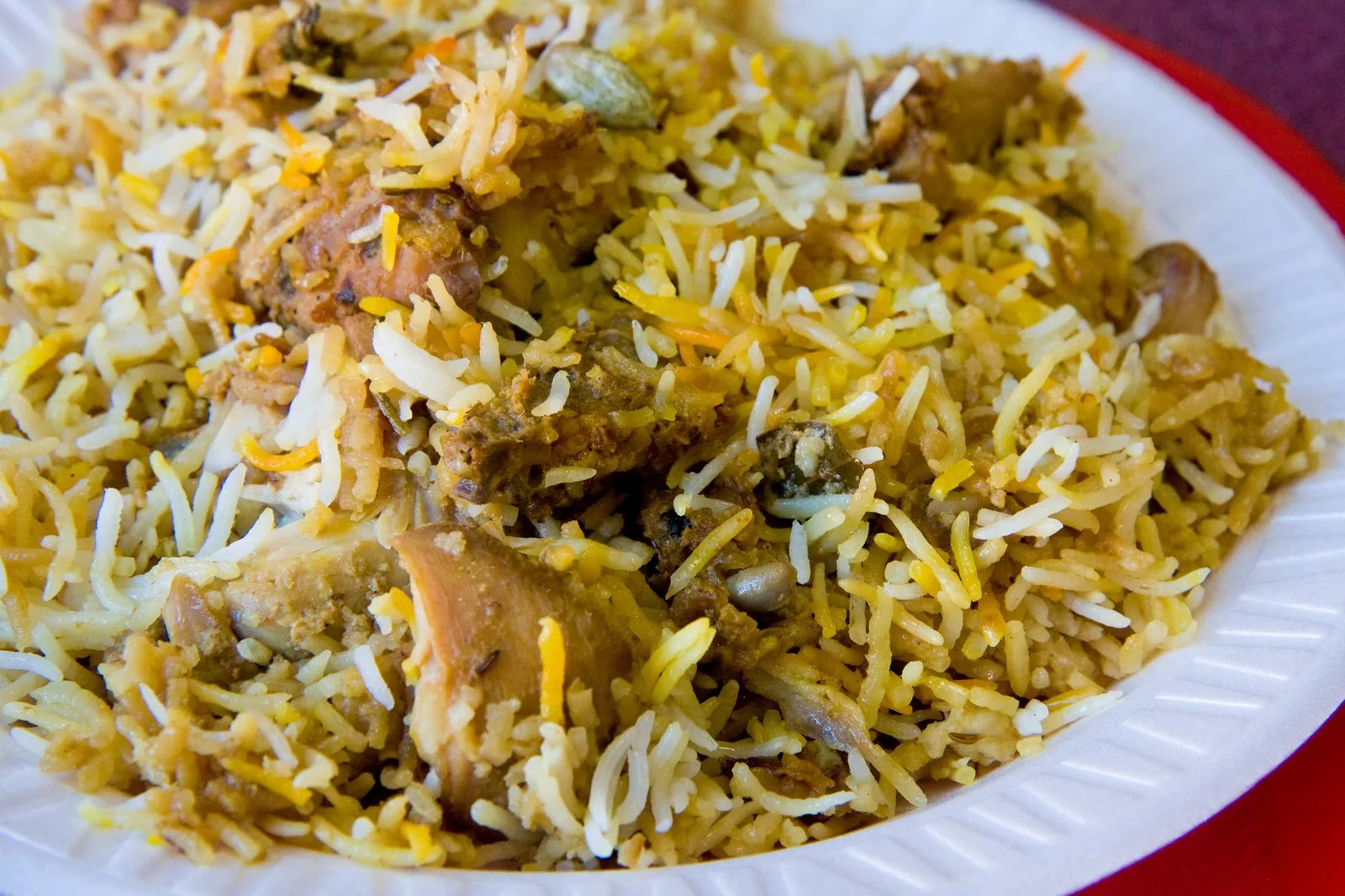
Hyderabadi, Bombay, Dhaka and Karachi Biryani Compared
You are standing in front of the fridge on Friday evening and have a kilo of meat and a bag of basmati. Which biryani? If you search for "Hyderabadi vs Bombay biryani" you find strong opinions and very few side-by-side numbers. Our recipe library has four regional versions, so here they are lined up.
The short version: the rice is almost always par-boiled to about 70 percent, then finished by dum (sealed slow steam). What changes is how the meat arrives at that point, and what else lives in the pot.
The four at a glance
| Hyderabadi | Bombay | Dhaka kacchi | Karachi beef | |
|---|---|---|---|---|
| Meat in our recipe | Chicken, 1 kg (2.2 lb) | Chicken, 1 kg (2.2 lb) | Goat or mutton, 1 kg (2.2 lb) | Beef, 900 g (2 lb) |
| Rice | 500 g (1.1 lb) | 450 g (2.3 cup) | 600 g (3 cup) | 500 g (2.5 cup) |
| How the meat is cooked | Raw, marinated (kacchi) | Fried into a gravy first | Raw, marinated (kacchi) | Cooked in gravy until tender |
| Souring agent | Yogurt, 300 g | Tamarind and tomato | Yogurt, 250 g | Yogurt and tomato |
| Potato | No | Yes, fried | Yes, fried | Small amount |
| Total time | About 105 min | About 110 min | About 220 min | About 150 min |
These are the numbers from the recipes on this site, not claims about how every home in each city cooks.
Hyderabadi: raw meat, patient steam
Hyderabadi biryani in our recipe is kacchi style. The chicken is mixed with yogurt, ginger-garlic paste, biryani masala, red chilli, mint, coriander and half the fried onions, then rested for at least 2 hours in the fridge. It goes into the pot raw, the par-boiled rice goes on top, and everything cooks together under a tight seal.
That is why the pot has to be sealed well. The recipe tip says no steam should escape while the rice and chicken finish. If the seal leaks, the rice on top is fine and the chicken underneath is the part that suffers. Chicken has to reach 74 C / 165 F inside, so check a thick piece with a thermometer before you serve if you are not sure.
The other style, pakki, cooks the meat first. Some cooks prefer it for exactly that reason: you can confirm the meat is done.
Bombay: the gravy-first version with potatoes and a sour edge
Bombay-style biryani in our library is a different logic. The chicken is fried with ginger, garlic, chilli and turmeric, then simmered with tomato, yogurt, biryani masala and tamarind for about 20 minutes until cooked through and the oil separates. Halved potatoes are fried and added to the gravy for the last 5 minutes. The rice goes over the top, and dum is 20 minutes on the lowest heat.
Because the meat is already cooked before dum, the finishing time is short and predictable. The tamarind (2 tablespoons) gives a tangy note; add it slowly and taste.
Dhaka kacchi: mutton, a long dum
The Dhaka version is the heaviest of the four and the slowest, at about 220 minutes with marinating. It uses 1 kg of goat or mutton on the bone, yogurt, ginger-garlic paste, biryani masala, six slit green chillies, whole potatoes and plenty of fried onion. Rice is rinsed, soaked 30 minutes and par-boiled in water with whole spices.
Bone-in mutton needs the full dum. Cutting corners here is how you get rice that is fine and meat that is still chewy. Chicken cooks much faster than mutton, so it is not a straight swap.
Karachi beef: cook the meat until it gives
The Karachi beef biryani in our library marinates 900 g beef with yogurt, ginger, garlic, chilli, turmeric, biryani masala and crushed fried onion for at least an hour. It is then cooked with tomatoes in a heavy pot until fork-tender, 70 to 90 minutes. Potatoes are boiled and added to the gravy, and the gravy is seasoned a little stronger than you want the final dish, because the rice dilutes it.
A pressure cooker shortens the beef step, but keep the gravy thick. Beef is not a mince dish here, but if you ever use mince for a biryani, it needs to reach 71 C / 160 F.
Which to cook when
- Short on time, want a sure result: Bombay. Meat is cooked before the pot is sealed.
- Hosting and want the showpiece: Hyderabadi or Dhaka kacchi, planned a day ahead.
- Beef on the table and one pot: Karachi.
- First biryani ever: Chicken biryani is simpler than all four.
If your rice keeps turning to mush in any of these, read why biryani rice goes mushy, and for the difference between a pulao and a biryani, yakhni pulao vs biryani.
Choosing a pot
Any of these is easier in a heavy-bottomed pot with a tight lid than in a thin one. For 1 kg of meat and 500 g of rice you need roughly a 5 to 6 litre (5 to 6 quart) pot, so the rice has room to steam instead of packing down. If your lid is loose, a sheet of foil under it, or a rolled strip of dough around the rim, helps hold the steam in. Put a flat tawa or a heat diffuser under the pot for dum so the meat layer at the bottom does not scorch. These are common habits rather than rules, and your stove may need a little adjusting.
Leftovers rule
Whatever you make: cool leftovers within about 1 hour, refrigerate, eat within 1 day and reheat until steaming hot. Rice is the part people forget.
Degchi's pantry checker shows which of these you already have the whole spice list for, and each recipe page has dum and soak timers.
Related recipes
Related posts
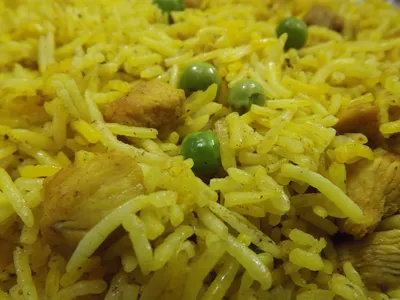
Pulao vs Biryani: What Is the Difference?
Pulao cooks the rice in the flavoured liquid. Biryani boils the rice first, layers it over a thick gravy and steams it. Here is the comparison with our own recipe numbers.
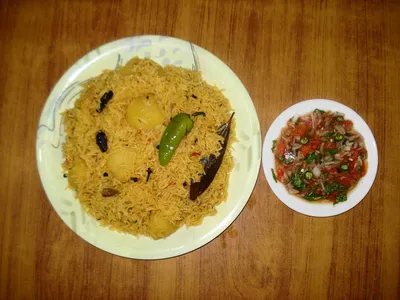
Beef Tehari vs Biryani vs Polao: How They Differ
Tehari, biryani and polao all put meat and rice on one plate. The difference is in the method. Here is a plain comparison, with amounts and timings from our own recipes.
Indian vs Pakistani Biryani: What's Actually Different
Biryani is claimed proudly by both countries, and both are right to claim it. Here's what actually differs between the common Pakistani styles and the many regional Indian ones — without picking a winner.