 Degchi

What to Cook Tonight When Everyone Says "Anything"
"Anything" is not an answer
It is 5 pm. You ask the family what to cook tonight. Your husband says "anything". Your daughter says "not daal". Your mother-in-law says "whatever you make is fine". You make chicken salan. Your daughter picks at it, and your husband says he was hoping for something lighter.
This is the dinner argument that never quite becomes an argument: no shouting, just quiet disappointment. In Urdu households it has a name, "aaj kya pakayein", and the question gets asked every single day. The way out is not a better recipe. It is a better process, and one that takes two minutes.
Rule 1: ask a smaller question
"What should we eat?" has a thousand answers, so people give none. "Daal or keema?" has two. Offer two or three real options, both of which you are willing to cook tonight and both of which the pantry can support. Say them out loud or send them in the family chat.
If you do not know what the pantry can support, look first. It takes a minute and prevents the most common failure: voting for a dish you cannot cook.
Rule 2: ban "anything" by giving it a job
Tell people that "anything" means "I accept the cook's choice and will not complain". That is a fair deal. The cook decides, and the person who said "anything" owns the outcome. It sounds like a joke and works like a rule. If someone has a real preference, they now have a reason to say it.
Rule 3: use a fallback list
Write down five dinners everyone in the house will eat without discussion. Ours would look something like this, from our recipe library:
- Chicken salan, the everyday curry, 15 minutes of prep and 45 of cooking
- Daal chawal, 15 and 30 minutes
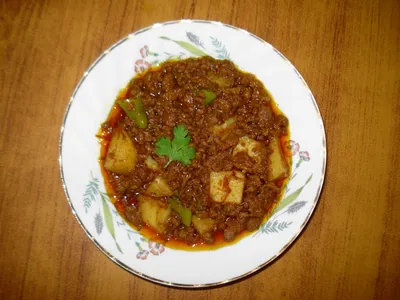
- Aloo keema, 15 and 35
- Khichdi, 10 and 30
- Chicken macaroni, 10 and 25
When the debate stalls after two minutes, pick from the list. The fallback list is not boring. It is the reason dinner happens at all on the nights when no one has energy.
Rule 4: one person, one veto, one day
Everyone can veto one dish per week, no explanation needed. A veto is not a favourite; it is a "please not this one". With a veto the child who hates okra stops fighting about okra every day, and the adult who dislikes mince stops quietly sulking. It also exposes the dishes that are vetoed by many people, which is useful information.
The same idea sits behind the majority rule in our app: if more family members dislike a dish than like it, it is not suggested, but it can still appear in an "Others" list with a label.
Rule 5: assign nights, not dishes
Instead of deciding every day, decide once per week what kind of night it is:
| Night | Type |
|---|---|
| Monday | Daal or vegetable |
| Tuesday | Chicken or mince |
| Wednesday | One-pot rice |
| Thursday | Leftovers or fridge clean-out |
| Friday | Family choice (kids pick) |
| Saturday | Something new |
| Sunday | Slow dish |
You still choose the exact dish on the day, but the choice is narrow. "Tuesday is chicken or mince" is far easier than the open question. Our school-night dinner rotation uses the same trick.
Rule 6: cook what the pantry already wants
At 5 pm, the best dish is often the one that uses what is about to go off. A soft tomato, half a bag of frozen peas, a few potatoes. Pick the dish those lead to, and the question answers itself. Aloo keema uses 500 g (1.1 lb) of mince and 300 g (0.65 lb) of potato; matar pulao takes 200 g (1.5 cups) of peas. Mince needs to reach 71 C (160 F) in the middle; if you are unsure, a thermometer settles it.
A two-minute script for 5 pm
Copy this. It works better than it looks.
- Look at the pantry (60 seconds). What must be used soon? What is Out?
- Offer two dishes. "Daal or keema tonight?" Name the dish, not the category.
- Wait for 30 seconds. If someone answers, done.
- If no answer, "anything" rule applies. You pick, and no complaints.
- Start cooking by 5:20. The longer you wait, the more likely the answer is takeaway.
If you want a tool for the vote step, Degchi has a dinner poll the family can answer on their phones, with the meal timing set once. It is only one way to do it, and a message in the family WhatsApp group does the same job.
When the vote goes wrong
- Two people want different things. Alternate. This is fair if it is tracked, which is why a simple note on the fridge helps.
- The loudest person always wins. Use a written or private vote, so everyone answers before seeing the others' replies. Our fair family vote rules go into this in detail.
- The cook is always the same person. The decision is half the work, so share it. Who cooks which night covers splitting it.
- Nobody is happy. Make the fallback list longer, and ask what people actually want to eat in a calm moment, not at 5 pm.
What to do tomorrow
Tonight, after dinner, write your family's fallback five. It takes five minutes. Tomorrow at 5 pm, you will have an answer for "anything".
Related recipes


Related posts

The Ten-Minute Weekly Pantry Reset for a Busy Desi Family
Ten minutes a week keeps the pantry honest. Check, use up, plan and list, and the rest of the week gets easier.

Nearly Empty Pantry? A Three-Day Dinner Plan Before the Next Grocery Run
The day before payday or a big shop, the cupboards look bare. Here is a three-day plan that turns what is left into real dinners.
Ending the "What's for Dinner?" Argument in a Desi Household
The hardest part of dinner is often the decision, not the cooking. A few small rules can take the daily argument out of it.
One Sunday Pot of Daal, Three Different Dinners
One pot of plain daal can become a soup, a dry-ish side and a quick khichdi. Here is how to stretch a single batch across the week.