 Degchi
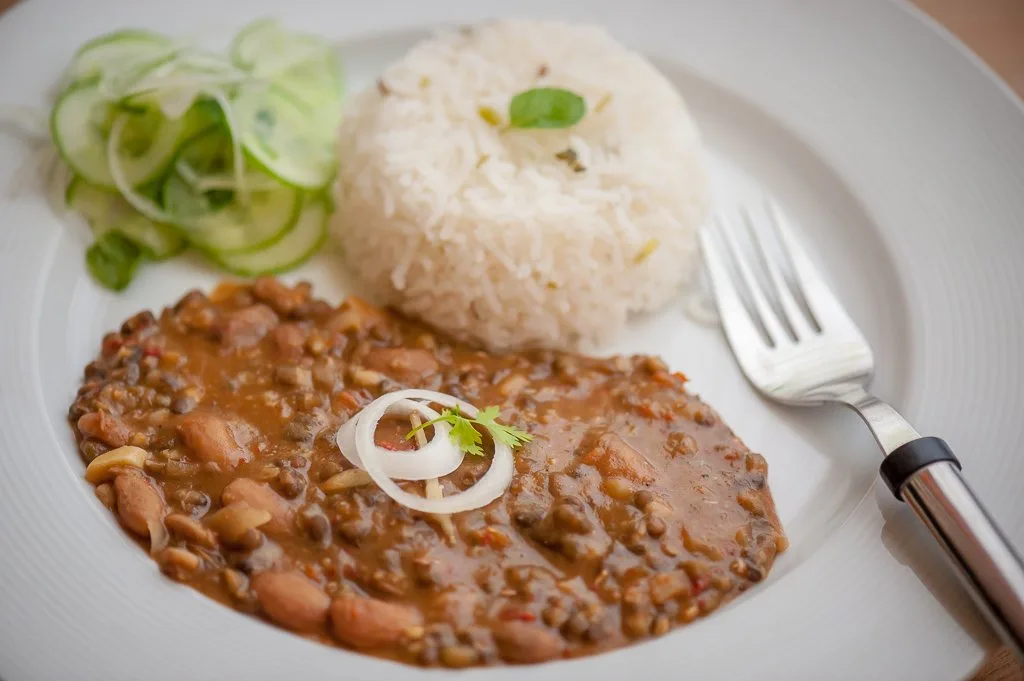
Why Is My Dal Makhani Not Creamy? Grainy or Thin Fixes
You followed the recipe, stirred in the cream, and the pot still tastes like beans in tomato sauce: grainy, a bit thin, nothing like the glossy dark dal you get at a good Punjabi restaurant. If you are wondering why is my dal makhani not creamy, the cream is almost never the problem. Creaminess comes from how soft the lentils get and how long they simmer afterwards.
Start with the lentils: they must collapse
Our Dal Makhani recipe uses 200 g (7 oz) of whole black lentils (urad) plus an optional 50 g (1.8 oz) of kidney beans. Both are soaked together for 8 to 10 hours, then pressure-cooked for about 40 minutes (6 to 7 whistles) until they mash easily between your fingers.
That finger test is the whole point. The recipe's tip states it plainly: under-cooked lentils never turn creamy, however long they simmer. If they still feel grainy at the centre, pressure-cook another 10 minutes before you touch the masala. Old lentils can take longer, and hard water slows softening; our piece on why daal will not soften covers that.
Keep the tomato out of the pressure cooker. Acid slows lentils from softening, so the recipe cooks them in fresh water with a little salt first and builds the masala separately. <!-- VERIFY: red kidney beans must be boiled hard to be safe to eat (standard food-safety guidance); the 40-minute pressure-cook covers it, no source opened for this post. -->
Build the masala so the gravy has body
The base takes roughly 15 minutes in our recipe:
- Melt 3 tbsp butter in a heavy pan over medium heat and fry the finely chopped onion for 5 minutes until golden.
- Add 1 tbsp each of ginger and garlic paste and fry 2 minutes until the raw smell goes.
- Add 3 pureed tomatoes, 1 tsp red chilli powder and 1.5 tsp salt. Cook about 8 minutes, until the oil separates and the masala turns thick and deep red.
If you skip the oil-separation point, the final dal tastes sharp. That is a different problem from graininess, and raw-tasting curry has its own fixes.
Mash some of it, then simmer slowly
Add the cooked lentils with their cooking liquid and press a few against the side of the pan with the back of a ladle. This releases starch into the gravy, which thickens it without flour or extra cream. Many home cooks skip this step and wonder why the dal stays loose.
Then simmer on very low heat. Our recipe says 20 minutes as a minimum, stirring often so it does not catch on the bottom, adding hot water if it gets too thick. It also says an hour or more gives the creamiest, darkest result. That is the honest trade-off: 20 minutes gets you dinner, an hour gets you the restaurant texture. Use a heavy-bottomed pot; thin pots scorch, as we explain in why thin pots scorch dum dishes.
Cream and butter go in last
Stir in 100 ml (about 0.4 cup) of cream and 0.5 tsp garam masala for the final 5 minutes, then serve. Boiling cream hard for a long time can make the dal look oily. A spoon of cold butter on top at the table adds shine. <!-- VERIFY: oily-looking dal from long boiling after cream is general cooking experience. -->
Quick diagnosis
| Symptom | Likely cause | Fix |
|---|---|---|
| Gritty bite in the lentils | Under-cooked | Pressure-cook 10 more minutes before the masala |
| Thin, watery gravy | Not mashed, short simmer | Mash a ladleful against the side, simmer 20 to 30 minutes |
| Pale, not dark | Short simmer, tomato not cooked down | Cook the masala until deep red, simmer longer |
| Sticks and burns | High heat, thin pot | Lowest flame, stir often, add hot water |
| Sharp or raw taste | Masala not cooked down | Cook tomato until the oil separates |
Make it the day before
The recipe notes that dal makhani tastes better the next day and freezes well. Reheat gently with a splash of hot water and a spoon of fresh butter on top. The standard rule for leftovers is to cool them within about an hour, keep them in the fridge for no more than a day or two, and reheat until steaming hot; see our cooling and reheating guide for the details.
Serve with tandoori naan, tandoori roti or plain rice. If kidney beans are the part giving you trouble, why rajma goes hard or mushy is a useful companion, and Chana Masala makes a good second pot for a mixed table.
A Sunday plan that works
Soak the lentils Saturday night. Sunday morning, pressure-cook (about 40 minutes), make the masala, then leave the pot on the back burner for a long, low simmer while you get on with the day. Degchi's cook mode timers can track the soak, the cook and the simmer, so you do not have to remember which pot is on which stage.
Recipes with tomatoes Recipes with flour Recipes with lentils
Related recipes



Related posts

Rajma Chawal for Four: A Sunday Dinner With US Measurements
Rajma chawal is comfort food that runs on pantry staples. Here is a clear version with US measurements and honest notes on dried versus canned beans.
Pressure Cooker Lentils: Times, Ratios and Safety Tips
A pressure cooker turns an hour of simmering into 15 minutes. Here are practical times, ratios and the safety rules that keep it trouble-free.