Degchi
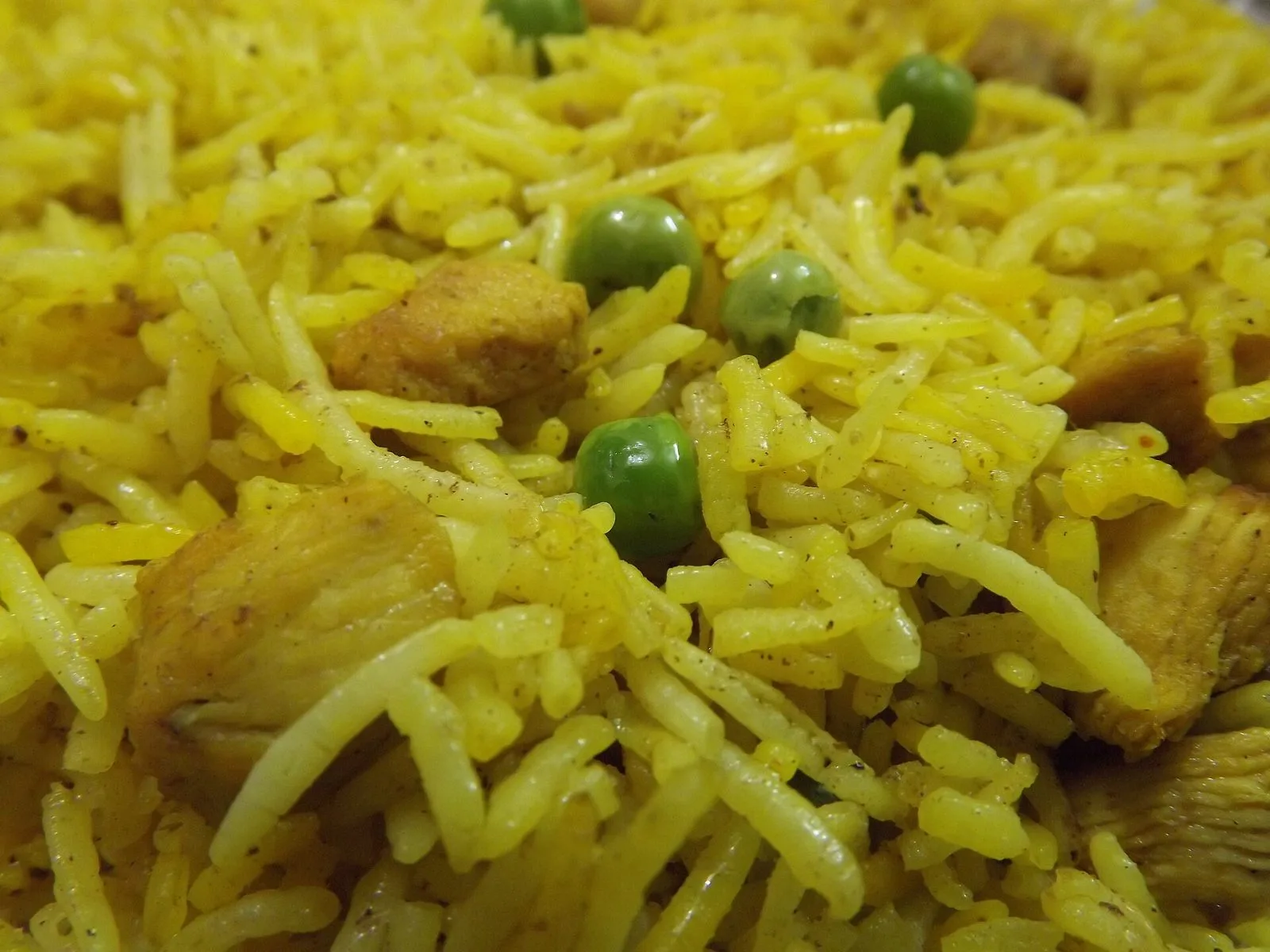
Photo: Sumit Surai / CC BY-SA 4.0
Rice Cooker vs Pot for Basmati, Daal and Khichdi
Two people can own the same rice cooker and get opposite results with basmati. One follows the inner-pot line and gets separate grains. The other doubles the water because a recipe said so, and gets porridge. The difference is rarely the cooker. It is knowing which of three methods a recipe uses before you copy it into the machine.
Three ways our recipes cook rice and lentils
Reading through our own recipe data, there are three different water methods.
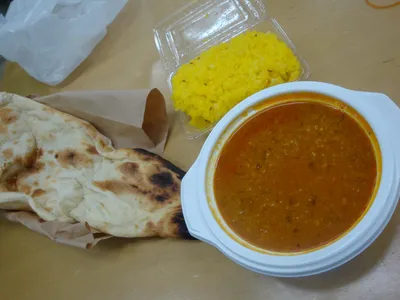
- Boil and drain. The daal recipe pairs 200 g (1 cup) of red lentils, simmered in 4 cups of water, with 300 g (1.5 cups) of rice boiled in plenty of salted water for about 12 minutes, then drained and kept covered.
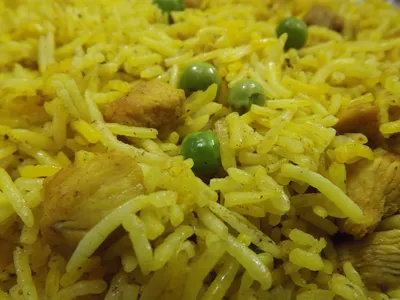
- Absorption, measured by volume. The chicken pulao measures the liquid left in the pot after the chicken is braised, and tops it up to about 1.5 times the rice volume. For 400 g (2 cups) of basmati that is roughly 3 cups of liquid in the pot.
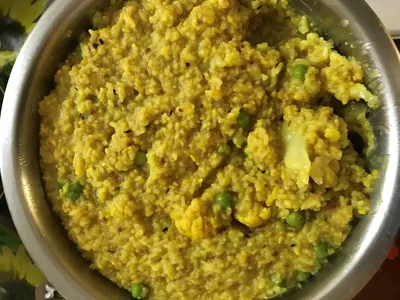
- Cooked down together. The khichdi puts 150 g (0.75 cup) of rice and 150 g (0.75 cup) of split mung beans in a pot with roughly 4 to 5 cups of water, and simmers about 20 minutes until it breaks into a porridge.
Only one of these, absorption, matches how a rice cooker works. The cooker has a sealed lid and a thermostat that cuts the heat when the water is gone. You cannot drain rice in it, and you cannot judge a porridge by sight without opening the lid.
Basmati: cooker or pot?
For plain basmati, both give good results, with some differences.
In a cooker. Rinse until the water runs fairly clear, soak 20 to 30 minutes if you have the time (our pulao soaks 20 minutes and our biryani 30), drain well and add water. A common starting point for soaked basmati is a little over 1 part water to 1 part rice by volume, but cookers differ. Use the line printed in the inner pot or the cup that came with the machine, and adjust by a spoonful the next time. Do not open the lid while it cooks, and let it rest about 10 minutes after the cooker clicks off, the same resting time our pulao suggests.
In a pot. You get more control. You can boil in plenty of salted water and drain like the daal recipe does, which gives the loosest grains and forgives a slight measuring error. Our guide how to cook basmati rice with separate grains covers that method. The trade-off is watching a timer and a pot.
My view: use the cooker for everyday plain rice and the pot when rice is part of a bigger dish.
Daal: put it in the pot
Lentils are the weak point of rice cookers, for three reasons.
- Foam rises. Red lentils and chana daal foam a lot while heating, and a cooker lid with a steam vent can spit starchy water onto the counter. Skim and keep the lentils below the half-full mark, as you would in a pressure cooker.
- The tadka. Both our daal and chana daal finish with a hot-ghee tempering of cumin and garlic that gets poured over at the end. A cooker has no way to sear this, so you need a small pan anyway.
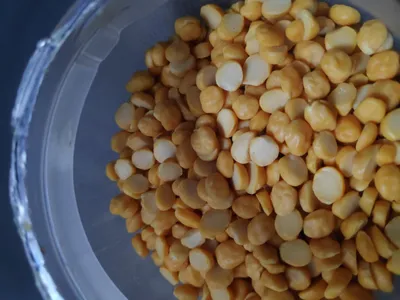
- Timing. Red lentils soften in about 20 minutes, chana daal needs a 30 minute soak, then 25 minutes of boiling and further simmering. A cooker's automatic cycle is built for rice, not for this.
If you want to use the cooker for lentils anyway, treat it as a slow simmer. Choose a "porridge" or "slow cook" mode if your machine has one, check at the minimum time and add hot water if it thickens. Skip the machine for chana daal.
Khichdi is the cooker's best desi dish
Of the three methods, khichdi suits a rice cooker best, since the rice and lentils cook together in water and you want a soft finish. A pot needs stirring every few minutes in our recipe, and a cooker does not.
Use the same proportions as the recipe as a start: equal parts rice and mung beans, with about 3 times their combined volume in water. In the recipe, 1.5 cups of dry grain takes 4 to 5 cups of water. A cooker loses less water to evaporation than an open pot, so begin at the lower end, near 4 cups. If it comes out too thick, stir in hot water at the end, as our tip says. Make the cumin tarka separately in ghee and pour it over.
Quick reference
| Dish | Method in our recipe | Fits a rice cooker? |
|---|---|---|
| Plain basmati | Soak, then absorb or boil and drain | Yes, absorption method |
| Chicken pulao | Absorb 1.5 times the rice volume in braising liquid | Not directly, the braise needs a pan first |
| Khichdi | 150 g rice and 150 g mung in 4 to 5 cups water | Yes, with a separate tarka |
| Daal with boiled rice | Lentils simmer, rice boiled and drained | Rice in the cooker is fine, lentils stay in a pot |
| Chana daal | 30 minute soak, then 25 minute boil | No, use a pot or a pressure cooker |
Things that go wrong in both
- Not rinsing. Surface starch makes rice sticky. Our troubleshooting post on sticky or gluey rice has the details.
- Copying a water ratio from a different method. A boil-and-drain recipe has no ratio at all, so there is nothing to copy.
- Leaving cooked rice on the warm setting for hours. Food safety guidance says to cool cooked rice within about an hour and refrigerate it for no more than a day. Reheat until steaming hot. Our guide to cooling and reheating rice and daal walks through it.
For more cooker-friendly meals, see rice cooker desi meals.
A rule for deciding in 10 seconds
Ask whether the dish needs the rice to be dry and separate, creamy and soft, or part of a gravy. Dry and separate means a pot, or a cooker if you measure carefully. Creamy and soft means a cooker is perfect. Part of a gravy means start in a pot.
If you want to see which of these your cupboard already covers, the pantry check on the Degchi home page lists your rice, lentils and spices against the recipes.