Degchi
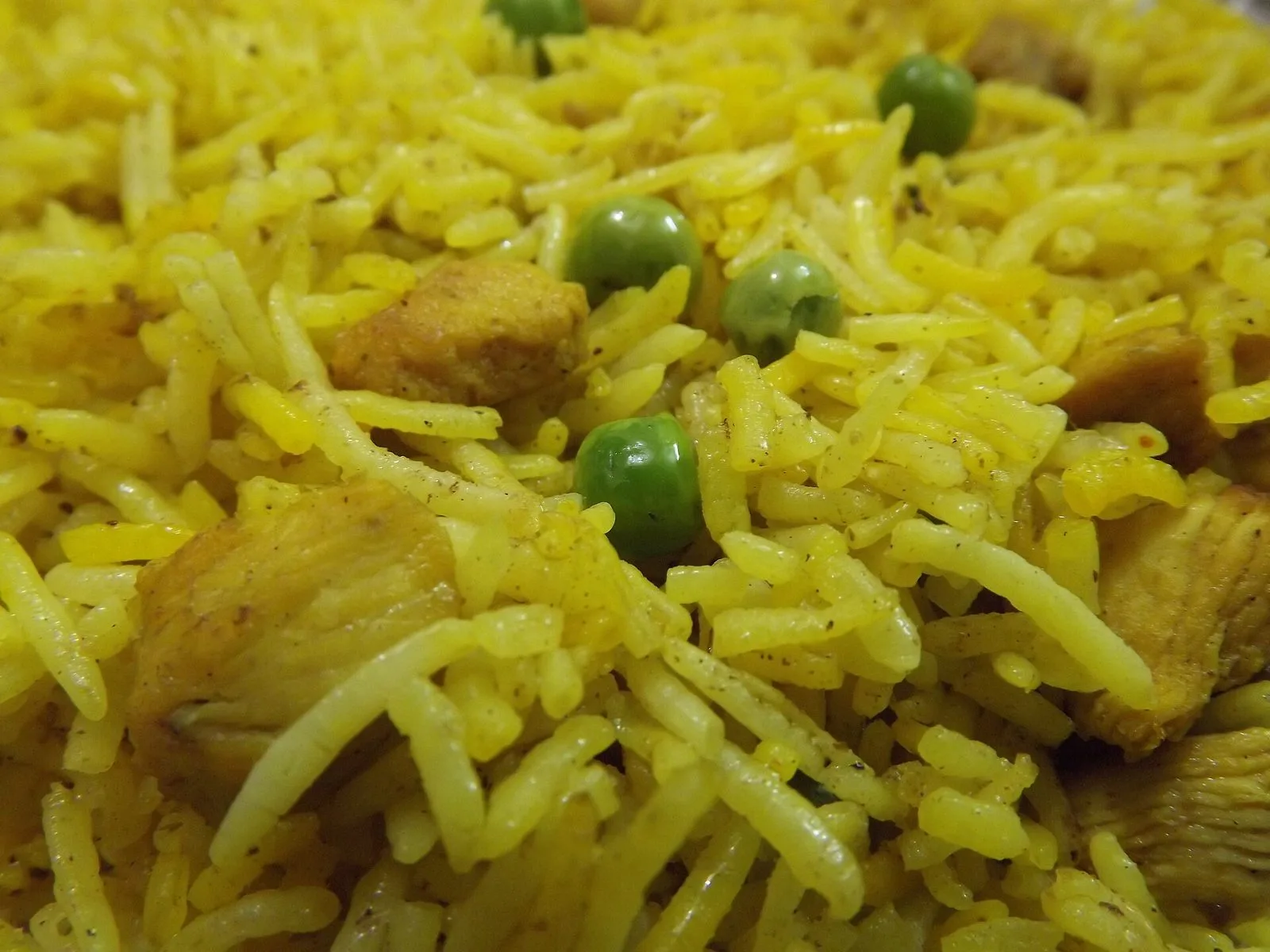
Photo: Sumit Surai / CC BY-SA 4.0
Rice Cooker Cup vs Measuring Cup: Why Rice Goes Wrong
A friend swears by the rice cooker. You buy one, follow her proportions ("two cups rice, two cups water"), and the rice comes out as paste. Or the rice cooker line says "2" and the grains are hard. Nothing is broken. You are mixing two different cups.
This post explains the difference, shows how to measure properly, and gives a calm fix for the batch that has already gone wrong. For a broader comparison of cooker versus pot, see rice cooker vs pot for basmati and daal.
The cup that comes in the box is smaller
Most rice cookers ship with a small plastic measuring cup. In Japanese-style cookers this cup is traditionally about 180 ml, called a "go". A US measuring cup is about 240 ml. So a "2 cup" fill with the plastic cup is roughly 360 ml of rice, not 480 ml. <!-- VERIFY: 180 ml rice-cooker cup and 240 ml US cup are standard figures, but cooker brands vary; check your manual. -->
This matters for two reasons. First, if you scoop rice with the plastic cup and fill water to the marked line inside the pot, the proportions are designed to match. That is the system working as intended. Second, if you switch to a US cup for rice and still trust the inside lines, you overfill the rice, or if you pour water by US cups against the plastic cup's rice, you drown it.
The golden rule: use one cup for everything. Either the plastic cup and the inner lines, or a ratio you control yourself.
Reading the water lines
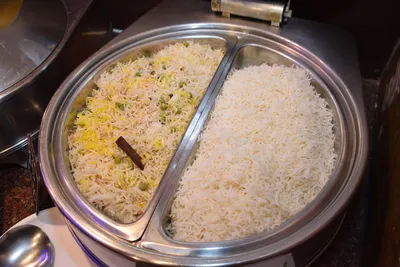
The marks inside the pot usually correspond to the number of plastic cups of rice. Pour the rice in, level it, then add water to the matching number. Different lines may exist for white rice, brown rice, porridge and sushi rice. Basmati is not always on the list; white rice lines are the usual starting point, then adjust.
Two cautions. The lines assume the rice sits flat. If a mound of rice pokes above the water, shake the pot gently to level it. And the lines assume you are not pouring in the soaking water; drain after soaking.
What our recipes ask for
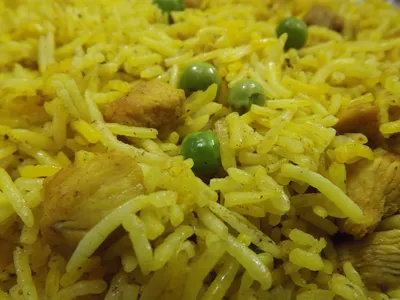
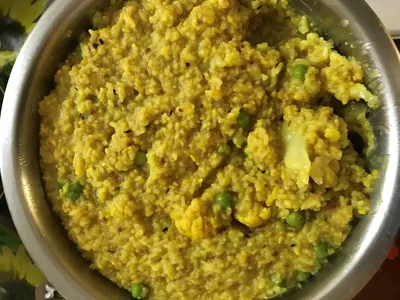
Pulao and khichdi recipes in our library give water in volume, not in cooker lines. For example the khichdi recipe puts about 4 to 5 cups of water into a pot with rice and moong, a deliberately soft dish, and the matar pulao soaks rice for 20 minutes first, then drains. A pulao made in a rice cooker needs the same drain after soaking.
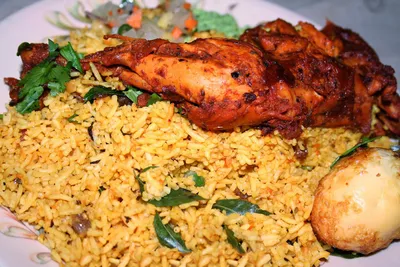
Basmati specifically: wash until the water runs almost clear, soak 20 to 30 minutes, then drain. The chicken biryani recipe soaks for 30 minutes. In a rice cooker, soaked and drained basmati needs less water than dry, usually a 1:1 to 1:1.25 rice-to-water volume. <!-- VERIFY: 1:1 to 1:1.25 for soaked basmati in a rice cooker is a common range, not from our recipe data; test with your cooker. -->
A starter table to test, not to trust blindly
| Rice | Soak | Rice : water (same cup) |
|---|---|---|
| Soaked basmati, separate grains | 20 to 30 min, drained | 1 : 1 to 1 : 1.25 |
| Unsoaked basmati | none | 1 : 1.5 |
| Medium-grain white rice | none | 1 : 1.25 |
| Soft khichdi-style | none | 1 : 3 or more |
<!-- VERIFY: ratios are starting points commonly cited for home rice cookers; only the khichdi 4 to 5 cups total water appears in our recipe data. -->
Write down what works for your machine once. Cookers differ in how much steam they lose, so the number you land on is yours.
Fixing a bad batch
Mushy rice. Fan it open on a wide tray for a few minutes so steam escapes and the surface dries. It cannot be un-mushed, but it makes good fried rice or khichdi-style leftovers. Use less water next time, drain after soaking, and do not lift the lid mid-cycle.
Hard centres. Sprinkle 2 to 3 tablespoons of hot water over the rice, close the lid, and run "keep warm" for 10 minutes. If the cooker clicked off, restart the cook cycle once.
Burnt base. Scrape nothing. Let the pot cool, soak with warm water, and lift the crust later; a little crust is common and not a failure.
Wet top, dry bottom. Usually uneven rice or a tilted pot. Level the rice and the cooker before starting.
After cooking: rest and fluff
Do not open the lid the moment it clicks. Give it 10 minutes to rest so moisture evens out, then fluff with a fork or a flat paddle, not a spoon that mashes. If you are not eating straight away, spread the leftovers into a shallow container and cool them quickly. The cooked-rice rule from our other guides applies: cool within about 1 hour and keep in the fridge no more than 1 day. Our cooling and reheating rice and daal guide covers the steps.
A three-minute habit
- Pick one cup and stick with it.
- Wash, soak (for basmati), drain.
- Level the rice, set the water line or ratio, and note the result.
- Rest 10 minutes, then fluff.
If you want to work out what to cook with rice you already have, try Degchi's pantry matching and pick a recipe from what is in the cupboard.