 Degchi
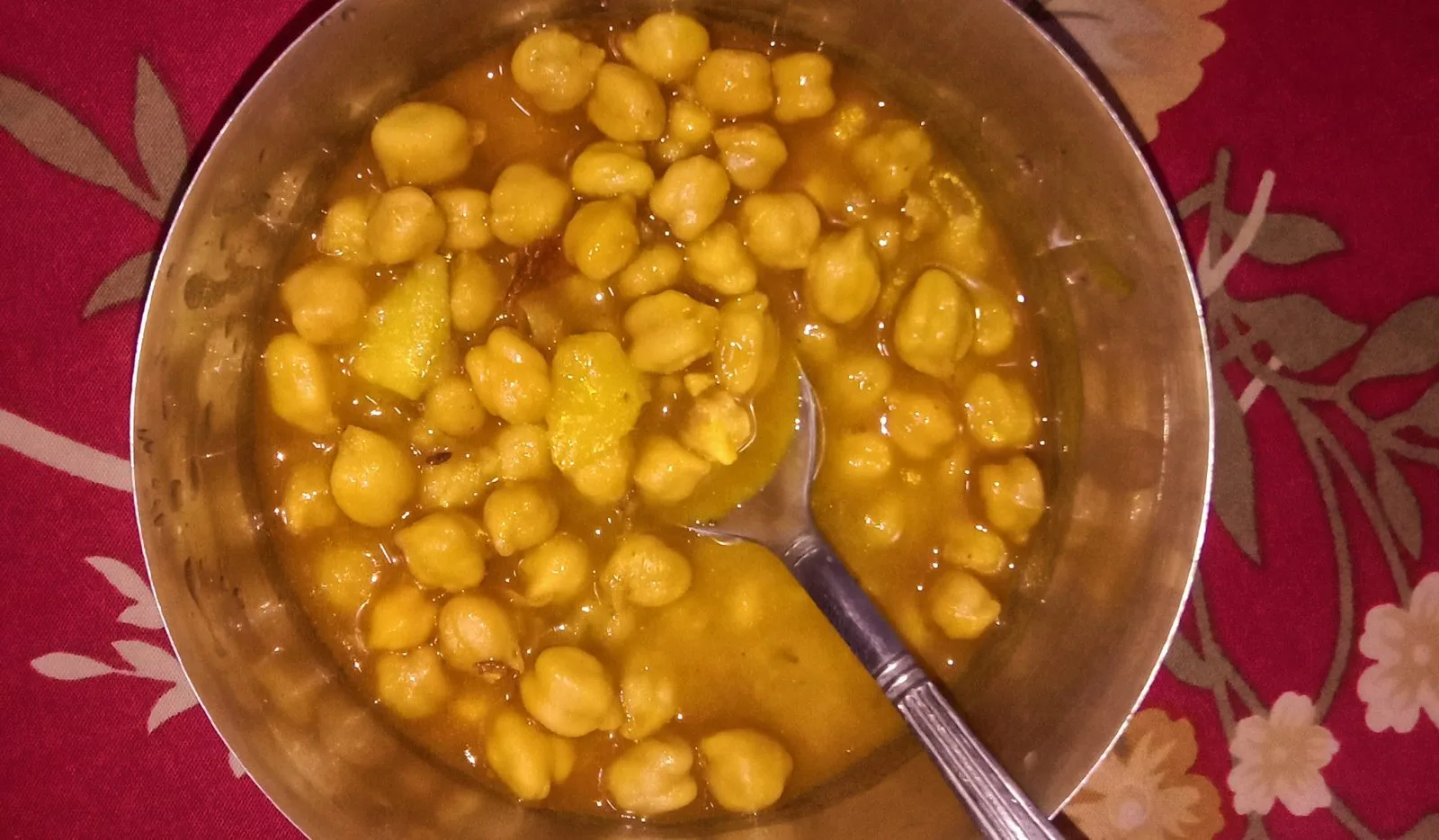
Photo: Billjones94 / CC BY-SA 4.0
Pressure Cooker Whistles: How Many for Each Dish?
"Cook it for three whistles." Every family has a version of this sentence, and it works perfectly until you borrow a cousin's cooker, move to a new stove, or buy a different brand. Then three whistles gives you rock-hard chickpeas on Monday and daal soup on Tuesday.
The reason is simple. A whistle is a sound made by steam escaping past a weight. It is not a unit of time. If you want to know how many pressure cooker whistles a dish needs, the honest answer is: it depends on how fast your cooker reaches pressure, and how often the weight lifts once it does. This post gives a rough whistle count for common desi dishes and, more usefully, a way to convert it to minutes so the result stops depending on your stove.
What a whistle actually measures
Once the cooker is sealed and the heat is on high, the pot takes a few minutes to build pressure. Then the weight (or the whistle) lifts and steam pushes out with a hiss or a toot. On a strong flame the whistles come close together, maybe 20 to 40 seconds apart. On low heat or an induction hob set too low, the gap can stretch past a minute.
So three whistles on a big gas burner can be about 2 minutes of pressure cooking, and three whistles on a weak one can be 4 or 5. That is a wide gap for a pulse that needs a fixed amount of heat to soften. <!-- VERIFY: whistle spacing varies by burner and cooker; the 20 to 40 second range is a general observation, not a measured figure from our recipes. -->
The fix: count the first whistle as "pressure reached", then time the minutes yourself.
A working chart: whistles and minutes side by side
These are starting points for a standard 3 to 5 litre cooker with a weight or whistle valve. Where our own recipe pages give a number, it is listed as such.
| Dish | Soak | Typical whistles | Minutes at pressure |
|---|---|---|---|
| Red lentils (masoor daal) | 10 min | 1 to 2 | about 5 |
| Split chickpea daal (chana daal) | 30 min or more | 3 to 4 | 10 to 15 |
| Soaked chickpeas | 8 h or overnight | 4 to 5 | 10 to 12 (our recipe) |
| Soaked rajma | overnight or 4 h minimum | 5 to 6 | about 20 |
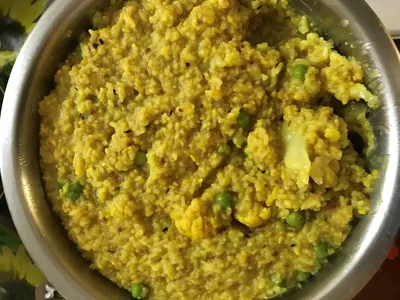
| Khichdi (rice and moong) | none | 2 to 3 | 5 to 6 |
| Plain basmati | 20 to 30 min | 1 | 3 to 4, then rest |
<!-- VERIFY: only the chickpea 10 to 12 minute figure and soak times come from our recipe data. Whistle counts and the other pressure minutes are general home-cooking ranges. -->
The chana masala recipe says dried chickpeas need 45 to 60 minutes in an open pot or 10 to 12 minutes in a pressure cooker, and gives a simple finish line: one chickpea should crush easily between your fingers. That test matters more than any whistle number.
Why the same dal behaves differently in two cookers
Four things move the count around.
Fill level. A cooker packed to the maximum line takes longer to build pressure than one filled halfway. Pulses expand, so most manuals say not to fill beyond half for beans and lentils, and two thirds for other foods. Check your own manual for the exact line.
Water ratio. The daal recipe uses 4 cups of water for the lentils it serves four with, and the khichdi recipe uses roughly 4 to 5 cups for its rice and moong. Less water means a thicker, quicker pot. More water means longer to boil and a thinner result.
Age of the pulse. Chickpeas and rajma that have sat in a cupboard for a year can take double the time of a fresh bag. Old beans are the usual cause of "I gave it 8 whistles and it is still hard".
Hard water or salt timing. Hard water can slow softening. Salt early is fine for most pulses in modern cookers, but if a particular batch stays firm, try salting after.
How to convert your own cooker to minutes
Do this once and write the numbers on a sticky note inside the cupboard door.
- Fill the cooker, lock the lid, set the burner to high.
- Start a timer when the first whistle sounds.
- Lower the flame to medium so the weight rocks gently, not violently.
- Stop the heat at the minute count in the chart above.
- Let the pressure drop naturally for 10 minutes, then check the dish.
If it is underdone, put the lid back on and give it 3 more minutes. If it is overdone for daal, whisk it; nobody minds creamy daal. Overdone chickpeas are fine for hummus or for mashing into a masala.
Natural release or quick release
Beans and chickpeas prefer a natural release. A sudden vent can split skins and spray foam out of the valve. Lentils that foam, especially chana daal, benefit from a spoon of oil or ghee in the water and from not filling past half. Rice can take a quick release after a 5 minute rest.
Never force a lid open. If the lid will not turn, there is still pressure inside. Wait, or run the cooker base briefly under a cool tap on the outside, then check the manual's release instructions.
One lazy rule for the week
If you cook pulses most days, pick one routine and keep it: soak at night, cook at a fixed minute count, rest 10 minutes. After two or three tries your own numbers will be more reliable than any family rule.
Degchi's cook mode lets you run a step timer for each stage, and you can try the pantry-first recipe matching from the home page. For a size guide before you buy, see pressure cooker size for a family, and for how the same pulses compare in an open pot, see pressure cooker vs open pot cooking times.
Related recipes


Related posts
Why Does Daal Foam and Boil Over? How to Stop It
You turned your back for 30 seconds and the daal climbed out of the pot. Here is why lentils foam, and how to stop it with a rinse, a spoon and the right pot.

Pressure Cooker Size: 2L, 3L or 5L for Your Family?
A 3 litre cooker is not a 3 litre pot. Here is how much food each size really holds, what the fill line does to lentils, and how to choose between whistle and weight valves.