Degchi
Pressure Cooker Size: 2L, 3L or 5L for Your Family?
You open the box, rinse the lentils, tip in everything for a family dinner, and the lid will not even lock. Or worse, it locks, and daal foam clogs the vent. Most pressure cooker trouble starts with one number: the size printed on the pot is the brim volume, not the amount of food it can hold.
If you are choosing a pressure cooker size for the first time, or wondering whether your 2 litre pot is the problem, this is the working version.
The number on the lid is a brim measurement
A cooker marked 3 L can hold 3 litres (about 12.7 US cups) of water if you fill it to the very top. You must never do that. Steam needs headspace to build pressure, and foaming food needs room to rise.
The general guidance in most manufacturer manuals is two simple limits, and your own manual overrides what I say here:
- Fill to no more than two thirds of the pot for ordinary food such as rice, vegetables and meat in gravy.
- Fill to no more than one half for foaming or swelling food such as lentils, beans and chickpeas.
So a 3 L cooker gives you roughly 2 L (8.5 cups) of cooked food, or about 1.5 L (6.3 cups) of daal and beans. That second number is the one people forget.
What each size actually feeds
These are working estimates from the fill lines above, not lab results. Appetite varies.
| Cooker size | Safe fill (general food) | Safe fill (lentils, beans) | Practical use |
|---|---|---|---|
| 2 L (8.5 cups) | about 1.3 L | about 1 L | One or two people, a single daal, small batches |
| 3 L (12.7 cups) | about 2 L | about 1.5 L | A family of 3 to 4, daal plus a pot of rice |
| 5 L (21 cups) | about 3.3 L | about 2.5 L | A family of 5 or more, meal prep, whole bone-in meat |
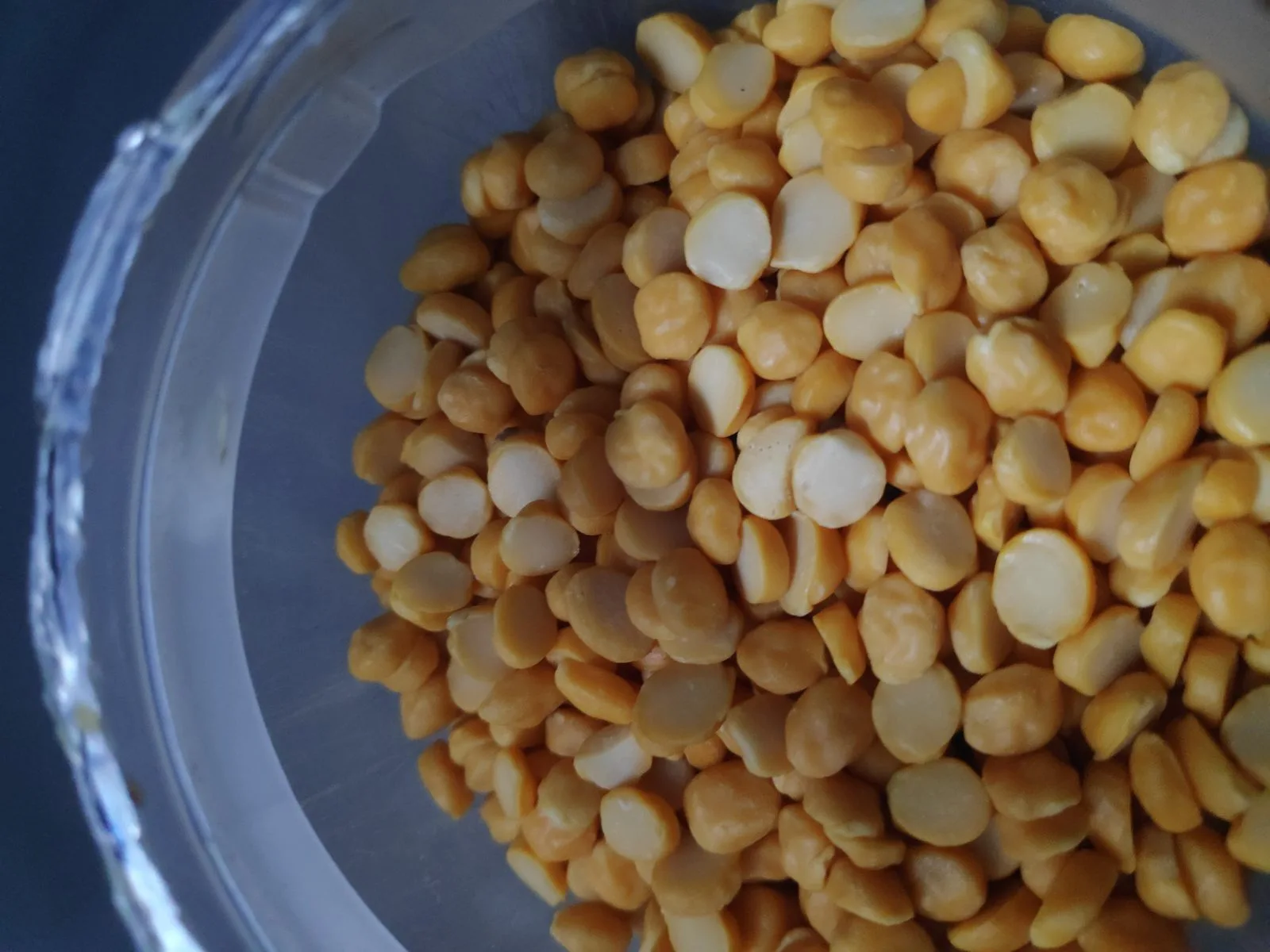
Compare that to our recipes. Daal serves 4 from 200 g (1 cup) of red lentils and 4 cups of water, which is roughly 1.2 L of liquid plus the lentils. In a 2 L cooker that is already over the one-half line for lentils, so you would cook it in a pot or halve it. Chana daal is 250 g (1.25 cups) with 4 cups of water, which has the same problem. Both sit comfortably in a 3 L cooker.
Why lentils get the half-full rule
Lentils and beans release protein foam as they heat. The foam rises toward the vent, and if it reaches it, you get spitting, a blocked weight or a sticky mess on the stovetop. This is also why recipes tell you to skim foam or add a teaspoon of oil.
Soaking, rinsing and skimming help, but headspace helps more. Our pressure cooker lentils guide covers timing by lentil type, so I will not repeat it here.
Which size for which household
One or two people. A 2 L cooker is enough, and it heats and comes to pressure quickly. Single-serve cooking is where it shines: a cup of lentils, a small khichdi, a few potatoes. Its weak spot is anything long. Bone-in meat pieces tend to wedge awkwardly in a small pot.
A family of three or four. The 3 L cooker is the default for good reason. It handles a daal for four and still leaves room for rice, if you cook that in the same pot in a separate steel container.
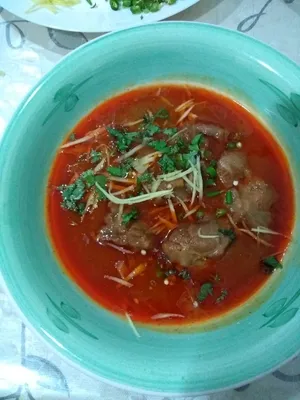
Five or more, or weekend batches. A 5 L cooker lets you braise bone-in meat for a long dish like nihari and lift out the large pieces without wrestling the lid. It also takes more stove space and more time to reach pressure on a weak burner, which is worth knowing if you cook on a small electric coil.
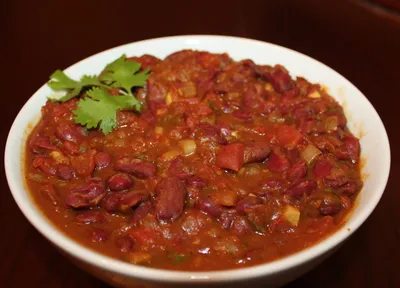
If you cook twice a day for a big household, two smaller cookers can be more flexible than one huge one. You can run a daal and a pot of beans such as rajma at the same time.
Whistles vs weight valves
Most Indian-style stovetop cookers use a weight on the vent that rocks and whistles. Others use a spring valve with a visual pressure indicator and no sound. Both work, and neither is better for flavour.
- Whistle or weight: you can hear progress from another room. The count of whistles is a loose clock, but it depends on your flame, the pot size and how full it is. Two whistles in a 5 L pot is not the same cooking time as two whistles in a 2 L pot.
- Spring valve: quieter and more precise, because you start timing when the indicator rises. It suits people who cook by minutes, like our recipe timers.
If you follow recipes written in whistles, convert once for your own pot. Cook a batch with a timer, note the minutes after full pressure and write it on the lid with masking tape. After that, whistles stop being a guess.
Mistakes that look like faulty cookers
- Over-filling. Foam clogs the vent, the lid sticks, the gasket gets dirty.
- A stretched or hardened gasket. If steam leaks from the rim instead of the vent, the gasket is the culprit. Replace it, because it wears out with use.
- Opening early. Let the pressure drop naturally for lentils or use the manual's release method. Do not force the lid.
- Forgetting the minimum liquid. Every cooker has a minimum, usually printed in the manual. Without it, the pot cannot build steam and food may scorch.
- High flame once pressure is reached. After the first whistle, lower the flame. The pot holds its pressure on low, and a very high flame just burns the bottom.
A quick way to choose
Ask three questions. How many people do you cook for on a weeknight? Do you cook lentils or beans more than twice a week? Do you braise meat in the cooker?
- Under three people, no meat: 2 L.
- Three to four people, lentils often: 3 L.
- Five or more, or any big meat dish: 5 L, ideally with a smaller 2 L as well.
If you are not sure what your family cooks most, open the home-page pantry sandbox at Degchi, look at which dishes your cupboard already covers, and size the cooker around the daal and rice you make most often.