 Degchi
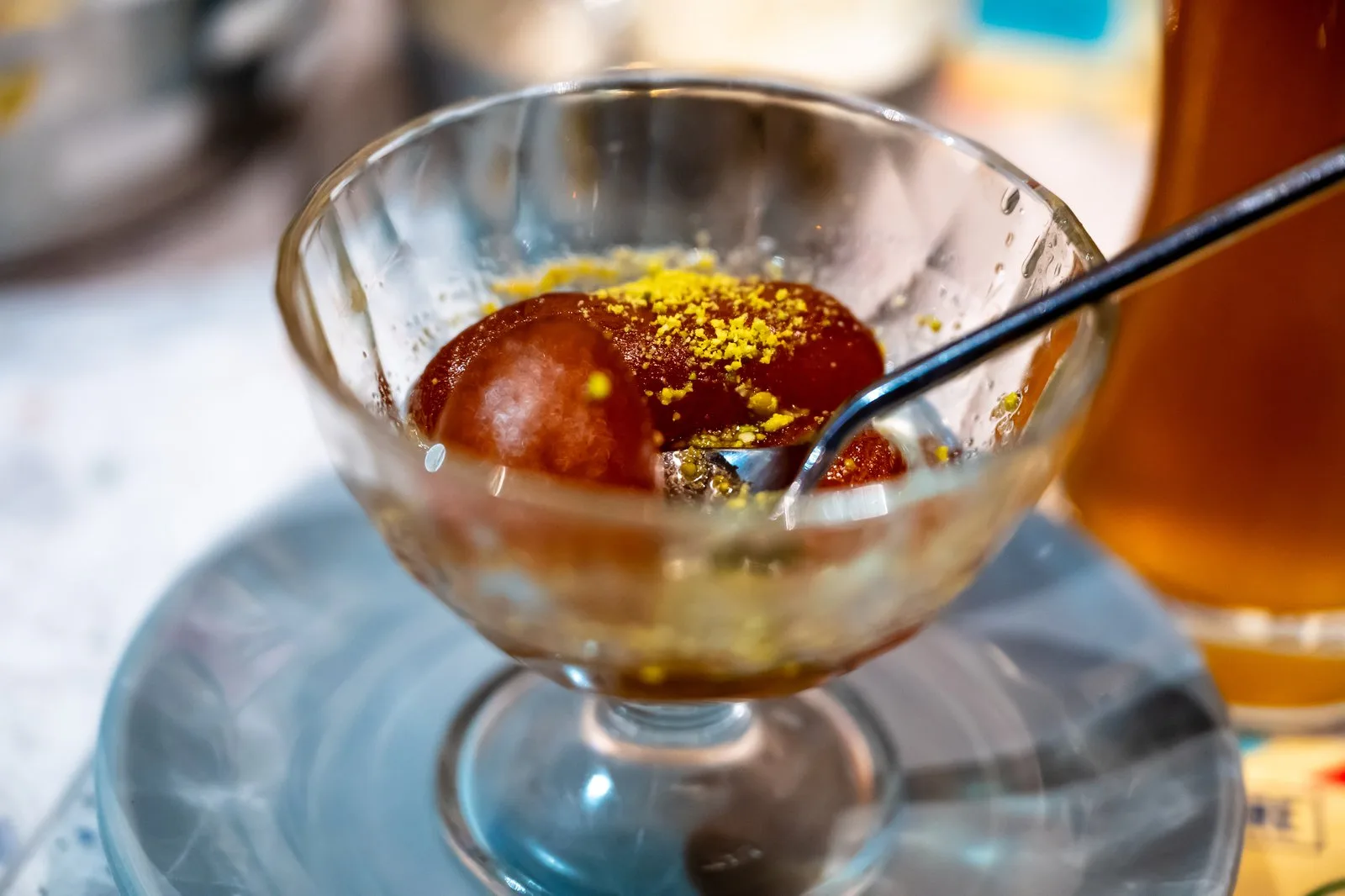
Jalebi at Home: Batter, Syrup and Why They Go Limp
Pretty swirls that go soft in minutes
Jalebi is a spiral of fermented batter, deep fried and dunked in sugar syrup. It should crackle when you bite and release syrup. The home result is often limp, chewy or oily. In every case the problem is one of three things: batter thickness, oil temperature or syrup temperature. Our library lists jalebi. This is the reasoning that makes it work.
Amounts for about 20 jalebi
| Ingredient | Metric | US |
|---|---|---|
| Plain flour (maida) | 200 g | 1 3/4 cups |
| Cornflour | 2 tbsp | 2 tbsp |
| Yogurt | 2 tbsp | 2 tbsp |
| Baking powder or pinch of yeast | 1/2 tsp | 1/2 tsp |
| Warm water | about 250 ml | 1 cup |
| Ghee or oil for frying | 500 ml | 2 cups |
| Sugar for syrup | 300 g | 1 1/2 cups |
| Water for syrup | 200 ml | 3/4 cup |
| Saffron, cardamom, lemon juice | pinch, 2 pods, 1 tsp | same |
Batter: thick ribbon, no lumps
Whisk flour, cornflour and yogurt, then add water gradually until you have a smooth batter that falls from a spoon in a thick ribbon, like pancake batter but a little thicker. A thin batter fries flat and soggy. A thick batter makes dense spirals that are hard to pipe.
Beat well for 3 minutes to develop some stretch. Rest for 6 to 8 hours in a warm place, or overnight, so it ferments lightly and turns sour and bubbly. This gives the honeycomb texture. If you are short of time, use 1/2 tsp baking powder and rest the batter 30 minutes instead; the result is less hollow but acceptable. For fermentation basics and why warmth matters, see why idli batter does not ferment.
Syrup: one-string, warm
Boil sugar and water for 5 to 6 minutes until it is sticky. Press a drop between finger and thumb: it should form a single thread (one-string consistency), not a thick strand. Add a squeeze of lemon to stop crystals forming, plus saffron and cardamom. Keep the syrup warm on very low heat.
The temperature matters. Cold syrup does not soak in and the jalebi stays dry and hard. Boiling syrup makes the spirals soggy at once. Warm to the touch is right, around 60 to 70 C (140 to 160 F).
Frying
Heat ghee or oil in a wide pan to about 170 C (340 F). Pour the batter into a squeeze bottle, a piping bag with a small hole, or a thick plastic bag with the corner snipped. Pipe a spiral about 6 cm (2 1/2 in) wide, making 2 to 3 loops, finishing with a tiny overlap.
Fry for about 1 to 2 minutes on each side until pale golden and crisp. Dark brown means the oil is too hot. Pale and flabby means too cool. Fry 3 to 4 at once, not more.
The dunk
Drain the jalebi for 5 seconds, then put it in the warm syrup for about 20 to 30 seconds per side. Lift out and place on a rack. A long dunk makes them soft; a short one keeps them crisp. For syrup-soaked, soft jalebi, leave them for 2 minutes instead.
Eat within a few hours. They lose crispness in the fridge.
Why the swirls break apart
- Batter too thin: the loops disappear in the oil.
- Oil too cool: the spiral spreads.
- Hole too wide: thick streams do not fry through.
- Spiral too tight: the inner loops stay raw.
Fix list
| Problem | Fix |
|---|---|
| Soft and limp | Syrup too hot or soaked too long; thicker batter |
| Hard and dry | Syrup too cold; fry less |
| Oily | Oil too cool; drain on a rack |
| Crystallised syrup | Add lemon juice; do not stir while boiling |
| Bitter taste | Over-fermented batter; shorten rest |
| Pale | Fry 30 seconds longer |
A timeline
| When | Step |
|---|---|
| Night before | Mix batter, rest overnight |
| 5:00 pm | Make syrup, keep warm |
| 5:20 pm | Heat oil, test with a dribble of batter |
| 5:30 pm | Pipe and fry in batches |
| 6:00 pm | Dunk, drain, serve |
Pair them with rabri or falooda for a traditional sweet, or use gulab jamun syrup tips as both desserts share the syrup stage. Degchi can add maida, saffron and a candy thermometer to your list; see the try-it page.
Related recipes


Related posts

Shopping Smart at the UK Asian Store: A Grocery Budget Guide for Desi Families
The local Asian shop can cut your food bill, but only if you buy the right things in the right sizes. Here is a practical way to shop it.
Meatless Days for a Desi Family: Satisfying Vegetarian Dinners That Fill Everyone Up
South Asian cooking already has a deep vegetarian tradition. One or two meatless dinners a week can be filling, affordable and easy on the grocery bill.
Which Tawa for Roti and Paratha? Iron, Cast Iron or Non-Stick
A tawa is the pan a flatbread lives on. The right one depends on what you cook most: soft rotis, flaky parathas or dosa.
The Make-Ahead Onion-Tomato Masala Base: One Cooking Session, Many Weeknight Dinners
The slowest part of most curries is building the base. Do it once, freeze it in portions, and weeknight cooking gets much quicker.