 Degchi
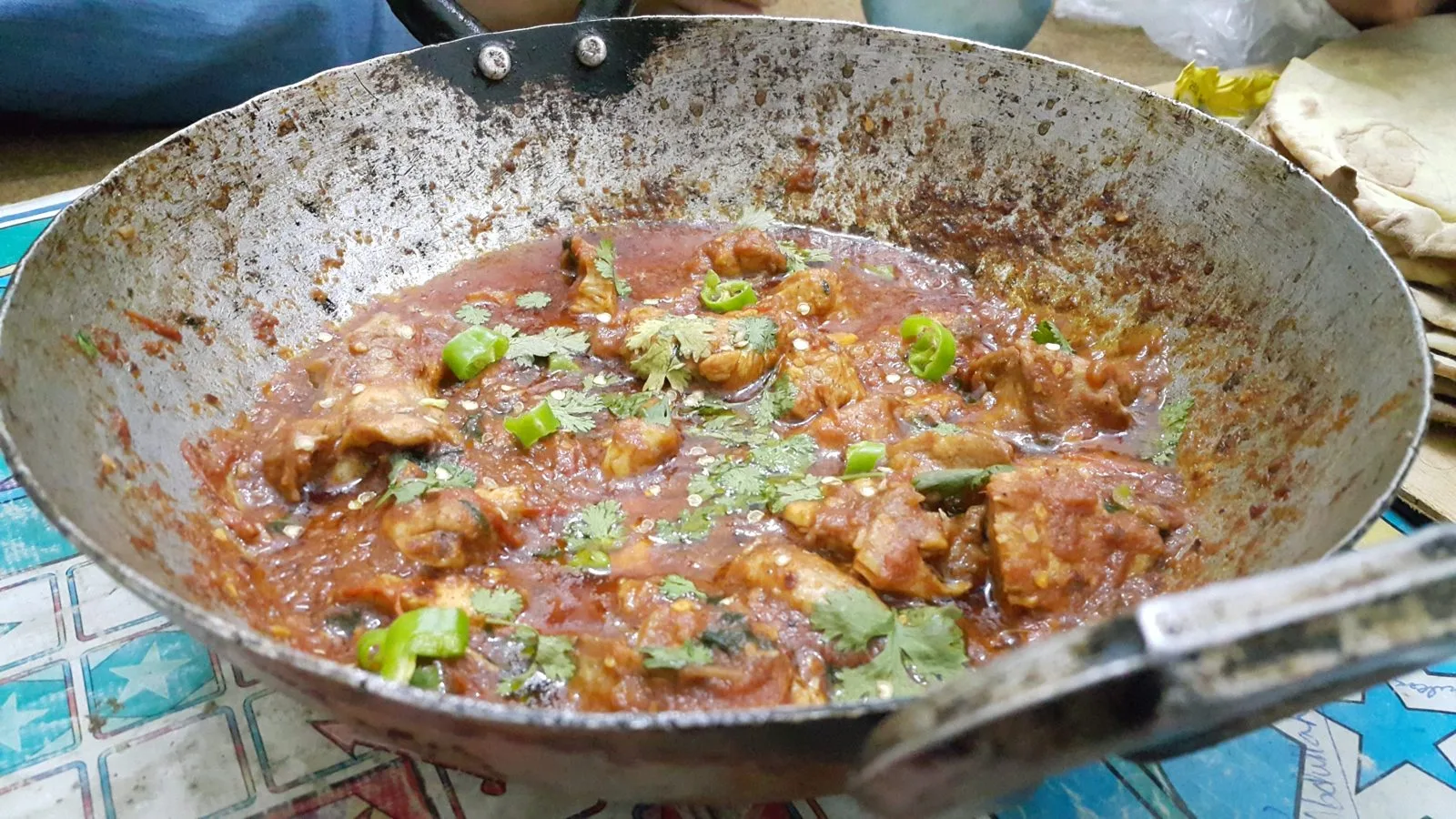
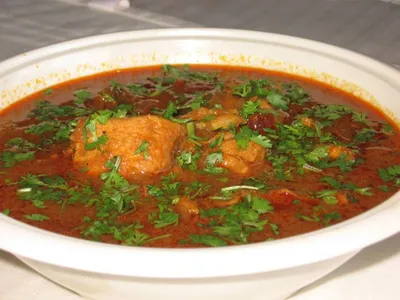
Photo: Kskhh / CC BY-SA 4.0
Why Is My Curry Oily? Oil Separation vs a Split Gravy
There is a slick of orange oil on top of your curry and you are wondering what went wrong. Maybe nothing. Why is my curry oily is one of those questions with two honest answers: either the dish is finished, or the gravy has split. Learn to tell them apart and you will stop fixing things that are not broken.
When oil on top is the goal
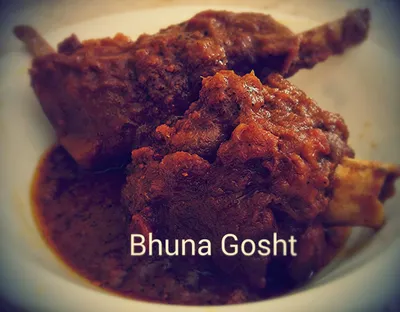
Look at how many recipes in our library say it outright. The chicken karahi cooks the tomato until "oil floats on top", and then dries the gravy over high heat for 3 to 4 minutes until "oil separates at the edges". The bhuna gosht cooks the tomato, yogurt and spices for 10 minutes "until the oil separates", and finishes by dry-roasting until the masala coats the meat and the oil surfaces. Aloo gosht, chana masala and chicken handi all contain the same instruction.
The stage has a name. Bhuna (from the verb bhuno; bhunao is the informal Hinglish form) means frying a masala slowly until its water cooks off. Outside sources agree on what it looks like. A cookware guide on the technique describes oil pulling away from the sides of the pan, the masala going glossy and deeper in colour, and a spluttering pan going quiet as the moisture leaves. A cooking forum thread says the same thing: oil collects at the edges or on top, the paste thickens, and the masala stops tasting raw. One poster adds that oil can separate from a bright red paste without any browning, so do not wait for brown.
That is why recipes use it as a doneness cue and not a minute count. How long it takes depends on the pan, the heat and how watery the tomatoes are. Our karahi tip says pale, watery tomatoes give a thin gravy that takes much longer to dry down. The guide we read puts the reduction at roughly 10 to 20 minutes, depending on quantity and moisture.
What the stage looks like, minute by minute
- Wet and loud. The tomato is bubbling, the pan is steaming, and the oil is mixed into the paste.
- Thickening. The tomato breaks down and the paste starts to clump around your spoon.
- Tight. The paste pulls together and leaves a clean line when you drag the spoon through it.
- Oil appears. Small beads, then a ring of oil at the edges. It smells cooked, not sharp.
- Move on. Add meat, water or yogurt now, depending on the recipe.
If you add water at step 2, you restart the clock. The same guide suggests a splash of hot water after the tomatoes have reduced, then reducing again, to deepen flavour. And if the paste sticks before the oil separates, a spoonful of water loosens it, as one forum poster suggests.
When it is too much oil, not a doneness sign
Recipes in our library use a fair amount of oil. Our karahi has 5 tablespoons for 800 g of chicken and 4 servings, our bhuna gosht 4 tablespoons for 750 g of mutton, handi 3 tablespoons for 750 g of chicken, and aloo gosht 5 tablespoons for 600 g of mutton plus 300 g of potato. If your pool of oil looks bigger than that after cooking, you may have used more, or the dish was cooked in a wide pan with a lot of surface.
Fixes, in order of effort:
- Spoon it off. Tilt the pot and skim the surface with a ladle. Keep a spoonful if you like the shine.
- Blot. Lay a piece of kitchen paper on the surface for a second and lift it.
- Chill and lift. Refrigerate the curry and remove the solid fat layer. This works for leftovers.
- Stir in a little hot water. Over low heat, one tablespoon at a time. It loosens the masala and brings the oil and gravy back together; our bhuna gosht notes that a splash of water while roasting helps loosen the stuck masala without thinning the gravy.
- Next time, use less. Start with one tablespoon less oil. You can always add more at the end.
When the gravy has split
A split yogurt gravy is a different problem. The oil sits on top, but so do little grains and curds, and the sauce looks grainy and watery underneath. That is the yogurt proteins clumping, not oil leaving the masala.
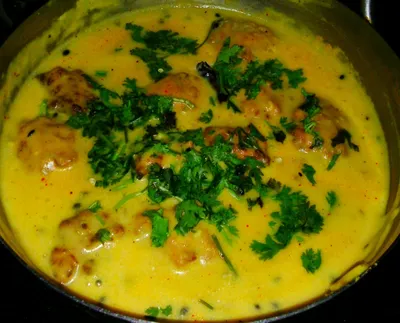
Our library has the two cautions that matter most. The chicken handi tip says to add the yogurt off direct high heat and stir constantly so it does not split. The kadhi recipe says to keep stirring while the yogurt mixture comes to a boil, since stopping even briefly can split it.
Other cooks recommend full-fat yogurt, adding the yogurt gradually, and bringing it up to the pot's temperature by stirring in a spoonful of hot gravy first. Those tips appear repeatedly in web results, but the pages were low-quality, and some cooks say they did not always work. Treat them as helpful habits, not guarantees.
For the kadhi case in detail, see our post on kadhi pakora without lumps or splitting.
If it has already split:
- Take it off the heat.
- Stir gently and see whether it comes back together.
- If the curds are small, a short pulse with an immersion blender will often smooth them; the flavour stays.
- If they are large and the sauce is thin, accept a rustic texture and serve over rice.
How to tell which one you have
| Look | Taste | Probably |
|---|---|---|
| Oil in a ring at the edge, masala thick and glossy | Rich, cooked | Done. Move on. |
| Oil on top, masala thin and pale | Raw, sharp | Not done, simmer longer |
| Oil on top plus grainy white bits | Sour, thin | Split yogurt |
| Oily and heavy, masala dark | Greasy | Too much oil, skim it |
Mistakes that cause oil trouble
- Adding yogurt straight from the fridge into a boiling pan.
- Turning up the heat to rush the bhuna and scorching the spices. The guide we read warns that spices burn if they go in before the moisture has cooked down.
- Using a thin pan that sticks and burns.
- Crowding the pot so steam traps the moisture.
Our onion-tomato masala base post shows how to do this stage once, in bulk, and freeze it. Our ghee vs oil guide covers which fat to start with.
Degchi can match recipes to what is in your pantry, so you can try the dishes above without a special shop. Start at degchi.matrixinn.net/#try.
Related recipes
Related posts
How to Brown Onions for Curry: Golden, Not Burnt
Pale onions give a thin, raw-tasting gravy and scorched ones turn it bitter. Here is how to brown onions for curry, with a colour guide and the fixes for each mistake.
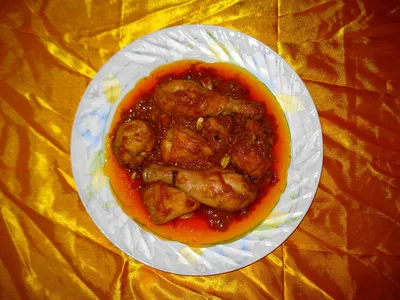
Why Does My Curry Curdle? Yogurt in Qorma and Korma
Grainy, separated yogurt gravy is almost always a heat or timing problem. Here is how to stop it in qorma and korma and what to do when it has already happened.
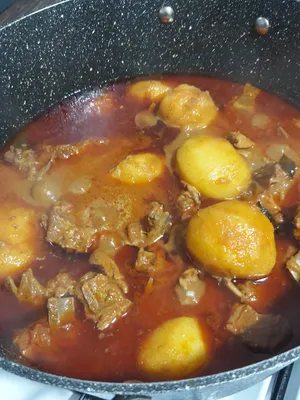
Why Is My Curry Too Sour? Tomato, Yogurt and Fixes
Sour curry usually traces back to one of four ingredients. Work out which one went in heavy, fix the pot tonight, and change one step next time.
How to Fix a Salty Curry (and a Sour One)
Dilute, add bulk, add acid or fat. The potato trick barely works. Here is a symptom-to-fix table for salty, sour and harsh curries, with real recipe examples.