 Degchi
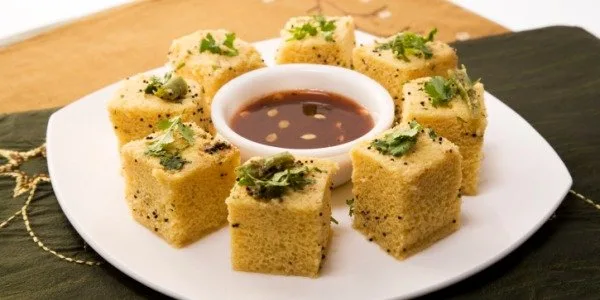
Photo: Samirluhar99 / CC BY-SA 4.0
Steaming Without a Steamer: Idli, Dhokla, Pitha in a Pot
The only three things a steamer does
A steamer does three jobs. It holds boiling water, it keeps the food above that water, and it traps the steam under a lid. Any kitchen can do all three. If you have been told you need an idli stand or a dedicated steamer to make idli, dhokla or pitha, you do not. You need a deep pot with a lid, something to stand the tray on, and a way to stop drips falling on the food.
Our recipe library has three dishes that depend on steam: idli with sambar, dhokla and Bangladeshi bhapa pitha. Here is how to manage each in an ordinary pot, with the timings written into those recipes.
Build the setup first
- Choose a pot wide enough that your tray or plate sits inside without touching the sides, with a lid that closes properly. A pressure cooker pot works too if you leave the weight or whistle off, which is how many Indian kitchens steam idli.
- Make a stand. Options that work: a steel trivet, a metal cooling rack, three or four balls of foil, a small upturned steel bowl, or a heatproof ring cut from a washed tin can with both ends removed.
- Add water to a depth of about 3 cm (1 inch). It must stay below the base of whatever sits on the stand, because water touching the food makes it soggy.
- Wrap the lid in a clean tea towel, tied up on top away from the flame. This catches condensation so it does not drip onto the surface. Skip this step with idli moulds, which are usually fine, but do it for dhokla, where drips leave pits.
- Bring it to a full boil before the food goes in. Our idli recipe tips say the steamer should already be producing steam when the moulds go in.
Idli: small moulds, steady heat
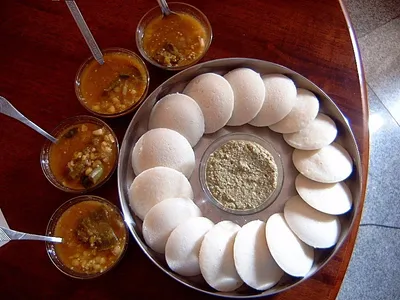
Our idli batter is rice and whole urad soaked 6 hours, ground, salted once by hand and fermented overnight. The steaming instruction in the recipe is 12 minutes over a steady rolling boil, with water below the stand, until a toothpick comes out clean. Do not open the lid during the first 10 minutes.
If you have no idli stand, use small greased steel katori bowls or a muffin tin that fits in the pot. Fill each cup about three-quarters, because the batter rises. If using bowls, they need a bit longer than idli moulds because the batter is thicker in the middle, so test with a toothpick at 12 minutes and give it a few more if it comes out wet.
After switching off, wait 2 to 3 minutes before unmoulding, as the recipe says. A wet spoon or a knife dipped in water loosens each one. If your idlis come out hard or flat, the problem is more likely the batter or the heat than the equipment, and our post on why idlis turn hard, flat or dense covers that.
Dhokla: one shallow tray
Dhokla needs a shallow, flat-bottomed container: a cake tin, a steel thali with a rim, or a heatproof glass dish. Our recipe whisks 250 g (2 cups) of gram flour with 100 g (about 0.4 cup) of yogurt, a tablespoon of sugar, turmeric, salt and water into a lump-free batter and rests it for 20 minutes.
The important bit is the timing. Baking powder goes in at the last second, and the batter goes straight into the greased tray, where it froths. Waiting too long loses the rise, which is the recipe tip.
Steam for 15 minutes until a toothpick comes out clean. Cool slightly, cut into squares and pour the mustard-seed, green chilli and curry-leaf tempering over the top. Eat at room temperature with green chutney.
Make sure the tray is level on the stand, or the dhokla will set slanted. Check the water about halfway; a 15-minute steam in a small pot can use a fair amount of water, so keep a kettle of hot water ready to top up. Never add cold water, because it stops the boil.
Bhapa pitha: the cloth-and-bowl method
This is the one most people assume needs special equipment. The traditional pitha steamer is a small pot with a steamer ring, but the method in our recipe works with a small bowl and thin cloth.
The flour is the make-or-break step. Rub 300 g (2.4 cups) of rice flour with a pinch of salt and sprinkle in water gradually until it is damp and crumbly, not a dough. Push it through a sieve. The tip in our recipe: squeeze a handful. It should hold when pressed but crumble when poked. If it stays loose, add a few drops of water; if it feels like dough, add a little dry flour.
To fill: half-fill a small bowl with flour, put a spoon of grated coconut and jaggery in the centre, cover with more flour and level the top. Tie a thin cloth over the bowl, invert it over a pot of boiling water, and steam 8 to 10 minutes until the pitha holds together. Unmould onto a plate and serve warm.
If you have no steamer ring, place the inverted bowl on a ring of foil or rest the cloth-covered rim on the pot's edge so the mouth of the bowl is over the steam. Keep the water below the cloth.
Troubleshooting sheet
| What you see | Likely cause | Fix |
|---|---|---|
| Soggy tops | Condensation dripping | Wrap the lid in a tea towel |
| Sticky bottom | Water touching the tray | Lower the water or raise the stand |
| Dense, no rise | Lid opened early, or the water was not boiling | Wait for full steam, leave it shut for the first 10 minutes |
| Dry, crumbly pitha | Flour too dry | Rub in a few drops of water and re-sieve |
| Pot boiled dry | Not enough water | Check halfway and top up with hot water |
One short checklist before you start
Pot with lid, stand, 3 cm of water, tea towel, toothpick, greased tray, kettle of hot water. Degchi's recipe pages have a timer for each step, so the 12-, 15- and 8-to-10-minute figures above can run in the app; try the pantry sandbox to see which of these you can already make with what is at home.
Related recipes

Related posts
Kitchen Scale or Measuring Cups for Desi Recipes?
A US cup of rice weighs about the same as a cup of lentils, but a cup of flour is far lighter. Here are the figures from our recipes, and when a scale is worth buying.

Pressure Cooker vs Open Pot: Real Cooking Times
A pressure cooker halves some jobs and does nothing for others. Side-by-side times for mutton, chickpeas, kidney beans and lentils, and when to leave the lid off.