 Degchi
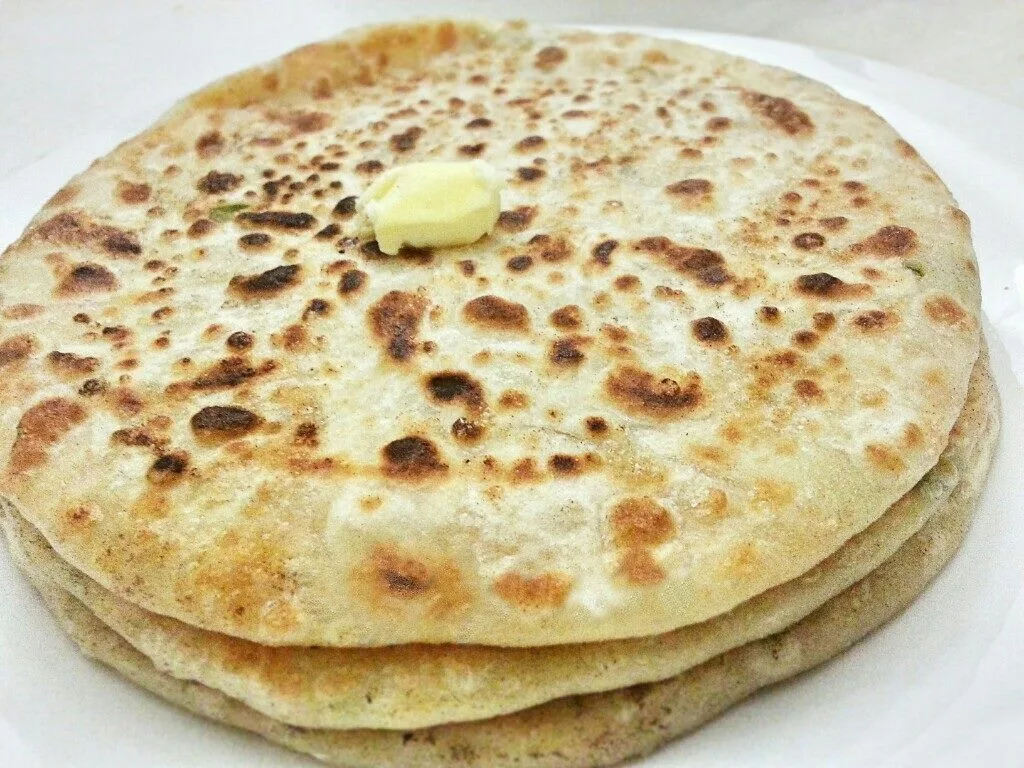
Photo: Affaf Ali / CC BY-SA 4.0
Kitchen Scale or Measuring Cups for Desi Recipes?
The cup that changes with the ingredient
A recipe says "2 cups of flour". You scoop it, level it, and the dough comes out stiff. Your friend scoops the same amount and her dough is soft. Neither of you did anything wrong. Scooping packs flour, and a cup of flour can weigh quite a lot more or less depending on how you fill it.
That is the reason our recipe pages show metric and US amounts side by side, and why this post puts a kitchen scale ahead of measuring cups for most desi cooking. Below are the conversions our recipe library actually uses, so you can see what to expect.
What our recipes use, ingredient by ingredient
These pairs come from the amounts written in our own recipes. They are rounded and the recipe pages are the reference, so use them as rough guides, not lab values.
| Ingredient | Metric in our recipes | US amount in the same recipe | Rough grams per US cup |
|---|---|---|---|
| Whole-wheat flour (atta) | 250 g | 2 cups | about 125 g |
| Refined flour (maida) | 150 g | about 1.2 cups | about 125 g |
| Gram flour (besan) | 250 g | 2 cups | about 125 g |
| Raw rice (chawal) | 450 g | 2.25 cups | about 200 g |
| Red lentils (masoor) | 200 g | 1 cup | about 200 g |
| Whole urad (mash) | 200 g | 1 cup | about 200 g |
| Sugar | 200 g | 1 cup | about 200 g |
| Yogurt (dahi) | 100 g | about 0.4 cup | about 250 g |
| Oil | 60 ml | 0.25 cup | about 240 ml |
The pattern is the point. Flours are light, so a cup holds about 125 g. Grains, lentils and sugar are denser, so a cup holds about 200 g. A cup of rice weighs roughly 60 per cent more than a cup of atta. If a recipe uses grams and you convert by guessing "a cup is a cup", your biryani gets too little rice or your dough too much flour.
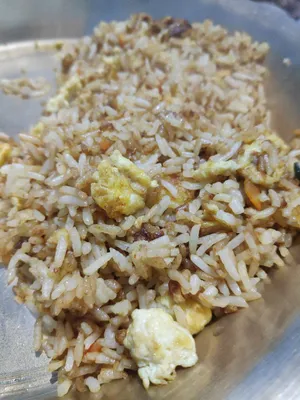
Cooked rice is different again. Our egg fried rice uses 300 g (2 cups) of cooked rice, which is about 150 g per cup, because cooked grains hold air and water. Do not mix up raw and cooked amounts.
Why the scale wins for atta and besan
Dough is where the scale earns its keep. Take our aloo paratha: 300 g (2.5 cups) of flour makes 3 servings, with 400 g (0.9 lb) of potato. A heaped cup can be 140 g or more; a lightly spooned cup, closer to 115 g. Over 2.5 cups that gap adds up to more than a hand of flour, and the dough texture changes with it.
The same is true of pakoray batter: 250 g (2 cups) of gram flour needs water added gradually until the batter is thick and lump-free, and a scale tells you the starting point so the water is not guesswork. Batters and doughs are the dishes that punish bad measuring. Curries do not. Nobody notices 20 g of onion.
How to measure cups properly, if you only have cups
If you are working in cups, do it the same way every time:
- Fluff the flour in its container with a spoon.
- Spoon it lightly into the cup, without pressing or tapping.
- Level the top with a knife.
- For sticky things like jaggery or yogurt, use a dry-measure cup and a rubber spatula to scrape out.
Do not scoop with the cup itself, which packs the flour.
For liquids, use a clear measuring jug on a flat surface and read it at eye level. A US cup is about 240 ml, a tablespoon about 15 ml and a teaspoon about 5 ml. Spoon sizes vary a little by country (an Australian tablespoon is larger, for example), so if a recipe came from elsewhere, check its source.
The katori question
Many Indian and Pakistani cooks measure by katori, the small steel bowl, or by the mugs and glasses they own. That is a perfectly good method for a family kitchen as long as you always use the same one. A katori is not a standard measure, though, and sizes vary between sets, so we do not quote exact conversions for it. If you cook by katori, measure its capacity once with water in a jug and write it on the inside of a cupboard door.
What to buy
You do not need an expensive scale. Features worth having:
- A flat platform you can put a bowl on, with a tare button that zeros the bowl's weight.
- A grams setting, and a display that shows to 1 g, and ideally an ounces setting for US recipes.
- A capacity of at least 3 kg (about 6.6 lb) so a mixing bowl of dough does not overload it.
- Batteries you can replace, and a surface you can wipe clean.
Plain measuring spoons are also worth having for spices, because a teaspoon from the cutlery drawer varies a lot.
A one-bowl method for dough
With a scale, a paratha dough is one bowl and no scooping: place the bowl, press tare, add 300 g of atta, press tare again, add the water in portions until the dough is soft. Our recipes tell you to rest the dough (15 minutes for the paratha), then divide into balls. You can see on the page when the weight is correct, by how the dough feels, and the scale gives you a repeatable starting point.
Short reference for the next shop
- Flours: about 125 g per US cup
- Rice, lentils, sugar: about 200 g per US cup
- Yogurt: about 250 g per US cup
- A US cup of liquid: about 240 ml
- Our recipe pages show both unit systems, and the servings scaler on each page adjusts the amounts for you, which saves the arithmetic. You can see how it works in the try-out.
Related recipes
Related posts
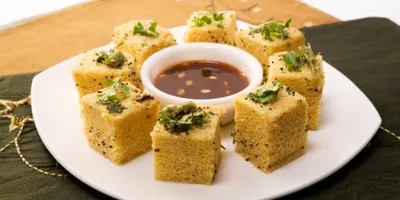
Steaming Without a Steamer: Idli, Dhokla, Pitha in a Pot
You do not need a special steamer for idli, dhokla or Bengali bhapa pitha. A deep pot, something to lift the tray above the water and a tea towel is enough.
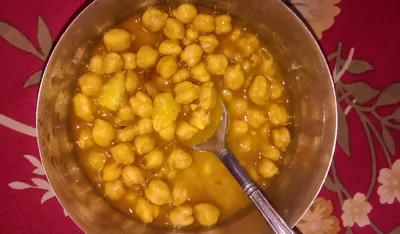
Pressure Cooker vs Open Pot: Real Cooking Times
A pressure cooker halves some jobs and does nothing for others. Side-by-side times for mutton, chickpeas, kidney beans and lentils, and when to leave the lid off.