 Degchi
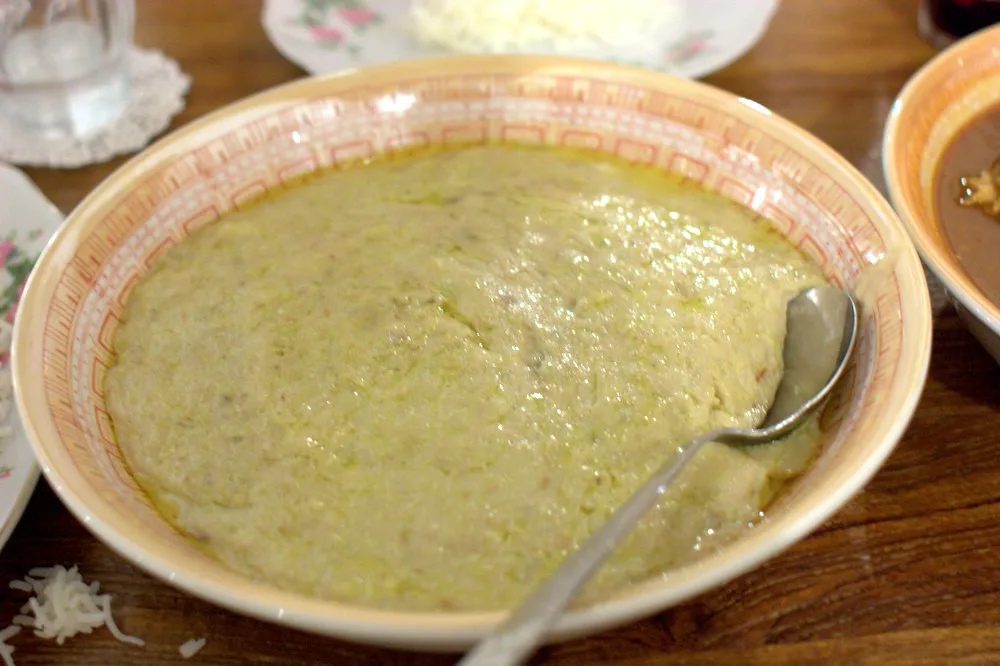
Photo: Krista / CC BY 4.0
Harees vs Jareesh: What's the Difference?
Ask in a Riyadh kitchen and a Dubai one what separates harees from jareesh, and you may get two different answers. That is not carelessness. The names overlap, and the sources we opened do not agree on a clean line. This post is about harees vs jareesh as far as the evidence allows, plus what actually changes in the pot.
What harees is made of
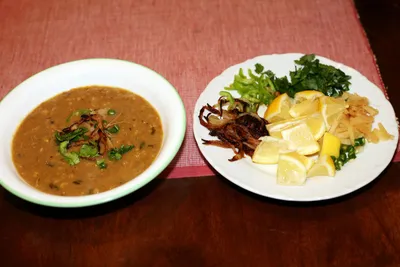
The short answer to "what is harees made of": wheat, meat, salt and fat. Saudipedia describes it as two main ingredients, ground wheat and mashed meat, cooked for one to two hours to a firm consistency, with ghee added when it is served. Wikipedia describes the dish as boiled, cracked or coarsely ground cracked wheat or bulgur, with a consistency anywhere between porridge and gruel.
Our harees recipe uses 300 g (1.5 cups) of whole wheat soaked overnight, 500 g (1.1 lb) of bone-in meat, salt and 4 tbsp of ghee. It simmers for about 2 hours, then you beat it for about 10 minutes until it is smooth and stretchy. For history and the haleem connection, see our harees explainer.
What jareesh is made of
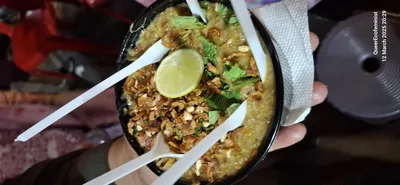
Jareesh is also wheat-based. Saudipedia says it is made from coarsely ground wheat, not finely minced, and that in the central region whole grains are broken into pieces with special equipment into coarse or minced forms. Cooked, it ends up like a thick aseeda (porridge). It also lists traditions that vary by region: in Tabuk, jareesh may be cooked with milk and a little wild ghee, with meat and milk, or with tomatoes.
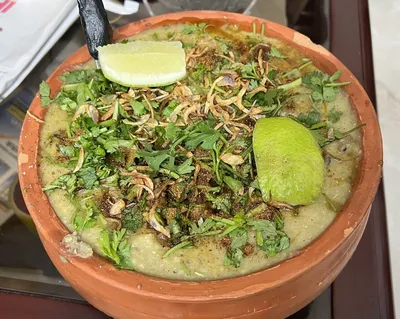
Our jareesh recipe serves 4 and is lighter on time: 300 g (1.5 cups) of cracked wheat soaked only 30 minutes, 400 g (0.9 lb) of meat, 2 onions, a dried lime (loomi), half a teaspoon of turmeric, 3 tbsp ghee and 1.5 litres of water. Yogurt, 150 g (0.6 cup), goes on top.
Why sources disagree
Here is the honest part. One English-language encyclopedia article lists "jareesh" as one of several names for harees, and describes the dish itself as made from cracked wheat. Saudipedia treats the two on separate pages and says harees has a firmer consistency that resembles jareesh. A recipe site we saw through search says harees uses whole grains and jareesh uses pre-crushed wheat, but we could not confirm that on a stronger source, so we are not giving it to you as fact.
What we can say: the names are used both ways, depending on country, family and region. So if one cook insists they are different dishes and another says they are the same, both may be describing their own kitchen accurately.
Side by side in our recipes
| Harees (our recipe) | Jareesh (our recipe) | |
|---|---|---|
| Wheat | 300 g whole wheat | 300 g cracked wheat |
| Soak | Overnight, at least 8 hours | 30 minutes |
| Meat | 500 g bone-in | 400 g |
| Aromatics | None; salt only | 2 onions, turmeric, dried lime |
| Cooking time | About 2 hours simmer (up to 3 with tough meat) | About 8 minutes browning, 50 simmering the meat, then 30 with the wheat |
| Texture goal | Beaten smooth, stretchy, falls in ribbons | Thick, mashed lightly, porridge-like |
| Finish | Melted ghee well, cinnamon and sugar or salt and pepper | Yogurt swirl |
| Serves | 4 | 4 |
Notice that these are two recipes in our library, not a ruling on how every cook makes them. Cracked wheat is already broken up, which is probably why the jareesh recipe needs only a short soak.
If you only want one: how to choose
Use this short decision list:
- You have an overnight and want the smooth, stretchy bowl with a ghee well: harees.
- You have about an hour and a half and want a spiced, onion-and-lime porridge with yogurt: jareesh.
- You only have quick oats: our harees recipe has a shortcut using shredded chicken and 1 cup of quick oats in about 30 minutes. It is a stand-in, not either dish.
- You want more spice and lentils: that is haleem; see our Hyderabadi haleem and chicken haleem.
Two mistakes with both
- Skipping the beating or mash. Harees needs hard beating for the ribbon texture. Jareesh needs only light mashing; do not over-work it into harees.
- Salting early and tasting never. Salt shows up mostly toward the end of long cooks, so taste then adjust.
Serving, and a note on Saudipedia's detail
Saudipedia notes that harees is typically served without side dishes and is classed as a winter dish; central-region jareesh is traditionally a wedding-morning breakfast, and Tabuk jareesh is common in Ramadan. We cite these as descriptions of tradition, not as rules for your table. If you want something fresh to cut the richness, plain yogurt (for jareesh) or a sharp pickle works, as a suggestion rather than a tradition.
A pantry app can help here: if you mark cracked wheat, ghee and meat as "have" in Degchi at degchi.matrixinn.net/#try, the app tells you which of the two dishes you can start tonight.
Planning sheet: harees or jareesh this week
| Day | Do this |
|---|---|
| Night before | Harees: soak 300 g wheat overnight |
| Cook day | Harees: 2 hours simmer, 10 minutes beating |
| Cook day | Jareesh: soak 30 minutes, then about 90 minutes of cooking |
| Next day | Reheat with a splash of hot water, stirring often |
Related recipes
Related posts
What to Do With Leftover Kabsa or Machboos
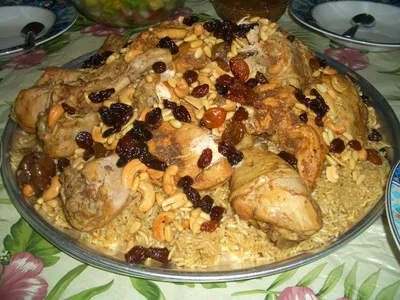
A pot of kabsa or machboos almost always makes more than a family eats. Here is how to store it safely and turn the leftovers into a second dinner that does not feel like leftovers.
How to Cook Mulukhiyah: Chicken, Garlic Tarqa, Rice
Mulukhiyah is a green, garlicky leaf stew ladled over rice. Here is the method from our recipe, how Egyptian and Levantine cooks differ, and what to do about the texture.
Machboos vs Kabsa: What Is the Difference?
They look alike, taste alike and are often used as synonyms. Here is what actually separates machboos from kabsa, what sources disagree on, and the rice ratio that works for both.
Khubz Tannour at Home Without a Tannour Oven
Khubz tannour is baked on the wall of a clay oven, but a hot home oven gets you close. Here is the dough, the timing and the heat, from our recipe, with honest limits.