 Degchi
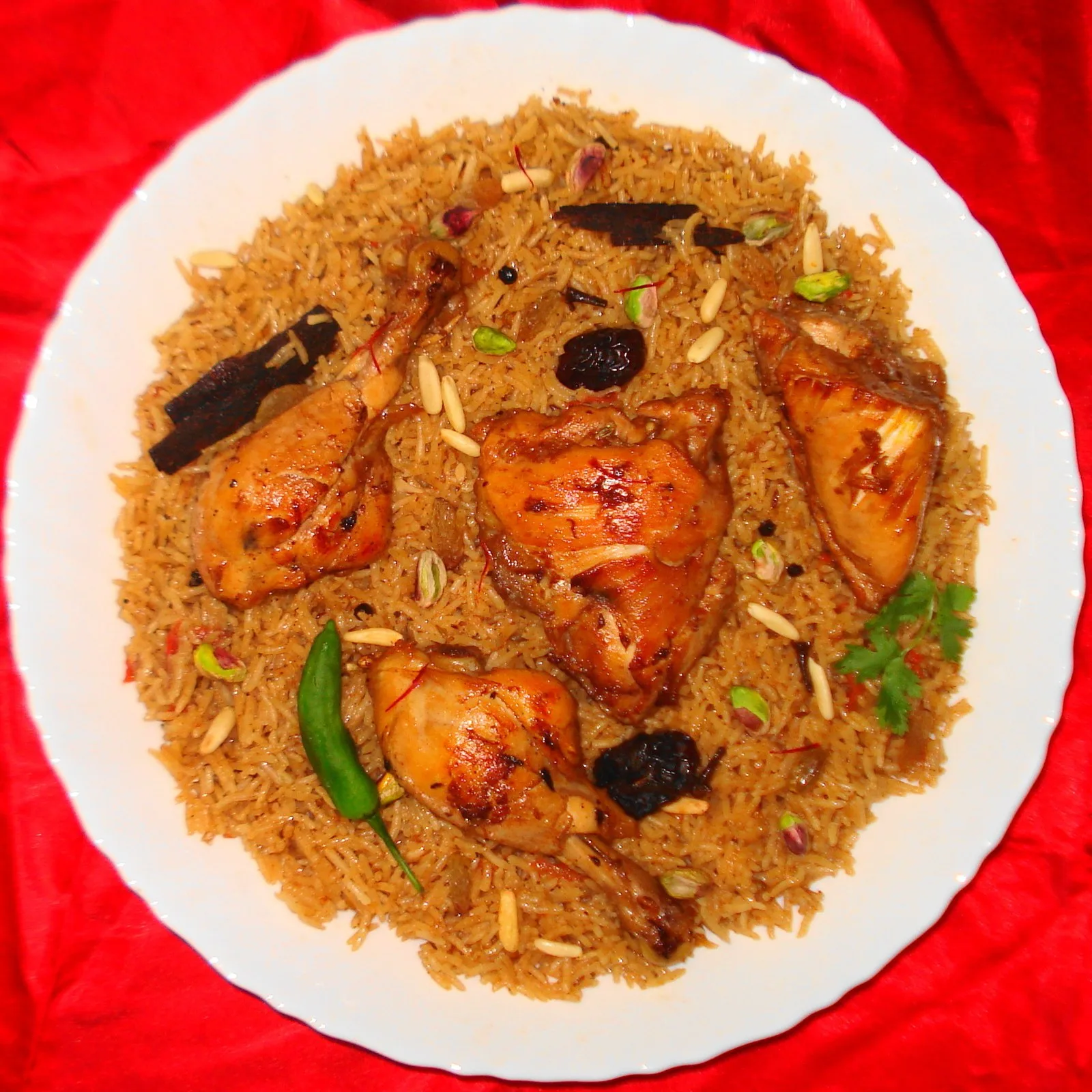
Machboos vs Kabsa: What Is the Difference?
Short answer
Machboos and kabsa are two names for closely related spiced rice and meat dishes from the Arabian Gulf. Kabsa is the name you hear in Saudi Arabia. Machboos (also spelled majboos or machbous) is the name used in the UAE, Bahrain, Kuwait and Qatar. Cooks and writers argue about the finer points, so think of the difference as a tendency, not a rule.
If you only want to cook one of them tonight, the method is almost the same. We cover both below, with real amounts from our own recipes.
What they share
Both dishes follow the same pattern. You brown onion in ghee or oil, add garlic, ginger, tomato and a warm spice mix called baharat, then simmer meat in water with dried lime (loomi) until tender. The meat comes out of the pot, the broth is strained, and basmati rice cooks in that broth. The meat goes back on top, the lid goes on tight, and the rice steams until done.
Many Gulf cooks finish with fried raisins and nuts. A tomato and chilli sauce, often called daqoos, sits on the side.
Where the differences show up
Sources describe a few tendencies, and they do not always agree with each other.
- Name and place. Kabsa is the Saudi name. Machboos is used across the smaller Gulf states. Wikipedia credits kabsa to Saudi Arabia or Yemen and flags the Saudi claim as needing a better source, so the origin is genuinely contested.
- Colour. Several cooking sites say kabsa often looks lighter and golden from saffron or turmeric, while machboos can be deeper and browner. One source attributes the brown colour to caramelised sugar. Other sources do not mention it, and many home cooks skip it.
- Dried lime. Machboos is often described as tangier, with more loomi. Where loomi itself comes from is also unsettled: one source says Oman, another says Persia.
- Moisture. Machboos tends to be a little moister. Kabsa is often described as a touch drier. Our own recipe notes say the same thing, with the same caveat: tendency, not rule.
- Spice blend. Each country and each family has its own baharat. This is where most real variation lives.
Several of the sources we checked are recipe blogs rather than food historians. Treat the origin stories as uncertain.
The two recipes side by side
Both of our recipes serve 4 and use the same rice: 2 cups (400 g) of basmati. Both need 20 minutes of prep.
| Chicken machboos | Lamb kabsa | |
|---|---|---|
| Meat | 2.2 lb (1 kg) chicken, in 8 pieces | 2.2 lb (1 kg) lamb, in large pieces |
| Cook time | 45 minutes | 70 minutes |
| Tomato | 2 tomatoes + 2 tbsp paste | 3 tomatoes + 2 tbsp paste |
| Dried lime | 2, pierced with a fork | 2 |
| Baharat | 2 tsp, plus 1/2 tsp turmeric | 1 tbsp |
| Garlic | 4 cloves | 5 cloves |
| Fat | 3 tbsp ghee | 3 tbsp ghee |
| Extras | Fried raisins and almonds (2 tbsp) | Saffron pinch, nuts and raisins (3 tbsp) |
Notice that we are comparing a chicken dish with a lamb dish, so the cook times differ because of the meat, not the name. We also have a fish machboos if you want to try that.
The rice ratio that works for both
This is the part most people get wrong. Our recipes use about 1 part rice to 1.5 parts strained broth by volume:
- 2 cups (400 g) basmati
- 3 cups (700 ml) strained broth
Measure the broth after the meat is cooked and lifted out. If you are short, top up with water. If you have too much, boil it down. Wash the rice until the water runs fairly clear, and soak it for 20 minutes before draining.
Once the rice is in, bring the pot to a boil, lower the heat to the minimum, put the meat on top, cover tightly and do not lift the lid. When the rice is tender, switch off the heat and rest it covered for 5 minutes. Straining the broth is what gives you fluffier rice.
If the rice is still firm
Sprinkle 3 to 4 tablespoons of hot water over the rice, cover, and give it 5 more minutes. It works because the grains finish in steam.
Dried lime tips
Pierce the dried lime with a fork before it goes in, so the sourness gets into the broth. Taste before adding more salt, because both the lime and the reduced broth add flavour of their own. Middle Eastern grocers and online shops usually carry loomi. We have not tested fresh lemon as a swap, so we cannot promise the same result.
Which should you cook?
If your family likes a tangy, soft, saucy rice, start with machboos. If you prefer drier rice with distinct grains and a saffron note, try the kabsa. Either way, one pot feeds a table, and the method will feel familiar the second time.
Switching between 400 g and 2 cups
Amounts in the recipes show in metric and US with a servings scaler, so you can switch between 400 g and 2 cups without doing the maths. The app is free and in closed beta. Join the beta if you would like to try it, or browse the full recipe library first.
Related recipes
Related posts
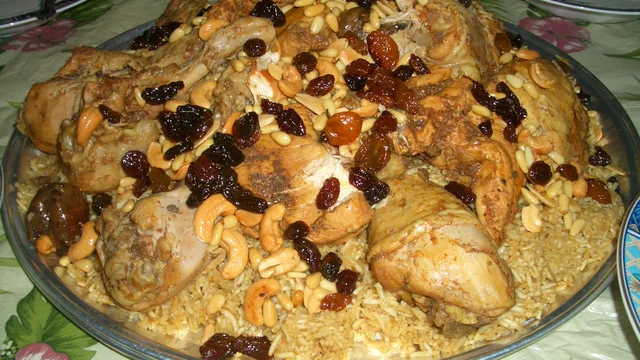
Gulf Home Favourites: Kabsa, Machboos and Mandi Explained
Kabsa, machboos and mandi all land on the table looking similar — spiced rice under a whole piece of meat — but they come from different places and are built differently. Here's what genuinely separates them.
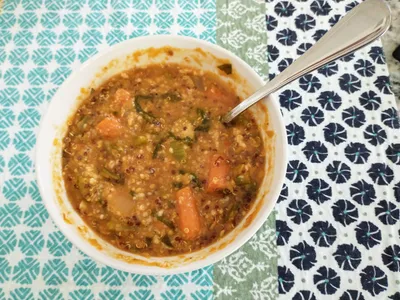
A Simple Ramadan Meal Plan for a Busy Family (Gulf and UK)
Ramadan cooking goes wrong when every night is a banquet. Here is a calm weekly rhythm for iftar and suhoor, built from dishes you can actually cook, with a prep day that does most of the work.
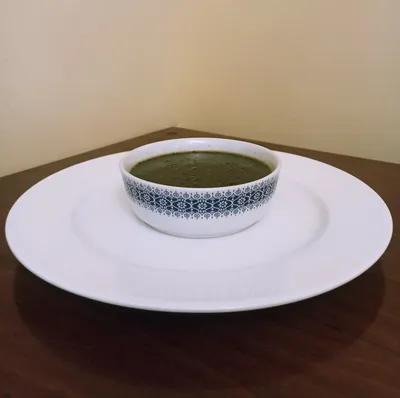
How to Cook Mulukhiyah: Chicken, Garlic Tarqa, Rice
Mulukhiyah is a green, garlicky leaf stew ladled over rice. Here is the method from our recipe, how Egyptian and Levantine cooks differ, and what to do about the texture.
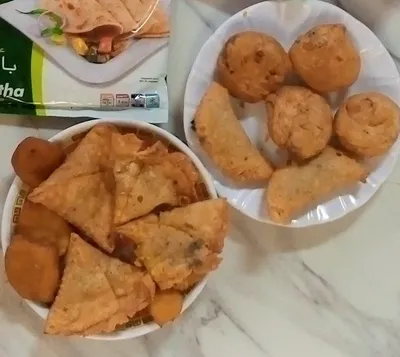
What Is Sambousek? Fillings, Frying and How to Make It
Sambousek is the Gulf and Levantine pastry that looks like a samosa and isn't quite one. What it is, what goes inside, whether to fry or bake, and our meat version.