 Degchi
Chai Colour Guide: What Amber, Red-Brown and Pink Mean
Look at the cup before you taste it
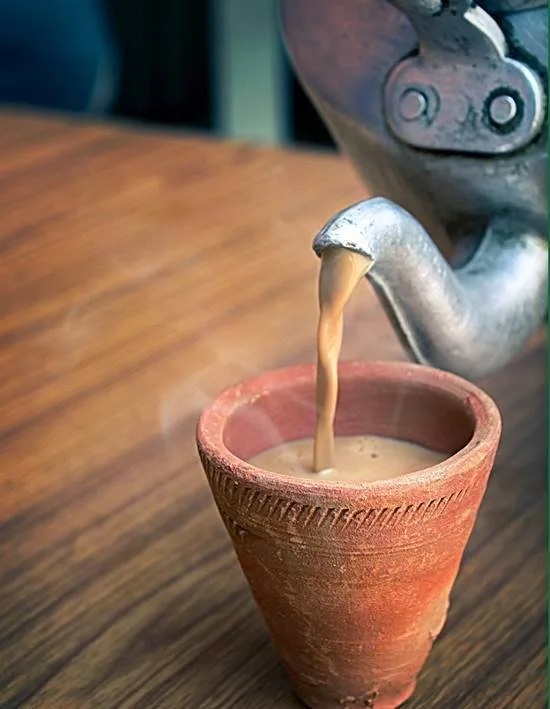
Pour a cup of chai into a white mug and you can tell a lot in three seconds. Deep amber and glossy points to a karak. A warm reddish-brown with a thin cream line is a doodh patti. Pale beige means the tea was timid. Salmon pink belongs to Kashmiri noon chai. A grey-brown cup with an oily shine usually means something went wrong.
Our recipes describe colour in specific words, and those words are good targets. This guide lines them up so you can judge a pot without a timer. If you are chasing the pink cup in particular, the full method is in Kashmiri pink chai (noon chai). Here we compare colours across the styles you already make.
Four colours, four recipes
| Cup | Colour target in our recipe | When to check | Main driver |
|---|---|---|---|
| Karak chai | water "deep red-brown" before milk; final cup "deep amber and rich" | after 3 minutes of tea in water | tea boiled hard in water first |
| Doodh patti | "deep reddish-brown" | after about 4 minutes of tea in milk | tea simmered directly in milk |
| Masala chai | water "a deep reddish brown" before milk | after 2 minutes of tea in the spiced water | spices first, then tea, then milk |
| Kashmiri noon chai | salmon pink | after a long boil and aeration | tea leaf type, baking soda, oxygen |
The first three share a trick. They all show you the colour at a mid-point and then ask you to wait for it. That is deliberate: the colour of the tea liquor, before milk, is what you are building. Milk afterwards only lightens and rounds it.
Amber: the karak look
The karak recipe boils the water with cardamom for 2 minutes, adds tea and boils hard for 3 minutes until the water turns deep red-brown, then adds milk and sugar and boils for 5 minutes more. The finished cup should read amber when held up to a window, because the evaporated milk adds a golden warmth.
If it is too pale, the tea stage was too short or too gentle. The fix is to prolong the water stage by a minute, not to add milk-stage time. If it is almost black, you likely added too many leaves or let it simmer after the milk. For strength adjustments without bitterness, see how to make karak chai stronger.
Reddish-brown: the doodh patti look
Doodh patti has no water stage. The tea goes into boiling milk, so the colour builds slowly through the 4-minute simmer. Pour a spoonful onto a white saucer at minute 3 and again at minute 4. You want a clear reddish-brown, not a flat tan. The tan stage is where many home cooks stop too early; the colour deepens a lot in the last minute.
The recipe's tip is to use strong loose black tea leaves rather than tea bags for the deepest colour and flavour. Bags hold finely broken leaf and often give a paler cup, and tea that has sat open for months loses colour too, so both are worth ruling out before you change the method.
Pale beige: why it happens
A beige cup has three usual causes. The leaf is old or low-grade. The milk went in before the tea had colour, so the tea never had a strong liquor to lighten. Or the pot was filled with too much milk for the tea you used. Check the amounts against the recipe, then extend the pre-milk stage, not the post-milk stage.
For a pale cup that is only slightly weak, adding more boiling water or more tea at the end does not help. The tea is already milk-diluted. Make a small concentrated brew in a separate pan, strain it, and add a spoonful to the cup.
Pink: a different chemistry
Noon chai is pink because of the leaf, the baking soda, a long boil and a lot of aeration. Brown, in this case, tells you which of those was missing. Our Kashmiri chai guide covers the fixes. The point here is that pink is not a brightness you can reach with a stronger brew of ordinary tea; if you are using a regular black tea, a brown or tan cup is the expected result, not a failure.
Grey-brown and dull: the warning colour
A chai that looks dull and flat, sometimes with a shiny film on top, tells you one of three things. The tea boiled too long after the milk went in. The pan was hard to clean and carried over residue. Or the water had a lot of minerals. The masala chai recipe warns that boiling the tea for too long after the milk goes in turns it bitter, and a dull colour often comes with the bitterness. Shorten the milk stage first.
Spices change the colour less than you expect
Cardamom, ginger, cinnamon and cloves, the spices in masala chai, add aroma and a small amount of colour. They do not make a cup darker in a meaningful way. If your masala chai looks pale, the answer is still in the tea stage. The recipe puts the spices in water for 4 minutes first, then the tea for 2 minutes. It is the second stage that gives the colour.
A colour check you can do anywhere
- Keep a white saucer or spoon next to the stove.
- At the end of the tea-in-water or tea-in-milk stage, spoon a little onto it.
- Compare it to the words in the table: amber, deep red-brown, reddish-brown.
- If it is lighter, give it another minute. If it is darker, you are done.
You can also keep a note of which pot and which tea gave the colour you like. If you track your pantry in Degchi, add the tea brand as a pantry note on the try it page so next week's pot matches.
Related recipes
Related posts
How to Make Masala Chai at Home (and How It Differs from Karak)
Masala chai is spiced milk tea boiled on the stove. Here is a method that releases more flavour from the spices, and how it differs from doodh patti and Gulf karak chai.
CTC vs Loose Leaf vs Tea Bags for Desi Chai
The pellets in a Tapal or Red Label packet are not the same as the leaves in an English breakfast bag. Here is what changes when you boil each one in milk.
Karak Chai vs Doodh Patti: What's the Difference?
Both are strong milk tea boiled hard. The split is where the water goes: karak chai builds on water, doodh patti on milk alone. Here are the numbers.
Hot Drinks for a Cold Evening: Chai, Gahwa, Sahlab and More
Six warm drinks from South Asia and the Gulf, how long each takes, what makes them different, and which one suits a quiet night, a guest or a crowd.