 Degchi
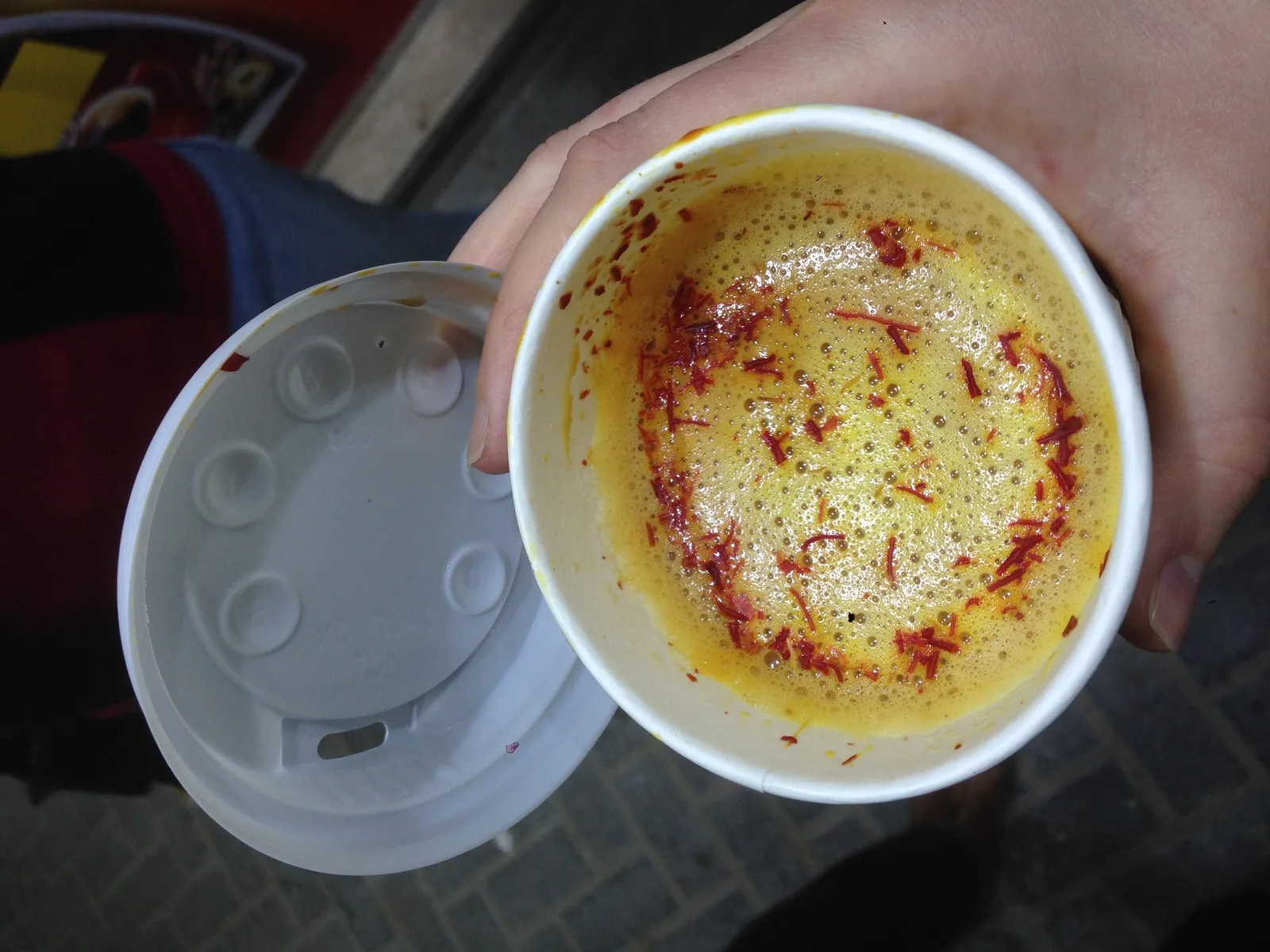
Photo: Carole Marxer / CC BY-SA 4.0
Karak Chai vs Doodh Patti: What's the Difference?
You ordered "karak chai" at a stall and got something that tasted like the doodh patti your aunt makes, or the other way round. The two get used as synonyms, and that is fair, because the cups overlap. Still, the method is different, and the difference shows up in the glass. Here is karak chai vs doodh patti using the amounts from two recipes in our library.
Start with the liquid
The cleanest way to tell them apart is to look at what the tea leaves are boiled in.
Doodh patti means "milk and leaf". The tea goes straight into milk and nothing else. Our doodh patti chai recipe uses 500 ml (2 cups) of milk and no water at all, for 2 cups.
Karak chai starts as ordinary strong tea. Our karak chai recipe boils 400 ml (1 2/3 cups) of water with cardamom first, adds the leaves, and only then pours in 200 ml (0.8 cup) of milk. That is two parts water to one part milk, for 4 small glasses.
So a doodh patti cup is 100 percent milk and a karak cup is about one-third milk. That explains most of what you taste: doodh patti is creamy and soft, karak is darker and sharper, with the tea doing more of the talking.
The numbers side by side
| Karak chai | Doodh patti | |
|---|---|---|
| Servings | 4 small glasses | 2 cups |
| Liquid | 400 ml water + 200 ml milk | 500 ml milk |
| Tea leaves | 2 tbsp | 2 tbsp |
| Cardamom | 4 pods | 2 pods (optional) |
| Sugar | 3 tbsp | 3 tbsp |
| Order of steps | Water and cardamom, then leaves, then milk | Milk and cardamom, then leaves |
| Boil time | about 10 minutes in total | about 10 minutes in total |
| Serve in | small glasses | cups |
Read the tea and sugar lines twice. Both recipes use the same 2 tablespoons of leaf and 3 tablespoons of sugar, but the karak batch makes about 600 ml for 4 glasses and the doodh patti batch makes 500 ml for 2 cups. Per cup, karak works out to roughly 1/2 tbsp of tea and 3/4 tbsp of sugar; doodh patti to 1 tbsp of tea and 1 1/2 tbsp of sugar. The karak glass is smaller and lighter, the doodh patti cup is bigger, stronger and sweeter. Cut the sugar if that is too much.
What the boil sounds like
Karak chai wants a hard, noisy boil. Our recipe says to boil the cardamom water for 2 minutes, the tea for 3 minutes "until the water turns deep red-brown", then to boil hard again after the milk goes in, "letting it rise and fall a few times". Five minutes in that last stage. The froth you see in a karak glass comes from that repeated rise.
Doodh patti is gentler. You bring the milk just to a boil (the timer in our recipe is 5 minutes, and it says to watch closely), add the leaves, stir once, then drop the heat and simmer 4 minutes until the colour is deep reddish-brown. Sugar goes in after that, with one more minute to blend.
The tip in the doodh patti recipe is worth keeping: if the pan is about to overflow, lower the heat. Lifting it on and off the flame again and again is what makes a mess.
The tea matters more than the ratio
Use strong loose black tea, not tea bags. Our doodh patti recipe says so, and the masala chai recipe points to CTC or Assam leaves, which brew dark and hold up to milk. A delicate tea disappears under all that dairy.
One catch: our karak recipe uses plain milk, but the dish description calls for evaporated milk, which is how many stalls make it. We have not written an evaporated-milk version with exact amounts, so if you want the stall flavour, try swapping the 200 ml of milk and taste. Taste before you add all the sugar.
Where masala chai fits
If you are comparing all three, masala chai is the spiced cousin. Our recipe splits 300 ml water and 300 ml milk evenly, adds ginger, cardamom, cinnamon and cloves, and uses only 2 teaspoons of tea for 2 cups. It boils the whole spices first, then the tea, then the milk. The full method is in how to make masala chai at home.
Think of it as a scale of milk: karak is the most water, masala chai is half and half, doodh patti is all milk. Spice is a separate dial.
Picking one for tonight
- You want a hard, bitter-sweet jolt after dinner: karak chai, small glasses, boil it hard.
- You want something milky to dunk a rusk in: doodh patti.
- Guests who like spice: masala chai.
- Not sure: start with doodh patti. It is the most forgiving, since the milk cushions the tea if you boil it a minute too long.
Pair either one with something salty. A plate of fritters works, and the lassi is the cold counterpart if the weather is hot.
If you want to see what you can cook or brew with what is already in your cupboard, the pantry planner at degchi.matrixinn.net/#try takes a few seconds and needs no sign-up.
A short fix list for a bad cup
- Too bitter: the leaves boiled too long after the milk. Use less tea or cut the boil.
- Pale and weak: not enough tea or not enough time before the milk goes in. Wait for the deep red-brown colour.
- Boils over: lower the flame as soon as the foam climbs, and use a taller pot than you think you need.
- Too sweet: halve the sugar and add more once you taste it.
Related recipes

Related posts
Why Is My Chai Bitter or Watery? Fixes That Work
Bitter, watery, pale or grassy: every bad cup of chai has a cause you can name. Here is how to read the cup and fix the next one.
Doodh Patti for a Crowd: Scale the Pot, Not Just the Ratio
The doodh patti recipe serves two. Guests arrive and you need ten cups. The numbers scale in a straight line, but the pot, the time and the boil-over risk do not. A practical table inside.
CTC vs Loose Leaf vs Tea Bags for Desi Chai
The pellets in a Tapal or Red Label packet are not the same as the leaves in an English breakfast bag. Here is what changes when you boil each one in milk.
How to Make Masala Chai at Home (and How It Differs from Karak)
Masala chai is spiced milk tea boiled on the stove. Here is a method that releases more flavour from the spices, and how it differs from doodh patti and Gulf karak chai.