 Degchi
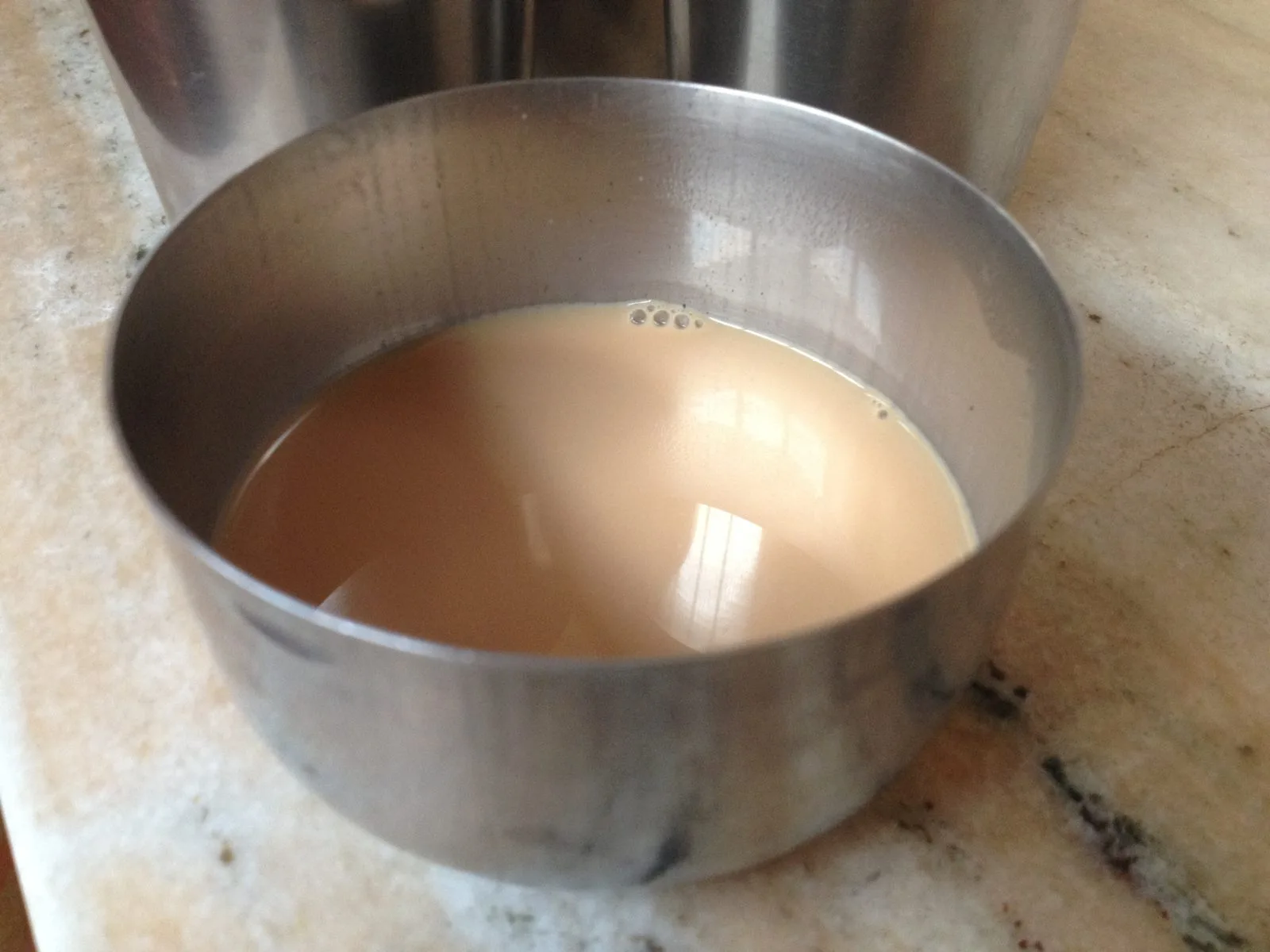
Doodh Patti for a Crowd: Scale the Pot, Not Just the Ratio
Ten cups from a recipe written for two
Our doodh patti chai recipe is written for two cups. Then the doorbell rings and there are six people in the lounge, plus the neighbour. The instinct is to multiply everything by five and use the biggest pan you own. That is how you end up with a pot that boils over in a single second, tea that tastes flat, and sugar you have to guess at.
This guide gives the doodh patti ratio at different sizes and then deals with the part the multiplication does not cover: the pot, the heat and the clock.
The base numbers
For 2 cups, the recipe uses:
- 500 ml (2 cups) whole milk
- 2 tablespoons tea leaves (6 teaspoons)
- 3 tablespoons sugar
- 2 cardamom pods, lightly crushed (listed as optional)
That is 250 ml of milk, 3 teaspoons of tea and 1.5 tablespoons of sugar per cup. The method has the milk come to a boil in about 5 minutes, then the tea simmers in the milk for about 4 minutes until deep reddish-brown, then sugar goes in and it simmers for one more minute.
Scaling table
| Cups | Milk | Tea leaves | Sugar | Cardamom | Pot volume |
|---|---|---|---|---|---|
| 2 | 500 ml (2 cups) | 2 tbsp | 3 tbsp | 2 pods | 1.5 to 2 L |
| 4 | 1 L (4 cups) | 4 tbsp | 6 tbsp | 4 pods | 3 L |
| 6 | 1.5 L (6 cups) | 6 tbsp | 9 tbsp | 6 pods | 4 to 5 L |
| 10 | 2.5 L (10 cups) | 10 tbsp | 15 tbsp | 8 to 10 pods | 7 to 8 L, or two pots |
The first four columns are the recipe multiplied. The pot column is a rule of thumb: you want the milk to fill no more than about one third of the pot. <!-- VERIFY: the one-third fill guideline is a common boil-over precaution, not from our recipe. -->
Two caveats. Sugar tastes less sweet when the batch is large, because bigger batches lose less liquid to evaporation per cup and taste less concentrated, so start at 80 percent of the sugar and add the rest at the end. And cardamom does not need to scale one to one; 8 pods is plenty for 10 cups.
Why the pot matters more than the ratio
Milk climbs fast. In a small saucepan filled halfway, the foam reaches the rim and spills in a second or two. Our recipe's own tip is to lower the heat immediately when the milk is about to boil over rather than lifting the pan on and off the flame. In a tall, narrow pot, you get more warning but the milk at the bottom scorches before the top moves.
For a crowd, choose a wide, heavy-bottomed pot with high sides. Wide means more surface area, so the foam spreads out instead of rocking upward. Heavy means the base spreads the heat so the milk does not catch. If your biggest pot is tall and thin, split the batch into two pots rather than risk one.
Time changes less than you think
A bigger volume takes longer to come to a boil, so the first stage stretches. The 5 minutes in the 2-cup recipe may become 12 to 15 minutes for 2.5 litres on a normal home stove. <!-- VERIFY: heating time depends on burner output and pot; this is an estimate. --> Do not add the tea until the milk is actually boiling. Adding tea to cold milk and heating them together gives a different, milder tea.
The simmering stage is where most people over-correct. The recipe's 4 minutes is based on 500 ml. For 2.5 litres, watch the colour, not the clock. You want a deep reddish-brown, and a spoonful on a white saucer is the easiest test. If the colour is there at 5 minutes, stop; keeping it on the heat makes it bitter, not stronger.
Sugar: add it in two steps
For a big batch, add about 12 tablespoons of the 15 during the final minute, stir, and taste a spoonful. Add more in small amounts. It is simpler to sweeten a pot than to rescue one that is too sweet. If guests include people who take their tea unsweetened, put the sugar on the table instead and leave the pot unsweetened. Many households do this by default for gatherings.
Keeping it hot without cooking it
Doodh patti does not hold well on a burner. After it is strained, the tea left on the heat keeps reducing and darkens by the minute. Pour the strained tea into a thermos or a pre-warmed steel kettle. If you do not have either, pour into the serving pot and keep the burner on its lowest flame with a lid ajar. Pour the first round within 15 minutes if you can.
For more on the cup-by-cup version at different strengths, the chai ratio cheat sheet gives the numbers for karak and masala chai side by side.
A running order for ten cups
- Crush the cardamom and measure the tea and sugar into small bowls before the milk goes on.
- Put 2.5 litres of milk and the cardamom in the big pot over medium-high heat.
- When the milk boils, add the tea, stir once, and drop the heat.
- Simmer until deep reddish-brown. Check on a white saucer from minute 4.
- Add 12 tablespoons of sugar, stir, and taste.
- Strain into a warm thermos or serving pot. Serve within 15 minutes.
What goes wrong when you scale up
Most failures are predictable. The milk skin sticks to the wall of the pot and burns, which gives the tea a scorched taste; scrape the sides gently before straining. The tea tastes thin, which usually means the tea went in before the milk was fully boiling. And the batch tastes dull, because the cardamom was added whole instead of crushed.
If you want to turn this plan into a shopping list, Degchi can scale ingredients for a given number of cups; you can try it from the try it page.
Related recipes
Related posts
Hot Drinks for a Cold Evening: Chai, Gahwa, Sahlab and More
Six warm drinks from South Asia and the Gulf, how long each takes, what makes them different, and which one suits a quiet night, a guest or a crowd.
How to Make Karak Chai Stronger (or Milder) Without Bitterness
Strong chai and bitter chai are not the same thing. Four dials control strength: tea per cup, water, boil time and the milk. Here is how to turn each one, with numbers from three recipes.
Chai Ratio Cheat Sheet: Water, Milk, Tea and Sugar
Three chai styles, three different ratios. Here are the numbers from our recipes, scaled down to one cup, plus what to change when it comes out weak, bitter or too sweet.
Karak Chai vs Doodh Patti: What's the Difference?
Both are strong milk tea boiled hard. The split is where the water goes: karak chai builds on water, doodh patti on milk alone. Here are the numbers.