 Degchi
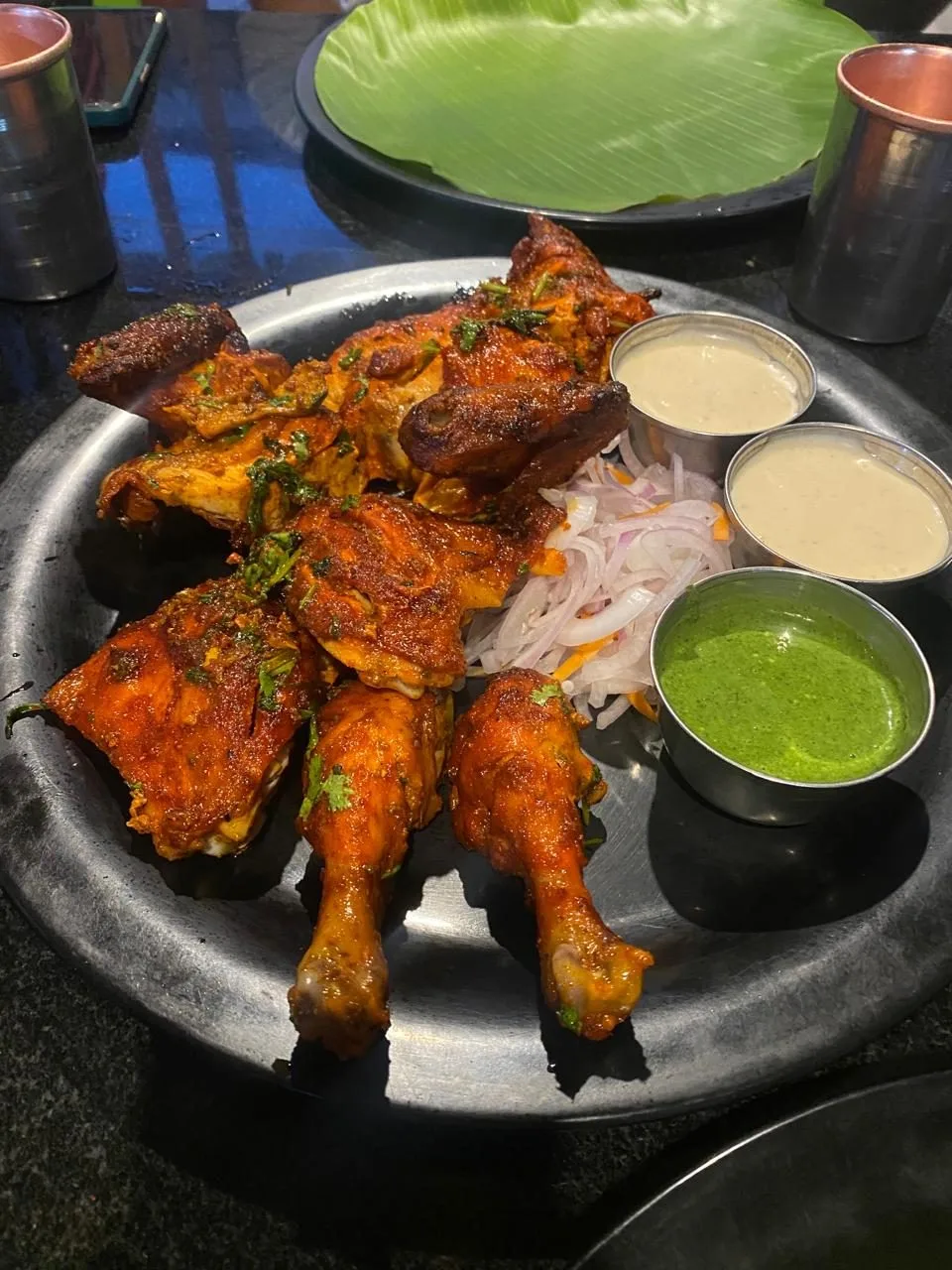
"Skewers for Seekh Kabab and Tikka: Flat, Round or Wooden?"
Everyone talks about the marinade and the mince. Nobody talks about the stick, and then the seekh kabab rotates on the skewer like a rotisserie and slides into the coals. The right skewer fixes more kebab problems than another teaspoon of garam masala.
Here is which skewers to use for seekh kabab and chicken tikka at home, and what to do when you own none.
The short answer
- Seekh kabab (minced meat): flat metal skewers, 8 to 12 mm wide.
- Chicken tikka, boti, paneer tikka (chunks): thin round or square metal skewers, or wooden ones that have been soaked.
- No skewers at all: a tray with a rack, or a grill pan, both covered below.
Why seekh needs a flat skewer
Our seekh kabab recipe shapes lime-sized portions (about 60 g) onto a flat skewer into a sausage roughly 2 cm thick and 12 to 15 cm long, squeezing firmly so there are no air gaps. The recipe tip is specific: use flat skewers instead of round ones, because the kabab rotates on a round skewer.
That rotation matters. On a round skewer the meat has nothing to grip, so it spins when you turn the skewer and the kabab peels away from the metal as it cooks. A flat blade gives the meat two broad faces to hold onto.
If your mince is too wet, flat skewers will not save it. Squeeze the grated onion dry (the recipe says so), chill the mixture at least 45 minutes and use wet hands. For help with fat and grind, see which mince for kebabs.
Chunks want something thinner
Chicken tikka and malai boti are cut pieces. A thin round or square skewer slides through without splitting the meat. Flat wide skewers make bigger holes and let juices run out.
Leave small gaps, about 5 mm, between pieces. Packed tight, the sides steam instead of char. Alternate with onion or capsicum if you like, but note that vegetables cook faster than chicken; thread them on separate skewers if you want both done properly.
Metal vs wooden
| Metal | Wooden/bamboo | |
|---|---|---|
| Heat conduction | conducts heat into the meat, helps cook seekh evenly | does not, so the centre cooks slower |
| Reusable | yes, for years | usually once |
| Burning | no | yes, unless soaked |
| Handle heat | gets hot, use a cloth | stays cooler |
| Cost | higher once | cheap each time |
| Best for | seekh, heavy chunks, charcoal | light chunks, oven, short cooks |
Metal wins for mince because it carries heat to the centre of a thick kabab. Wooden ones are fine for tikka in the oven or on a gentler grill.
If you use wooden skewers
Our chicken tikka recipe tip says to soak wooden skewers in water for 30 minutes first so they do not burn on the grill. Do that. Also:
- Use two parallel skewers per row of chunks. One skewer lets heavy pieces spin.
- Wrap the exposed ends in a small strip of foil if they overhang the heat.
- Do not leave wet skewers on a very hot coal bed for long; they smoke and scorch.
<!-- VERIFY: "Two parallel skewers" and the foil-end trick are common grilling advice, not from our recipe data. Metal skewer widths (8-12 mm) are a typical retail range, not a sourced standard. -->
What to do when you have no skewers
- Tikka in the oven: spread pieces on a wire rack set over a tray. Our chicken tikka recipe uses 240 C / 465 F with the rack in the upper third and a tray to catch drips, 18 to 20 minutes, turning halfway. Check 74 C / 165 F.
- Tikka on the stove: sear in batches in a very hot pan, uncrowded, then finish in the oven.
- Seekh in the oven: shape on a rack as logs without a stick; they will keep their form if well chilled. Our oven guide for seekh, shami and chapli covers heat and timing.
- Seekh on a pan: the recipe suggests non-stick on medium-low with a lid for 2 to 3 minutes per side, then uncovered to colour. Check 71 C / 160 F.
- Improvised skewer: a clean metal knitting needle or a stiff metal rod from the hardware shop works only if the metal is food-grade stainless. If you are not sure, do not use it.
Using skewers well
- Wet your hands, not the mince. Water on the surface lets you press and smooth without sticking.
- Start at the tip. Press the first bit onto the end of the skewer, then work down in one smooth pull.
- Squeeze, then run your thumb along the length to remove air pockets.
- Chill the skewered kababs for 15 minutes before cooking if the day is warm.
- Turn every 2 to 3 minutes. Do not move them during the first minute, or they may tear.
- Brush ghee or oil in the last minute, as the recipe says, for shine.
Cleaning and storing
Metal skewers go through the dishwasher, but scrub the flat blades by hand if mince has dried on. Dry them completely before storing so they do not rust. Wooden skewers go in the bin after use.
A shopping list
If you cook kebabs twice a month, this set covers almost everything:
- 6 flat metal skewers, 30 to 40 cm long, for seekh
- 8 thin round or square metal skewers for tikka and boti
- a packet of wooden skewers as backup
- a wire rack that fits your baking tray
- an instant-read thermometer, because kebab doneness is easier to read from 71 C / 160 F or 74 C / 165 F than from colour
Add the skewers to your list in Degchi before the weekend, and check degchi.matrixinn.net/#try to see what else your pantry needs for the marinade.
Related recipes
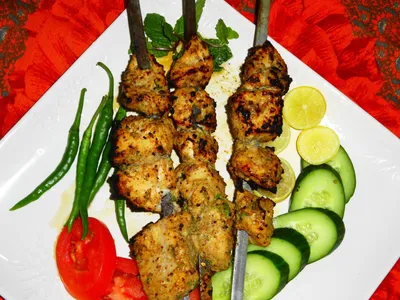
Related posts
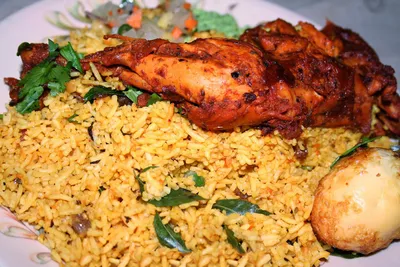
Eid Dawat Menu for 10 People: Quantities and a Cooking Plan
A realistic Eid dawat menu for 10 guests, with every quantity scaled from our recipe pages and a two-day timeline that keeps the host out of the kitchen when the doorbell rings.
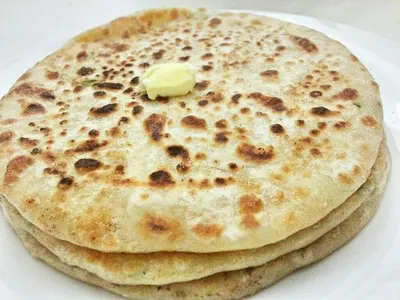
Desi Picnic Food That Travels: What to Pack and Keep Safe
A desi picnic works when each dish is chosen for how it behaves in a cooler bag. Parathas, tikka, kababs and dry chaat, with amounts and food-safety limits.
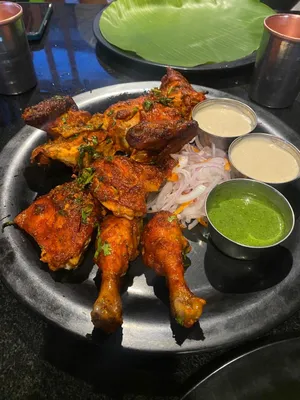
Desi Weeknight Dinners in the Air Fryer: What to Cook and What to Skip
An air fryer will not replace your karahi, but it handles tikka, kebabs, and roasted vegetables quickly. Here is how to use it for desi food.
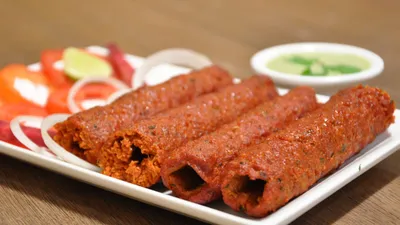
"Kebab Rolls at Home: Paratha Wraps That Don't Go Soggy"
"A kebab roll falls apart for three reasons: wet filling, thin bread, and no wrap. Fix all three and a Tuesday leftover becomes street food."