 Degchi
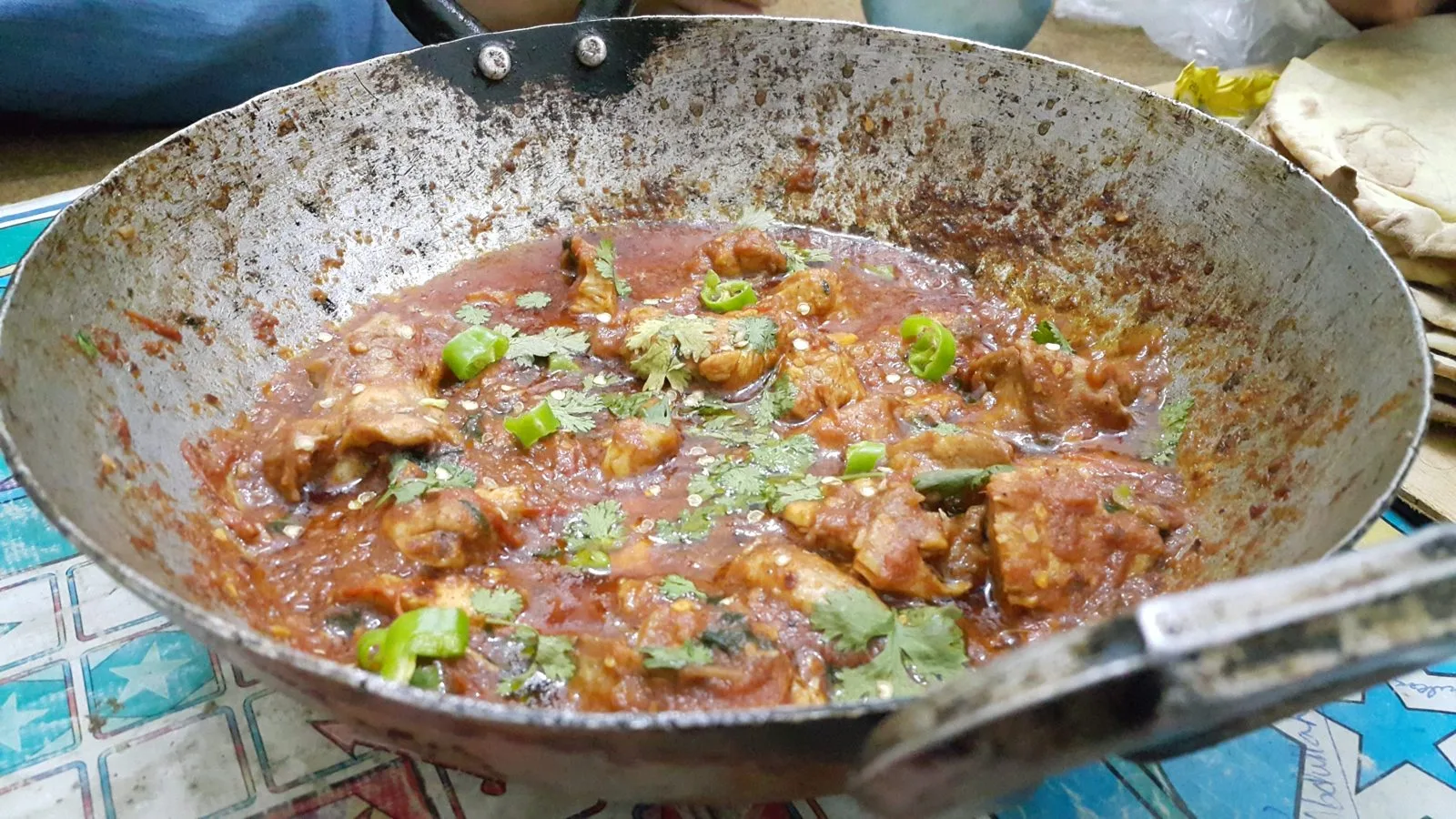
Photo: Kskhh / CC BY-SA 4.0
Mutton Karahi That's Actually Tender: Time and Method
Great sauce, rubbery meat
Mutton karahi disappoints in a specific way. The tomato and ginger sauce tastes right, the pan looks right, and the meat takes three minutes of chewing. The recipe you copied was probably written for chicken and then had the word "mutton" swapped in.
Bone-in goat or lamb needs a lot more time than chicken, and the time cannot be rushed with higher heat. You either pre-cook the meat or cook the whole dish slowly. Both work. This post explains both and when to choose each. If you want the chicken version, see chicken karahi, restaurant style.
Choose the cut before you choose the method
Ask the butcher for small curry pieces, about 3 to 4 cm (1 1/4 to 1 1/2 in), with bone. Shoulder and leg give lean meat that needs more time. Neck and ribs have more fat and connective tissue, and those cuts become silky when cooked low and slow. Many cooks like a mix of both.
Young animals cook faster than mature ones. If the butcher says the meat is from an older animal, plan for the longer end of every timing below.
Two ways to make it tender
| Pressure cooker pre-cook | Stovetop slow cook | |
|---|---|---|
| Time for meat to soften | 25 to 35 minutes after pressure | 75 to 100 minutes |
| Liquid needed | Little; juices plus about 120 ml (1/2 cup) water | 250 ml (1 cup) water, topped up |
| Best for | Weeknights | Weekends, no pressure cooker |
| Risk | Overcooking if left for 45 minutes | Scorching if the lid leaks steam |
For the pressure method, put 800 g (1 3/4 lb) mutton in the cooker with ginger-garlic paste, salt, a spoonful of oil and a little water. Cook until the first whistle, then lower the heat and give it about 25 minutes of pressure. Let the pressure drop on its own. The meat should be nearly soft when pierced with a fork. Our pressure cooker lentils guide explains how to read whistle counts on different cookers.
Building the karahi after the meat is soft
With the meat nearly tender, the karahi becomes quick.
- Heat 60 ml (1/4 cup) oil in a heavy karahi over high heat.
- Add 4 to 5 chopped tomatoes and cook hard for 8 to 10 minutes, mashing, until the oil separates at the edges.
- Add the cooked meat with its stock, 1 1/2 tsp salt, 1 tsp each of crushed coriander and black pepper, and a few slit green chillies.
- Cook on high for 10 to 12 minutes, stirring constantly, until the liquid has reduced to a thick coating on the meat.
That last step, bhunai in Urdu (frying the masala down until it clings), is what separates karahi from a stewed curry. Stock left in the pot makes it watery, so reduce it properly rather than pouring it off. The stock carries flavour from the meat.
Slow stovetop method
If you do not own a pressure cooker, start the meat in the same karahi. Fry it with ginger-garlic paste on medium-high for 10 minutes, then add 250 ml (1 cup) hot water, cover tightly and cook on the lowest heat for 75 to 100 minutes. Check at 60 minutes; add hot water, never cold, if the pan looks dry. Add the tomatoes only after the meat is tender, then follow step 2 above. Adding tomato early slows softening slightly because of its acidity, which is the same effect described in why daal won't soften.
When it is still chewy at the end
- Meat still firm after the sauce is done: add 100 ml (scant 1/2 cup) hot water, cover and simmer gently 20 minutes, then reduce again. You lose a little of the sauce's cling but save the meat.
- Sauce too oily: spoon off oil from the top, but keep a tablespoon; karahi should shine.
- Too sour: a pinch of sugar and 5 more minutes of bhunai.
For a similar dish with potatoes, the method in aloo gosht uses the same rule: soft meat first, vegetables after.
A Sunday plan
| Time | Step |
|---|---|
| 5:00 pm | Meat into the cooker with paste |
| 5:35 pm | Pressure released, meat resting |
| 6:00 pm | Tomatoes in the karahi |
| 6:20 pm | Meat joins the pan |
| 6:35 pm | Ginger on top, serve with roti |
If you want a one-pot slow dish for the same night, nalli nihari takes the long route on purpose. Degchi can store the plan as a list so the weekday you cook it, the tomatoes and green chillies are already on the shopping list; see how in the pantry sandbox.
Related recipes
Related posts
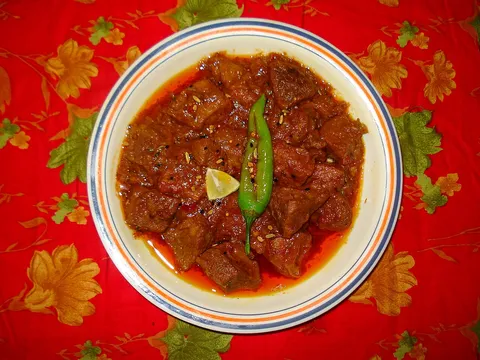
Achar Gosht: The Pickle Spices and How to Use Them
Achar gosht tastes like a jar of pickle turned into a mutton curry. The flavour comes from four whole seeds, vinegar and a very short sizzle in hot oil.

Pressure Cooker vs Open Pot: Real Cooking Times
A pressure cooker halves some jobs and does nothing for others. Side-by-side times for mutton, chickpeas, kidney beans and lentils, and when to leave the lid off.
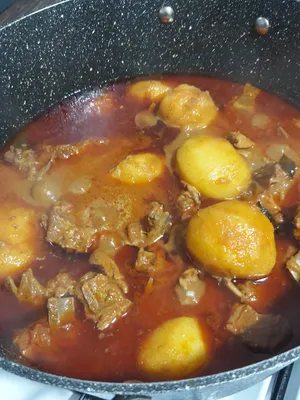
Aloo Gosht Recipe: Pakistani Mutton and Potato Curry
The meat should be nearly tender before the potatoes go in. Everything else about aloo gosht follows from that one rule; here is the full method from our recipe.