 Degchi
Achar Gosht: The Pickle Spices and How to Use Them
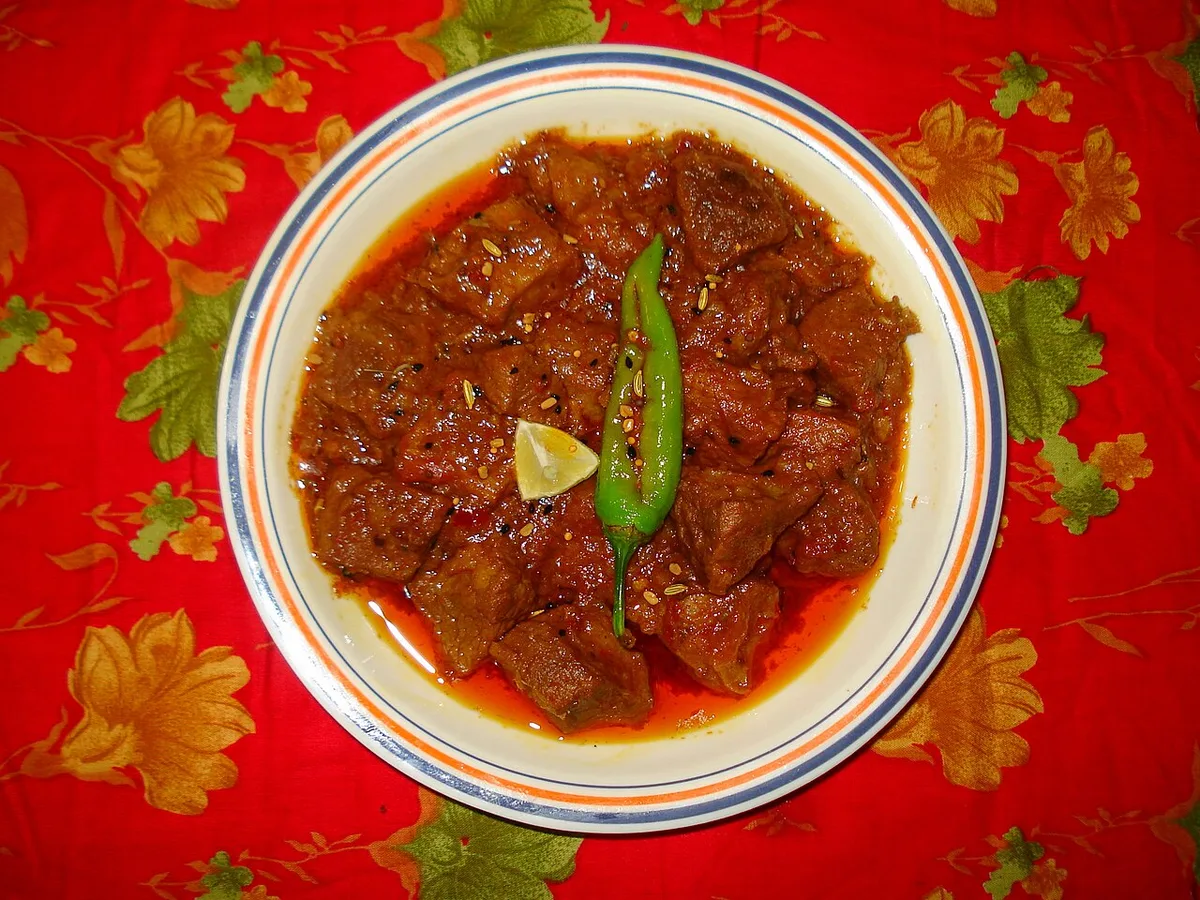
Achar gosht smells like the inside of a pickle jar, sharp and a bit smoky, and then the mutton underneath is soft enough to pull apart. If yours tastes like ordinary curry, the pickle spices never really bloomed. If it is tough, the time was wrong. Both are easy to fix.
Our achar gosht recipe serves 5 and uses 750 g (1.65 lb) of mutton, 150 g (0.65 cup) of yogurt and two onions. It takes about 95 minutes, most of it hands-off simmering.
The four seeds
The pickle character comes from whole seeds fried briefly in oil:
- Mustard seeds (rai), 1 teaspoon: sharp and slightly bitter.
- Fennel (saunf), 1 teaspoon: sweet, aniseed-like.
- Fenugreek seeds (methi dana), 1/2 teaspoon: bitter, so keep it small.
- Nigella (kalonji), 1/2 teaspoon: oniony and peppery.
The recipe also uses 1 tablespoon of vinegar in the marinade, which adds the tang you expect from a jar of achar. If you have none, lemon juice is the nearest swap, though the flavour is a little different.
The 20-second sizzle
Heat 5 tablespoons of oil and add the seeds. Let them sizzle for about 20 seconds. You are listening for mustard seeds to crackle and the fennel to turn a shade darker. Then add the sliced onions straight away.
Fenugreek is the one to watch. A few extra seconds and it goes dark and bitter, and the bitterness will carry through the whole pot. If a seed looks black, start again. It costs one tablespoon of oil, not the whole dish.
A tip from the recipe: crush the mustard and fennel lightly before adding. It releases more oil and gives a stronger pickle flavour.
Marinade and browning
Mix the mutton with yogurt, ginger, garlic, 1.5 teaspoons of chilli powder, turmeric, salt and the vinegar. The recipe asks for at least 1 hour. Longer helps, but the acid and yogurt are not as aggressive as raw papaya, so overnight in the fridge is fine.
After the seeds, fry the onions about 8 minutes until golden, then add the marinated mutton and fry on high heat for 10 minutes. You want the colour to change and the oil to rise. This is the step that builds depth. Skipping it is the most common reason for a flat, thin-tasting gravy.
Cooking time
Add a cup of hot water (about 240 ml) and 3 green chillies, cover, and cook on low heat for 60 to 70 minutes until the mutton is fork-tender. Check halfway and add a splash of water if it dries.
The recipe notes that mutton from an older animal needs the full time. A pressure cooker cuts it to about 25 minutes. For a pressure cooker, brown the mutton as above, add the water, and cook, then reduce the sauce uncovered. See our pressure cooker vs open pot guide for timing comparisons.
The last five minutes
Turn the heat up for the last 5 minutes and stir until the masala clings to the meat. It should be thick and shiny, not soupy. Taste for salt now, since the seeds can hide it.
Which cut to buy
Bone-in shoulder or leg pieces, cut about 4 cm (1 1/2 in), give the best result because the bone and connective tissue add body to the gravy. Boneless leg is leaner and dries out sooner, so shorten the covered simmer by 10 minutes and check early. If you can only find lamb, it is more tender than mutton: begin checking at 40 minutes and expect to finish sooner.
Ask for a mix of meaty and bony pieces. A pot of all meat and no bone tastes thinner, however good the spices.
Making it ahead and adjusting heat
Achar gosht improves overnight, as the seeds settle into the gravy. Cook it a day ahead, cool it quickly and refrigerate. Reheat gently in a pan with a splash of water.
For less heat, use 3/4 teaspoon of chilli powder and leave the green chillies whole rather than slit. For more, add 1/2 teaspoon of crushed dried red chilli to the tadka seeds. Kashmiri chilli gives colour with less burn, if you want the look without the fire.
Small swaps
- No fenugreek seeds: leave them out rather than substituting dried fenugreek leaves, which taste different. The dish still works.
- No kalonji: add an extra 1/4 teaspoon of mustard.
- No mustard seeds: use 1/2 teaspoon of mustard powder stirred into the marinade.
- Mustard oil: some cooks use it for a stronger pickle flavour. Heat it until it just smokes, then cool a moment before the seeds go in. Use half mustard oil and half regular oil if the flavour is new to you.
What to serve
Plain basmati, hot roti or a simple daal. The gravy is sharp, so something mild and starchy balances it. A cooling bowl of plain yogurt helps if the green chillies were strong.
Troubleshooting sheet
| Problem | Cause | Fix |
|---|---|---|
| Bitter | Fenugreek burnt or too much | Cut the seed to 1/4 teaspoon, watch the 20 seconds |
| No pickle smell | Seeds not fried in hot oil | Hot oil first, then seeds |
| Tough mutton | Cooked too short or too high | Low and covered, or use the pressure cooker |
| Thin gravy | Skipped the high-heat fry | Fry 10 minutes until oil rises |
| Too sharp | Too much vinegar | Stay at 1 tablespoon |
Storing it
Cool within about an hour and refrigerate. The cooked mutton keeps up to 3 days; reheat in a pan until steaming hot, adding a splash of water. [VERIFY: 3-day fridge life for mutton curry follows the recipe tip for beef; confirm]
Achar gosht is the kind of dish you can plan on a Sunday. If you are not sure you have all four seeds, Degchi will check your pantry for them before you shop: degchi.matrixinn.net/#try.
Recipes with yogurt Recipes with onions
Related recipes

Related posts

Pressure Cooker vs Open Pot: Real Cooking Times
A pressure cooker halves some jobs and does nothing for others. Side-by-side times for mutton, chickpeas, kidney beans and lentils, and when to leave the lid off.
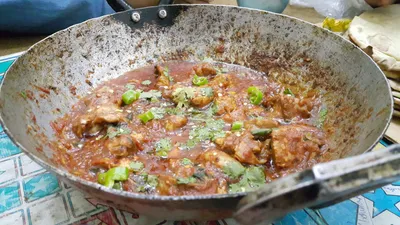
Mutton Karahi That's Actually Tender: Time and Method
Chicken karahi is a 40-minute dish. Mutton karahi is not, and pretending it is gives you chewy meat in a good sauce. Here is the realistic timetable.
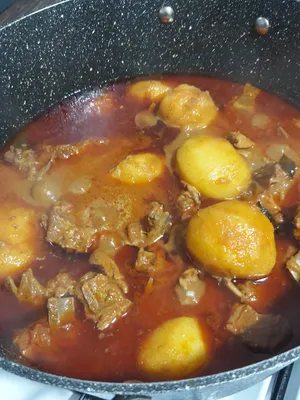
Aloo Gosht Recipe: Pakistani Mutton and Potato Curry
The meat should be nearly tender before the potatoes go in. Everything else about aloo gosht follows from that one rule; here is the full method from our recipe.