 Degchi
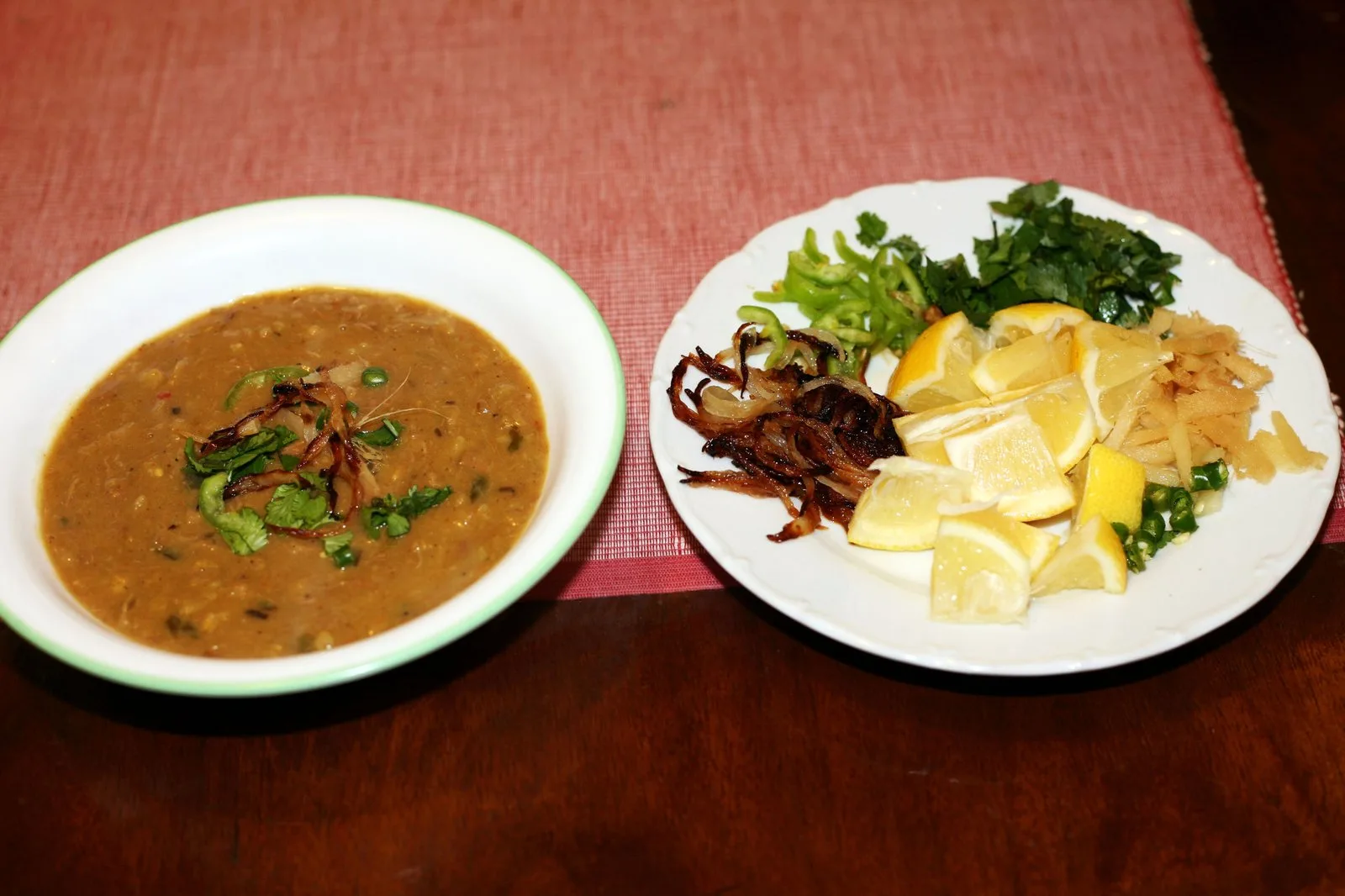
Photo: Halt123halt / CC BY-SA 4.0
Mutton Haleem Recipe at Home, With an Overnight Soak
It is 4 pm, you want haleem for iftar, and the wheat has not even been rinsed. That is the usual way a mutton haleem recipe at home goes wrong: the cooking is not hard, but the clock is. This post lays out the timing first and the pot second.
We use our Hyderabadi haleem recipe as the base. It serves 6 and is marked Hard in our library. Its listed meat is mutton, cut into bone-in pieces. For other versions, see our chicken haleem and Dhakaiya haleem.
What goes in the pot
Per our recipe, for 6 people:
- 500 g (1.1 lb) bone-in mutton pieces
- 150 g (5.3 oz) cracked or broken wheat
- 50 g (1.8 oz) each of masoor, moong and chana lentils
- 2 onions, sliced and deep-fried
- 1 tbsp ginger paste, 1 tbsp garlic paste
- 4 tbsp ghee
- 1 tbsp red chilli powder, 1 tsp garam masala, 2 tsp salt, to taste
- Optional: 100 ml (0.4 cup) milk, and lemon wedges to serve
Mint and fried onion go on top at the end. Note the ratio: the wheat is 150 g and the three lentils together are another 150 g, so the base is half grain, half pulse. That is why this one eats as a thick, spoonable porridge rather than a smooth gruel.
When to soak, and why overnight helps
Our Hyderabadi recipe soaks the wheat and all three lentils together for 2 hours, then drains. That is the minimum. Our chicken haleem recipe says to soak the same kind of mix for at least 2 hours, or overnight for the best texture, and notes that overnight soaking shortens the boiling time.
So the practical choice is simple:
- Same-day haleem: soak at lunch, cook in the afternoon. Fine, but plan on the full boil.
- Overnight soak: rinse the wheat and lentils after dinner, cover with plenty of cold water, leave them on the counter or in the fridge. In the morning, drain and go. You buy back boiling time and the grains collapse more easily.
Soaking does not replace cooking. The wheat still has to go completely soft.
A two-day plan that actually fits a working day
Haleem tastes better the next day and thickens as it sits, according to our recipe tips, so cooking ahead is not a compromise. One way to split it:
- Night before, 10 minutes: wash and soak the grains and lentils. Make the fried onions if you like; they keep.
- Morning, 45 minutes of attention: pressure-cook the mutton with ginger-garlic paste, salt and 4 cups of water until very tender, about 30 minutes. At the same time, boil the drained wheat and lentils in a second pot for about 40 minutes until completely soft and mushy.
- Late morning, 30 minutes: shred the meat off the bone, mash the grains with a hand blender, combine, and cook together on low heat for 20 minutes, stirring and pounding.
- Fridge until evening: cool it, cover it, refrigerate.
- Evening, 15 minutes: reheat with a little hot water, stirring often. Heat the ghee with chilli powder and garam masala, pour it over, and top with fried onion, mint and lemon.
If you start from raw on the day itself, count roughly three hours or a little more from the first rinse, with the meat and grains running side by side. That figure is our arithmetic from the step timers, not a number printed on the recipe page.
The beating step is the dish
Shredded meat plus mashed grain is not yet haleem. It becomes haleem when you work it. Our recipe says the longer you pound and stir the meat and grains together, the smoother and more porridge-like the result.
Our chicken haleem tips add useful detail for the same step: the stretchy texture comes from beating with a wooden spoon, a hand blender is faster but should be used in short pulses so the meat does not turn to paste, and over-blending makes it gluey. The Dhaka version gives a test: lift a spoonful and let it drop. Good haleem falls like a thick batter with the shreds clinging, not like a soup. Stop while it is slightly looser than you want, because it keeps thickening as it rests.
Hyderabadi haleem: what that name means
"Hyderabadi haleem" is more than a style. Wikipedia reports that India's GI registry gave Hyderabadi haleem a Geographical Indication in 2010, and that a dish cannot be sold under that name unless it meets the required standards. It also says the haleem tradition in the region derives from the Arabic dish harees, brought in during the Mughal period, and that Hyderabadi haleem is traditionally cooked in large wood-fired cauldrons.
Our home version is not that. It uses a pressure cooker and a hand blender, and takes hours instead of the much longer slow cook described for traditional haleem. Treat it as a home adaptation. If you want to understand the family tree, our harees guide covers the wheat-and-meat side, and nihari vs haleem vs paya covers how haleem differs from other slow-cooked dishes.
Problems at the stove
| What you see | Likely cause | Fix |
|---|---|---|
| Grainy, separate bits | Not mashed or beaten enough | Keep pounding; add hot water if it tightens |
| Gluey and pasty | Over-blended | Use short pulses next time |
| Scorched bottom | Heat too high, too little stirring | Lowest heat, stir and scrape |
| Too thick after resting | Normal | Loosen with hot water or stock |
| Bland | Salt added too early or too little | Taste after the combine step, then add |
Mutton is firmer than chicken, so judge it by the bone, not the clock. If you want a milder, wheat-only cousin without lentils, our harees is the one to compare, and nihari is the spiced stew that gets confused with haleem. If the meat does not pull away easily after the pressure-cooker stage, give it another 10 minutes.
Serving and keeping
Serve it hot with the ghee tarka, fried onion, mint and lemon. Cool leftovers quickly, refrigerate, and reheat until steaming hot, stirring often so the bottom does not catch.
Degchi's recipe page shows these amounts in metric and US units with a servings scaler, and the soak and cooking steps have timers; you can try the pantry side at degchi.matrixinn.net/#try.
Timing sheet for haleem day
| Time | Task |
|---|---|
| Night before | Soak wheat and lentils |
| Morning | Pressure-cook mutton; boil grains |
| Late morning | Shred, mash, combine, pound for 20 minutes |
| Afternoon | Cool and refrigerate |
| One hour before eating | Reheat, make tarka, fry or reheat onions |
Related recipes

Related posts

Nihari vs Haleem vs Paya: Three South Asian Slow-Cooked Classics
Nihari is a spiced stew, haleem a beaten porridge, paya a gelatinous trotter broth. Here is how they differ in texture, ingredients, timing and tradition.
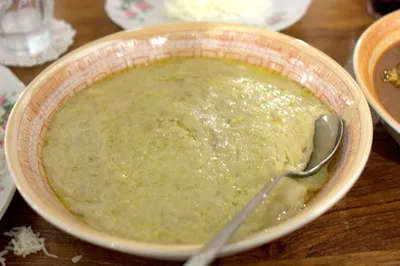
Harees Explained: The Wheat and Meat Porridge of the Gulf
Harees is wheat and meat cooked for hours, then beaten into a smooth, stretchy porridge. Here is what it is, how it differs from haleem, and how to make it, including a quick oat shortcut.

What Is Sambousek? Fillings, Frying and How to Make It
Sambousek is the Gulf and Levantine pastry that looks like a samosa and isn't quite one. What it is, what goes inside, whether to fry or bake, and our meat version.