 Degchi

How Long Do Mithai Last? Storing Eid Sweets Safely
It is the third day of Eid. The gulab jamun tray is still half full, the jalebi has gone limp, and someone asks whether the kheer from Monday is still fine. Nobody wants to throw out sweets that took an afternoon to make. Nobody wants a stomach ache either.
The answer depends less on how sweet a mithai is and more on how much milk and water it holds. Sugar helps preserve things, but only up to a point. A sweet that is mostly dry sugar and flour behaves very differently from one sitting in milk.
Sort the sweets by milk and water
Put every sweet in one of three groups before you decide where it goes.
- Dry and fried, no milk. Ladoo, biscuits, nankhatai, jalebi before it is soaked.
- Syrup-soaked. Gulab jamun and soaked jalebi. They are wet, but the sugar syrup is concentrated.
- Milk-based and wet. Kheer, sheer khurma, rasmalai, shahi tukray. These are the ones to watch.
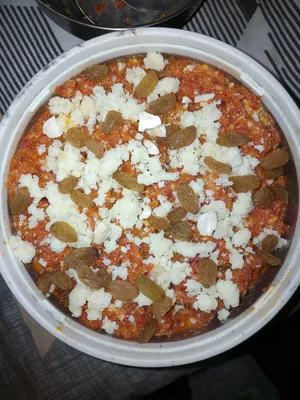
Halwa sits between groups two and three. Gajar halwa is cooked with a litre of milk to 1 kg of carrots and reduced until it leaves the sides of the pan, so it is thick, but it still contains milk and fresh vegetable.
Milk-based sweets: fridge, and a short clock
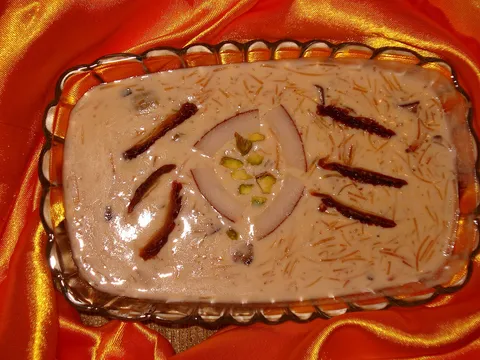
Our recipe data gives two firm numbers. Sheer khurma leftovers should be refrigerated within about 2 hours and finished within 2 days. Shahi tukray follows the same 2-day rule. Treat kheer and rasmalai the same way.
That 2-hour window is the bit people skip. A pot of kheer left on the stove overnight because it is "still warm and too thick to move" is the classic mistake. Dense, thick puddings cool slowly in the centre. Divide a big pot into shallow containers so it chills quickly, and put the lid on once it has stopped steaming.
<!-- VERIFY: the 2 h cooling window and 2-day fridge limit come from our recipe tips and general food-safety guidance; confirm against a food authority page before publishing. -->
Syrup sweets: counter for a day, fridge after
Gulab jamun is the grey area. Fried dough balls sitting in thick sugar syrup survive better than milk puddings. In a cool room many families keep them covered for a day. In a hot kitchen, especially a Gulf summer, put them in the fridge the same evening.
Two practical tips:
- Keep the jamuns in their syrup, in a sealed container. Dry air makes the surface leathery.
- Warm them before serving. Cold jamuns feel dense and the syrup turns sticky. Thirty seconds in the microwave per serving, or a few minutes in a pan of hot water, brings the softness back.
<!-- VERIFY: counter time for gulab jamun (about 1 day in a cool room) is a household rule of thumb, not sourced. -->
Our gulab jamun recipe tells you to soak for at least 30 minutes, ideally 1 to 2 hours, with both jamuns and syrup warm. If you made them ahead and chilled them, the same logic applies in reverse: reheat gently, and the syrup will loosen.
Jalebi: crisp for hours, not days
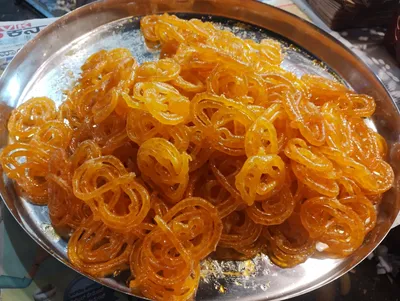
Jalebi is a special case. The recipe says to soak it in the warm syrup for only about a minute, because longer turns it soggy. That tells you what will happen to leftovers. By the next morning the crisp spiral has absorbed syrup and softened, and no fridge will change that.
Your options:
- Eat it the same day. This is the best answer.
- Store leftovers in a loosely covered container at room temperature. A sealed box traps moisture and speeds up the sogginess.
- Do not refrigerate. Cold turns the syrup sticky and the jalebi chewy.
- Re-crisp for 5 to 8 minutes in a 160 C (320 F) oven, on a rack so syrup can drip. It will not return to fresh, but it improves.
<!-- VERIFY: oven re-crisping temperature and time are a suggestion, not from our recipe data. -->
If you are making jalebi for a gathering, ferment the batter in advance (8 hours or overnight in our recipe) and fry just before guests arrive. The batter is the make-ahead part.
A quick table
| Sweet | Where | Roughly how long | Sign it is done |
|---|---|---|---|
| Kheer | Fridge, covered | 2 days | Sour smell, fizzy surface, watery separation |
| Sheer khurma | Fridge, covered | 2 days | Sour smell, curdled look |
| Shahi tukray | Fridge, covered | 2 days | Mushy bread, sour milk smell |
| Gulab jamun in syrup | Fridge, covered | A few days | Fermented smell, mould, bubbling syrup |
| Jalebi | Counter, loosely covered | 1 day for crispness | Rancid oil smell |
| Gajar halwa | Fridge | A few days | Sour smell, mould, watery layer |
<!-- VERIFY: "a few days" ranges for jamun and halwa are estimates; no figures in our recipe data. Check a published guide for dairy-containing sweets. -->
Freezing and gifting
Halwa freezes better than most sweets, because the texture is already dense. Portion it flat in small boxes so you can thaw only what you need. Milk puddings separate when frozen and are better eaten fresh. Fried sweets in syrup do not freeze well.
When sending a box to a neighbour, pack the milk-based sweets separately from the dry ones, and tell them to refrigerate. Dry fruit toppings can go on at the last minute, so they stay crunchy.
The smell and look test
Trust your nose, but know what to look for:
- A sharp, sour or "fermented" smell in anything with milk.
- Fine bubbles or fizz in syrup or pudding.
- Any fuzzy spot, even a small one. On a soft, wet sweet, mould roots go deeper than what you can see.
- A rancid, paint-like smell in anything fried or made with old ghee.
When in doubt, bin it. For people at higher risk, such as young children, pregnant women and older relatives, be stricter about the 2-day limit.
If you want to keep track of what is in the fridge this week, the pantry and shopping lists in Degchi take about a minute to set up, and our post on using up leftovers has more ideas for the end of an Eid week.
Related recipes


Related posts

Chicken Karahi Recipe: Dhaba Flavour at Home in 45 Minutes
Karahi is four ingredients of flavour and one pan on high heat. Here is how the recipe in our library gets a thick, oily, charred gravy without any water.
Why Does My Daal Taste Flat? Tadka and Seasoning Fixes
The lentils are soft, the colour is right, and it still tastes like nothing. Check these seven things, in this order, before you add more spice.

Dinner for Someone Who Gets Home Late: Plate and Reheat
The plate in the fridge at 10 p.m. should still taste like dinner. Which dishes hold, which collapse, and the safe-time rules for a plate that waits.

Rice Cooker vs Pot for Basmati, Daal and Khichdi
A rice cooker gives you hands-off rice, but our recipes use three different water methods. Here is which ones translate to a cooker and which still belong on the stove.