 Degchi
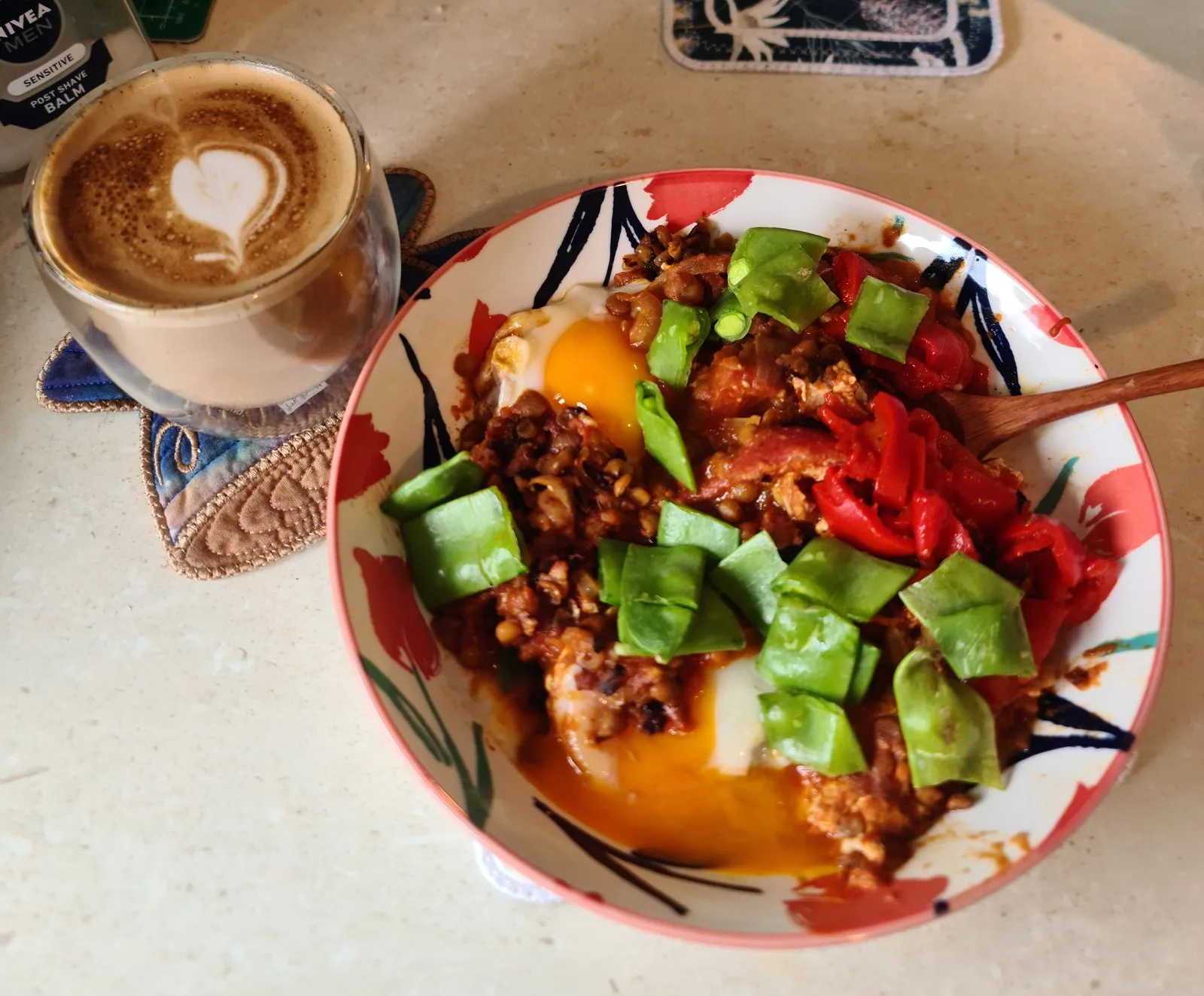
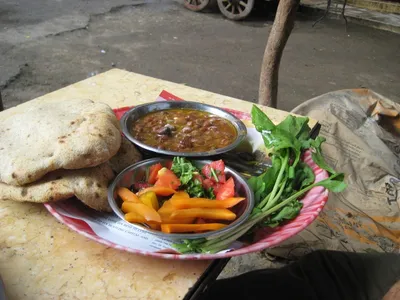
Photo: David Jackmanson / CC BY 4.0
Menemen vs Shakshuka: Two Tomato-and-Egg Pans Compared
Two skillets that get confused
Both are tomato-and-egg dishes cooked in a single pan and eaten with bread. Menemen is Turkish. Shakshuka is North African and Levantine, and widely cooked across the Gulf. They share about 80% of their ingredients, so people swap the names, and then wonder why their "shakshuka" looks scrambled.
Our library has shakshuka. The difference is in the egg, the vegetables and the order of steps.
At a glance
| Menemen | Shakshuka | |
|---|---|---|
| Egg treatment | Stirred into the sauce, softly scrambled | Cracked whole into wells, poached |
| Pepper | Green long peppers | Red or green bell pepper, sometimes none |
| Spice | Mild; chilli flakes (pul biber) and salt | Cumin, paprika, often chilli |
| Sauce | Quite loose, fresh tomato | Thicker, simmered tomato |
| Finish | Rarely covered | Lid on to set the whites |
| Time | 15 minutes | 25 to 30 minutes |
| Texture | Creamy, soft | Runny yolk, set white |
Menemen: made fast, eaten faster
For 2 people: 2 tbsp butter or oil, 2 long green peppers (or 1 small green bell pepper), 3 ripe tomatoes grated or chopped, 4 eggs, 1/2 tsp salt, 1/2 tsp chilli flakes.
- Melt butter on medium heat, soften the sliced pepper for 3 to 4 minutes.
- Add the tomatoes and cook 6 to 8 minutes until most of the water has gone and the sauce looks glossy.
- Lightly beat the eggs and pour in. Stir gently for 1 to 2 minutes only.
- Take it off the heat while it still looks slightly wet; the pan will finish the cooking.
Overcooked menemen turns into dry orange crumbs. A warning: eggs should be cooked until they are no longer liquid, particularly for young children, pregnant women or elderly diners, and the 71 C (160 F) guide for egg dishes applies. If you cook it a little firmer, nothing is lost.
Shakshuka: a slower, deeper sauce
For 2 people: 2 tbsp oil, 1 onion, 1 red bell pepper, 3 cloves garlic, 1 tsp cumin, 1 tsp paprika, 1/2 tsp chilli flakes, 400 g (14 oz) tin chopped tomatoes, 4 eggs, 1/2 tsp salt.
- Soften onion and pepper for 8 minutes.
- Add garlic and spices for 1 minute.
- Add tomatoes and simmer 12 to 15 minutes until thick. A watery sauce is the number one shakshuka problem; our runny eggs without watery sauce guide goes deep on that.
- Make 4 wells with a spoon, crack an egg into each, cover and cook 5 to 7 minutes on low heat until the whites are set.
Which to cook
- Hungry, in a hurry, with a bit of toast: menemen.
- Hosting, with good bread to scoop: shakshuka. It looks better on the table.
- Using up a half-empty tin of tomatoes: shakshuka.
- Feeding someone who does not like runny yolks: menemen, or shakshuka with the lid on longer.
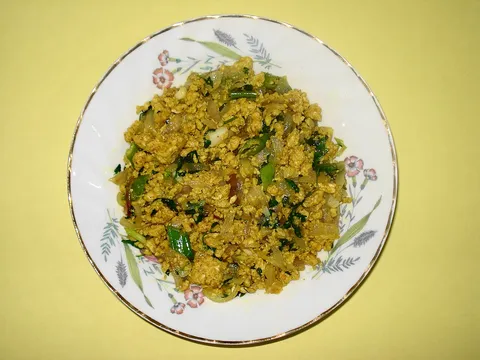
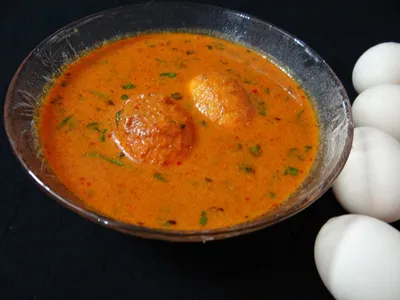
If you want an Indian-style cousin, anda curry boils the eggs first, and anday ka khagina is closer to menemen in spirit, with onion and green chilli instead of pepper.
Tomatoes: fresh, grated or tinned
Tomatoes decide the whole dish, and the two pans want different treatment.
- Menemen works best with ripe fresh tomatoes. Grate them on the coarse side of a box grater and throw away the skin left in your hand. You get pulp with no tough peel, and it cooks down in 6 to 8 minutes.
- Shakshuka is happy with a 400 g (14 oz) tin, which is thicker and more consistent than out-of-season fresh tomatoes. If you use fresh, plan on 600 g (1 1/3 lb) and a longer simmer.
- A pinch of sugar, about 1/4 teaspoon, rounds off sour tomatoes in either. Add it with the salt.
- Tomato paste: 1 tablespoon stirred into a thin sauce gives body without extra simmering.
Using the pan you have
A 24 to 26 cm (10 in) frying pan fits 4 eggs in shakshuka with room for the wells. A smaller pan crowds the eggs and the whites run together. Cast iron holds heat well but keeps cooking the eggs after the stove is off, so pull shakshuka a minute early. If you do not have a lid that fits, a baking tray or flat plate works.
For menemen, a non-stick pan makes the soft curds easier to move and stops the egg catching on the base. Use a wooden spoon or silicone spatula and fold from the edges to the centre.
Variations that stay true to the dish
- Menemen with onion. A long-running argument in Turkish kitchens is whether menemen has onion. Both versions are cooked. If you add it, soften it first for 4 minutes so it is not crunchy.
- Cheese. Crumbled feta or white cheese stirred in at the end of menemen is common. Go light on salt when you do.
- Shakshuka with spinach or chickpeas. Add a handful of spinach with the tomatoes, or 1/2 cup of tinned chickpeas, drained, to make it a fuller meal.
- Spiced desi version. Swap the paprika for 1/2 teaspoon of kashmiri chilli, add a few curry leaves in the oil and finish with chopped coriander.
Leftovers
Menemen does not keep; eat it straight away. Shakshuka sauce, without the eggs, keeps in the fridge for a day or two and reheats well, so you can make a double batch of sauce and poach fresh eggs the next morning. Reheat the sauce until it is steaming hot before the eggs go in.
Bread matters
Both dishes need something to mop up the sauce. Turkish simit, plain flatbread, toast, paratha and khubz all work. A thin crust gets soaked, so tear it rather than slice.
Common mistakes
- Watery sauce: cook the tomatoes down before eggs go in.
- Rubbery eggs: pan too hot. Lower the heat before adding eggs.
- Bland: salt the tomatoes early, because salt draws their juice and helps them break down.
- Cold eggs from the fridge: they drop the pan temperature. Let them sit out 15 minutes.
A pantry list for both
| Item | Amount for 2 |
|---|---|
| Eggs | 4 |
| Tomatoes (fresh or 1 tin) | 3 or 400 g |
| Onion | 1 |
| Green or red pepper | 1 to 2 |
| Garlic | 3 cloves |
| Cumin, paprika, chilli flakes | pantry |
| Bread | 2 to 4 pieces |
Degchi can suggest either from what is in your pantry when you add eggs and tomatoes; the pantry sandbox lets you try it without signing up.
Related recipes

Related posts
Shakshuka Recipe: Runny Yolks, No Watery Sauce
Shakshuka goes wrong in two directions: pink, watery sauce or hard yolks. This guide follows our 30-minute recipe and shows where each problem starts.
Suhoor Ideas That Keep You Full Until Iftar
Suhoor is eaten half asleep, so it has to be quick. Six filling ideas from our recipe library, with real prep times and what you can prepare the night before.
What Can I Cook With Eggs? 9 Dinners and Breakfasts From Our Recipes
Eggs are the emergency dinner. Nine dishes from our recipes, from a 10-minute omelette to a Bangladeshi egg curry, with boiling times and food-safety basics.