 Degchi
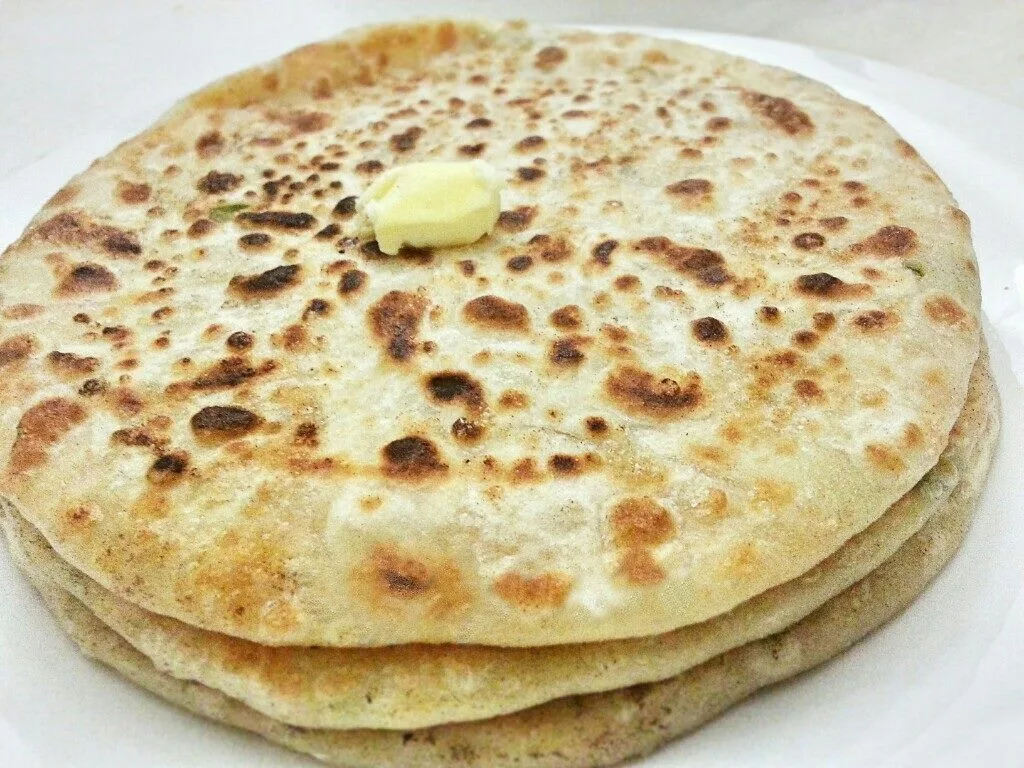
Photo: Affaf Ali / CC BY-SA 4.0
How to Make Paratha With Layers You Can Peel Apart
You roll a paratha, fry it in ghee, and it comes out like a thick roti. Nothing wrong with that, but it is not the one with the soft, flaky sheets that pull apart at the table. If you want to know how to make paratha with layers, the secret is in what you do between kneading and rolling. The dough is the same atta dough you use for roti.
A note on what is in our recipe library: there is no plain lachha paratha recipe on the site yet. We do have three parathas that teach the same dough and tawa skills: Aloo Paratha, Egg-Stuffed Flatbread and Moglai Porota. The folding method below comes from an outside recipe we read, and is credited in the sources note for this post.
Dough first: same as roti, a little more generous
Both the aloo and egg paratha recipes in our library ask for a soft dough made from whole-wheat atta, salt and water. The Aloo Paratha recipe uses 300 g (2.5 US cups) of atta and rests the dough 15 minutes. Moglai Porota uses 300 g (2.4 cups) of maida, which is plain white flour, kneaded soft and slightly oily, and rests it 30 minutes.
Soft matters here. A stiff paratha dough fights you at the pleating stage and the layers crack instead of stretching. If you need a refresher on water and resting, the soft roti post covers it.
How to make paratha layers: the pleat-and-coil fold
This is the whole trick. Take a ball of dough and roll it into a circle about 7 to 8 inches (18 to 20 cm) across, thin but not paper-thin. Then:
- Smear 1 to 2 teaspoons of ghee or oil over the whole circle.
- Sprinkle a thin dusting of dry flour on the ghee. The flour keeps the layers from fusing back together.
- Fold the circle into narrow pleats, about half an inch each, like a paper fan.
- Lift the pleated strip by its ends and stretch it a little in the air so it lengthens.
- Coil it from one end into a spiral, like a Swiss roll, and tuck the loose end underneath.
- Rest the coils, covered, for at least 30 minutes. The source we used says "at least half an hour" for the coiled dough. Do not skip this; a rested coil rolls out evenly, an unrested one springs back.
Then dust each coil and roll it out gently to the same 7 to 8 inches. Press the rolling pin lightly. If you flatten it hard the layers merge.
Ghee and tawa heat: medium-high, not scorching
Heat a heavy tawa until it is properly hot before the paratha goes on. The source we read cooks on a medium-high flame: about 20 seconds on the first side without moving it, flip, another 20 seconds, flip again and cook with ghee until brown spots appear.
The Aloo Paratha recipe in our library is a stuffed version and cooks longer, about 2 minutes per side in ghee (it uses 4 tablespoons across three servings), until golden and crisp. The egg paratha uses 3 tablespoons of ghee across two. Those quantities are generous on purpose.
If your parathas come out pale and tough, the tawa was cool. If the outside is dark and the inside raw, it was too hot or the paratha was too thick. Adjust one at a time.
Opening the layers
As soon as a paratha comes off the tawa, press it between your palms, or crush it gently toward the centre, to expose the inner layers. The source we used describes pressing with a flat ladle during cooking so the layers puff, and gently crushing the finished paratha. Do it while it is hot.
Stuffed parathas: where the layers matter less
For aloo paratha, forget the pleats. Knead the dough, rest it 15 minutes, mash 400 g (about 0.9 lb) of boiled potato with two green chillies, 2 tbsp coriander and salt, and let it cool slightly. The recipe tip is blunt: warm filling makes the dough soggy and it tears. Seal the stuffing into a ball, flatten, and roll gently. Oiled hands help, according to the tip on the recipe page.
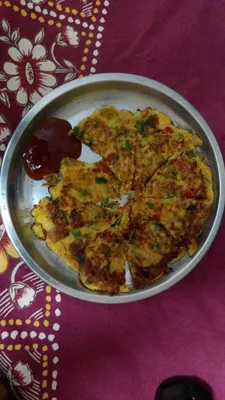
For the egg paratha, roll the dough thin and half-cook one side for about 2 minutes. Pour the beaten egg with onion, chilli and coriander on top, fold it like an envelope, and fry with ghee around the edges for about 5 minutes. The recipe page's tip is that a thin flatbread cooks through faster once the egg is folded in.
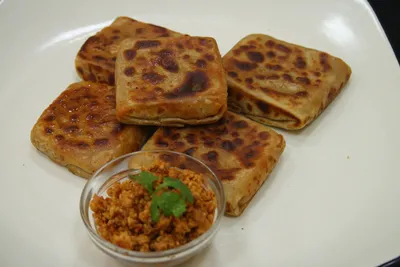
Moglai Porota is the showpiece: a thin sheet of dough around an egg-and-mince filling, folded into a sealed square, shallow-fried on medium heat for about 8 minutes. The tip says to seal the edges firmly or the egg leaks into the oil.
Making them ahead
The coils already need a 30-minute covered rest, so the fold can happen well before dinner. Cook the parathas just before serving. We have no tested numbers for holding or freezing finished parathas, so we will not give any.
For a school-morning plan that uses these, see our school-morning breakfast ideas and lunchbox ideas.
A mistake list for next weekend
- Dough too stiff to pleat, so add water next time.
- No flour between the ghee and the layers, so the layers stick.
- Skipping the 30-minute rest on the coils.
- Rolling too hard, which flattens the layers into one sheet.
- A tawa that is not hot enough when the paratha goes on.
- Letting the paratha cool before crushing it open.
If you are deciding between a plain paratha and aloo paratha tonight, Degchi's pantry matcher can check if you already have the potatoes and atta: try it here.
Related recipes
Related posts
What Can I Cook With Eggs? 9 Dinners and Breakfasts From Our Recipes
Eggs are the emergency dinner. Nine dishes from our recipes, from a 10-minute omelette to a Bangladeshi egg curry, with boiling times and food-safety basics.
School Lunchbox Ideas With South Asian and Gulf Flavours
Plenty of home-cooked dishes travel well in a lunchbox. Here are five from our library, how long they take, and how to pack them so they are still good at noon.

When Kids Refuse Dinner: Desi Dishes That Often Get Eaten
A child who refuses dinner is exhausting. Seven desi dishes from our recipes that tend to work with fussy eaters, and small changes in spice, texture and plating.
Desi Weekend Brunch Plan: Saturday Quick, Sunday Slow
Weekend brunch fails when you try to cook everything fresh at 11 am. Prep the night before, pick one star dish a day and keep the sides cold or reheatable.