Degchi
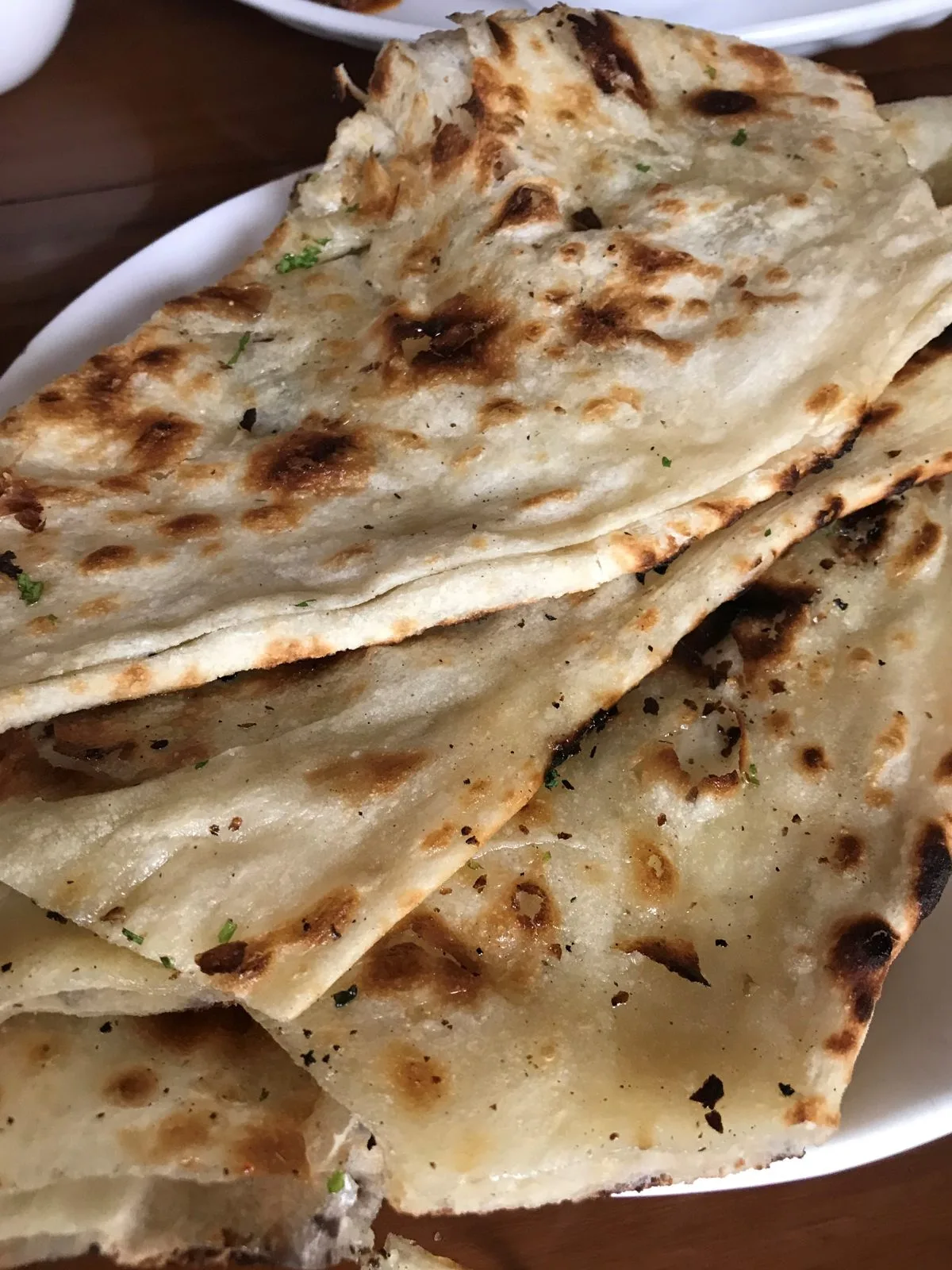
Photo: Rajeeb Dutta / CC BY-SA 4.0
How to Make Soft Roti That Stays Soft Past Dinner
The first roti is fine. By the fourth you are tearing a stiff disc in half and calling it "crispy". If that sounds familiar, the fix is almost never a secret ingredient. It is water, time and heat, in that order. This is how to make soft roti with plain whole-wheat atta, and how to rescue each stage when it goes wrong.
One note on our recipe library: it has Tandoori Roti rather than an everyday phulka or chapati, so the dough quantities below come from that page and the rest is general technique, with sources listed where a figure comes from outside our data.
How to make soft roti: start with the water
Our Tandoori Roti recipe uses 300 g (about 2.5 US cups) of whole-wheat atta, salt, and warm water added gradually. It does not give a fixed water figure, and that is deliberate: atta differs between brands and between a humid kitchen in Dubai and a dry one in Denver.
One published chapati recipe we opened uses 2 1/2 cups atta with roughly 3/4 cup lukewarm water, added in quarter-cup stages and then a teaspoon at a time. That is a useful starting point, not a law. Use it like this:
- Add about two thirds of the water and bring it together.
- Knead, then add water a teaspoon at a time until the dough is soft and gives when you press it, but does not stick to your palm.
- If it clings to the bowl, dust a pinch of dry atta. If it cracks at the edges, wet your hand and knead again.
A dough that feels slightly too soft is better than one that feels right. Stiff dough is the most common reason rotis turn hard: less water in the dough means less steam to keep the inside soft.
Resting the dough: 20 minutes is the minimum
Our recipe rests the dough for 20 minutes, covered. Other sources we read say 10 to 30 minutes, so the exact figure is not critical. What matters is that you do it. Resting lets the gluten relax, which means the ball rolls out round instead of shrinking back, and it stays rollable thin without tearing.
Cover it with a barely damp cloth or a plate, otherwise a dry skin forms and shows up later as flecks in the roti.
Rolling: thinner than you think, rounder than you fear
Divide the dough into balls. Our tandoori roti recipe makes them about the size of a small orange because that style is thicker. For a daily roti, go smaller, around a lime, and roll to roughly 5 to 5.5 inches (13 to 14 cm), a figure taken from the same chapati recipe.
Dust lightly. Too much dry flour burns on the tawa and tastes bitter. Roll from the centre outward and turn the roti a quarter turn each pass; uneven thickness is what stops it puffing evenly, because the thin patch cooks dry while the thick patch still holds steam.
Tawa heat and why the roti will not puff
The tawa should be hot but not smoking. Hot enough that the roti sets and blisters in seconds, not so hot that the outside scorches before the inside warms.
Here is the common sequence:
- Roti on the tawa until small bubbles appear.
- Flip. Cook until the second side bubbles too.
- Lift it onto an open flame (or press it gently with a folded cloth on the tawa if you cook on electric) and it should puff in seconds.
The usual reasons a roti stays flat:
| Symptom | Likely cause | Fix |
|---|---|---|
| Flat and pale | Tawa not hot enough | Heat longer; first roti is a thermometer |
| Flat with burnt spots | Tawa too hot or too much dry flour | Lower the heat, shake off excess flour |
| Puffs on one side only | Uneven rolling | Roll with quarter turns |
| Hard and crackly | Stiff dough or overcooked | Wetter dough, take it off sooner |
Our Tandoori Roti recipe times the final cook at about 90 seconds, because it finishes over direct flame or a broiler. Treat that as the upper end for an everyday roti, not the target.
Keeping them soft: ghee, stack, wrap
Hot rotis dry out because steam escapes. So trap it. Brush each roti with a little ghee or butter, which our recipe lists as optional, then stack them in a cloth, or in a casserole or lidded pot lined with a cloth. The chapati source we used says they hold for up to a day wrapped in a cloth or foil or in an airtight container, though they are best eaten the same day.
If you cook for a crowd, keep the stack covered and loose rather than flat in an open basket. If you need to hold them longer than a meal, a dry tawa for a few seconds a side wakes up a roti that has stiffened.
A rescue list for the next batch
Before you blame the atta, check these in order:
- Was the dough soft enough? Add water before you add anything else.
- Did it rest at least 20 minutes?
- Was the tawa properly hot before the first roti went on?
- Did you roll to an even thickness, with a light dusting of flour?
- Did you stack them hot and cover them straight away?
If you want to practise on something more forgiving, the dough for Aloo Paratha is the same atta, kneaded soft and rested 15 minutes, and a ghee-brushed tawa is kinder to beginners than a dry one. Our school-morning breakfast guide shows how to fit parathas into a weekday, and the ghee versus oil post covers which fat to brush with.
Degchi can show which dishes your atta, daal and vegetables already cover, and its cook mode has the dough-rest timer built in: try the pantry matcher.