 Degchi
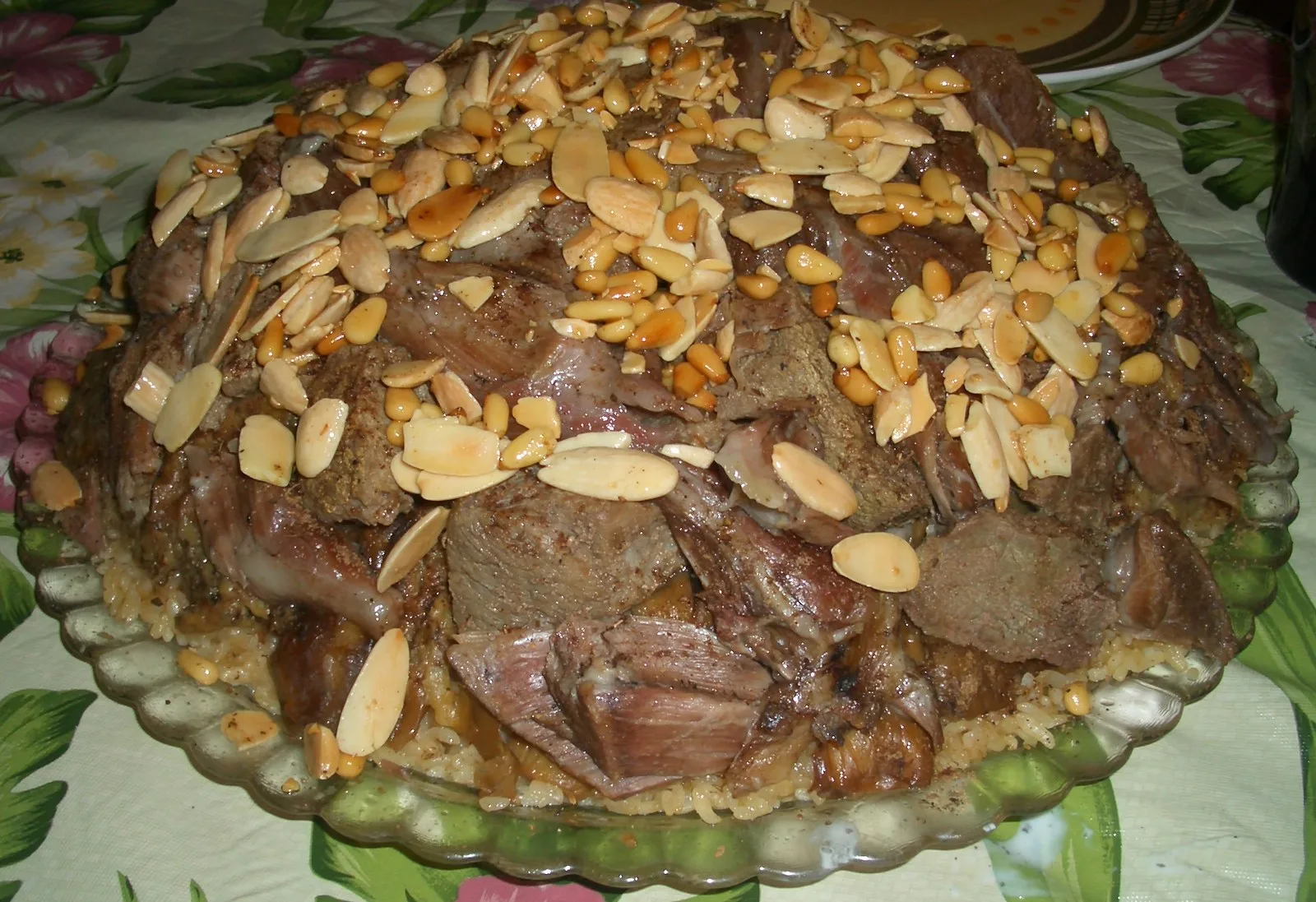
Photo: Bazel / CC BY-SA 4.0
How to Make Maqluba and Flip It Without Breaking
You lift the pot, half the rice stays behind, and the eggplant is welded to the bottom. That is the usual story with maqluba, and it is almost never the flip itself that failed. The flip is the last five seconds of a cook that started an hour earlier. If you want to know how to make maqluba that comes out in one piece, work backwards from the moment of the flip.
We already cover what the dish is, and where it is eaten, in How to Make Maqluba: The Upside-Down Rice Dish. This page is the practical sequel: timings, what each stage should look like, and how to rescue a slump.
How to make maqluba: work backwards from the flip
Maqluba means "upside down" in Arabic. Whatever you put on the bottom of the pot ends up on top of the platter, so the order of layers is the order of the finished dish, reversed. Our maqluba recipe serves 4 and takes about 75 minutes (25 minutes of prep, 50 of cooking).
For the flip to work, three things have to be true when you reach for the platter:
- The rice is fully cooked but not wet.
- The pot has rested long enough for the layers to firm up.
- The base is not stuck.
Everything below is about those three.
The timeline
This is the recipe's method laid out on a clock. Times come from the step timers in the recipe.
| Minute | What happens | What you are looking for |
|---|---|---|
| 0 | Wash the rice, soak it for 20 minutes | Water runs clearer after washing |
| 0 to 20 | Boil the chicken with onion, salt and spices in 1 litre (4 cups) of water, 20 minutes | Meat just cooked, juices clear |
| 20 | Lift the chicken out, measure the broth, top up to 700 ml (3 cups) | A precise number, not a guess |
| 20 to 30 | Fry sliced eggplant and cauliflower florets, about 10 minutes | Golden, but not soft all the way through |
| 30 | Layer: vegetables, then chicken, then drained rice | Rice level, not heaped on one side |
| 30 to 55 | Pour broth just above the rice, boil, cover, cook on low for 25 minutes. Do not stir | No lid-lifting |
| 55 to 70 | Rest off the heat, covered, 10 to 15 minutes | Steam settles, the top firms up |
| 70 | Flip | One firm motion |
In practice you can soak the rice and boil the chicken at the same time, so the real elapsed time is shorter than the sum.
Why the vegetables stay half-cooked
The recipe says to fry the eggplant and cauliflower until golden but "not soft all the way through, since they finish cooking with the rice". Soft vegetables that go into the pot fully cooked turn to mush under the weight of the chicken and rice, and a mushy bottom layer cannot hold a dome. Slightly firm slices, on the other hand, act like a rack: the first layer you set down is the one that has to take the weight when everything turns over.
Drain the fried pieces on paper. Oil pooling at the bottom of the pot is a different thing from a thin film of oil, and the layer that is meant to become the top of the dish should not be swimming.
The broth number
If one measurement matters, it is this one. Our recipe measures the broth, tops it up with water to 700 ml, and pours it in so it sits just above the rice. Our tip notes this works out near 1 cup of rice (about 190 g) to 2 cups of liquid, because the vegetables and chicken take up room in the pot. With 350 g (1.75 cups) of rice in the recipe, that is why the amount looks generous.
Don't eyeball it from the chicken pot. Measure. A slightly short pour means a dry top layer, which will end up as the bottom of the dome and fall apart; too much gives you rice that slides.
The rest, the tap and the flip
The recipe asks for a 10 to 15 minute rest, covered, off the heat. Treat it as part of the cooking time, not an optional extra. During those minutes the rice stops steaming hard and starts to set.
Then:
- Check the platter is wider than the pot and has a rim.
- Do it over the sink or a tray, with oven gloves. The pot is hot and steam will escape from the gap.
- Our tip is to tap the base of the pot gently before lifting.
- Flip in one firm motion. Do not hesitate halfway.
- Leave the pot upside down for a few minutes, as the recipe says, before you lift it. The wait lets the stuck bits drop.
- Lift straight up, slowly.
If the dome slumps anyway
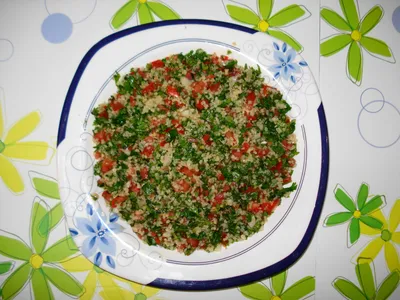
It happens, and it still tastes the same. Spoon the rice back into a loose mound, set the fried vegetables on top, and scatter the toasted nuts over it. Serve it with yoghurt (200 g or 1 cup in our recipe) and a salad, such as tabbouleh or a glass of laban on the side. Next time, check the broth measure first, then the rest time.
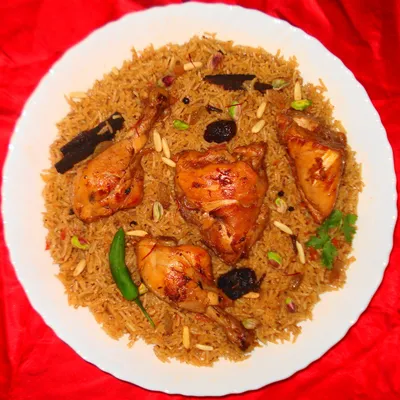
If you like the Gulf rice-and-chicken family, chicken machboos and lamb kabsa cook the rice with the meat in a more conventional way, with no flipping. Machboos vs kabsa explains how those two differ.
One more thing on food safety
Chicken pieces should reach 74 C (165 F) at the thickest part. Boiling for 20 minutes in the recipe is the usual way to get there, but a thermometer removes the doubt, especially if your pieces are large. Leftover maqluba should go into the fridge within about an hour and be reheated until steaming hot.
Planning it so the flip is the only task
If you are cooking this for guests, the part that can be done ahead is the boiled chicken, the measured broth and the fried vegetables. Degchi can hold the ingredient list for a dish like this and show what you already have in the pantry, so it is easier to see if the cauliflower is missing before the guests arrive; there is a pantry sandbox on the home page.
The rescue sheet, if something goes wrong
- Rice wet and loose: too much broth. Measure it next time.
- Top is hard: not enough liquid, or the lid was lifted.
- Vegetables stuck: the pot base needs more oil, or the first layer was cooked too soft.
- Dome fell on one side: rest it longer.
Related recipes
Related posts
How to Cook Mulukhiyah: Chicken, Garlic Tarqa, Rice
Mulukhiyah is a green, garlicky leaf stew ladled over rice. Here is the method from our recipe, how Egyptian and Levantine cooks differ, and what to do about the texture.
A Simple Ramadan Meal Plan for a Busy Family (Gulf and UK)
Ramadan cooking goes wrong when every night is a banquet. Here is a calm weekly rhythm for iftar and suhoor, built from dishes you can actually cook, with a prep day that does most of the work.
Khubz Tannour at Home Without a Tannour Oven
Khubz tannour is baked on the wall of a clay oven, but a hot home oven gets you close. Here is the dough, the timing and the heat, from our recipe, with honest limits.
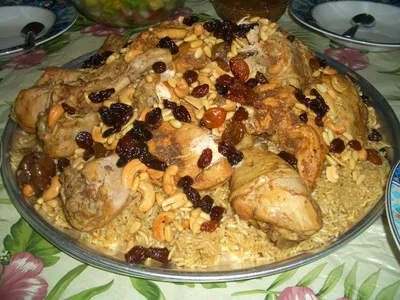
What to Do With Leftover Kabsa or Machboos
A pot of kabsa or machboos almost always makes more than a family eats. Here is how to store it safely and turn the leftovers into a second dinner that does not feel like leftovers.