 Degchi
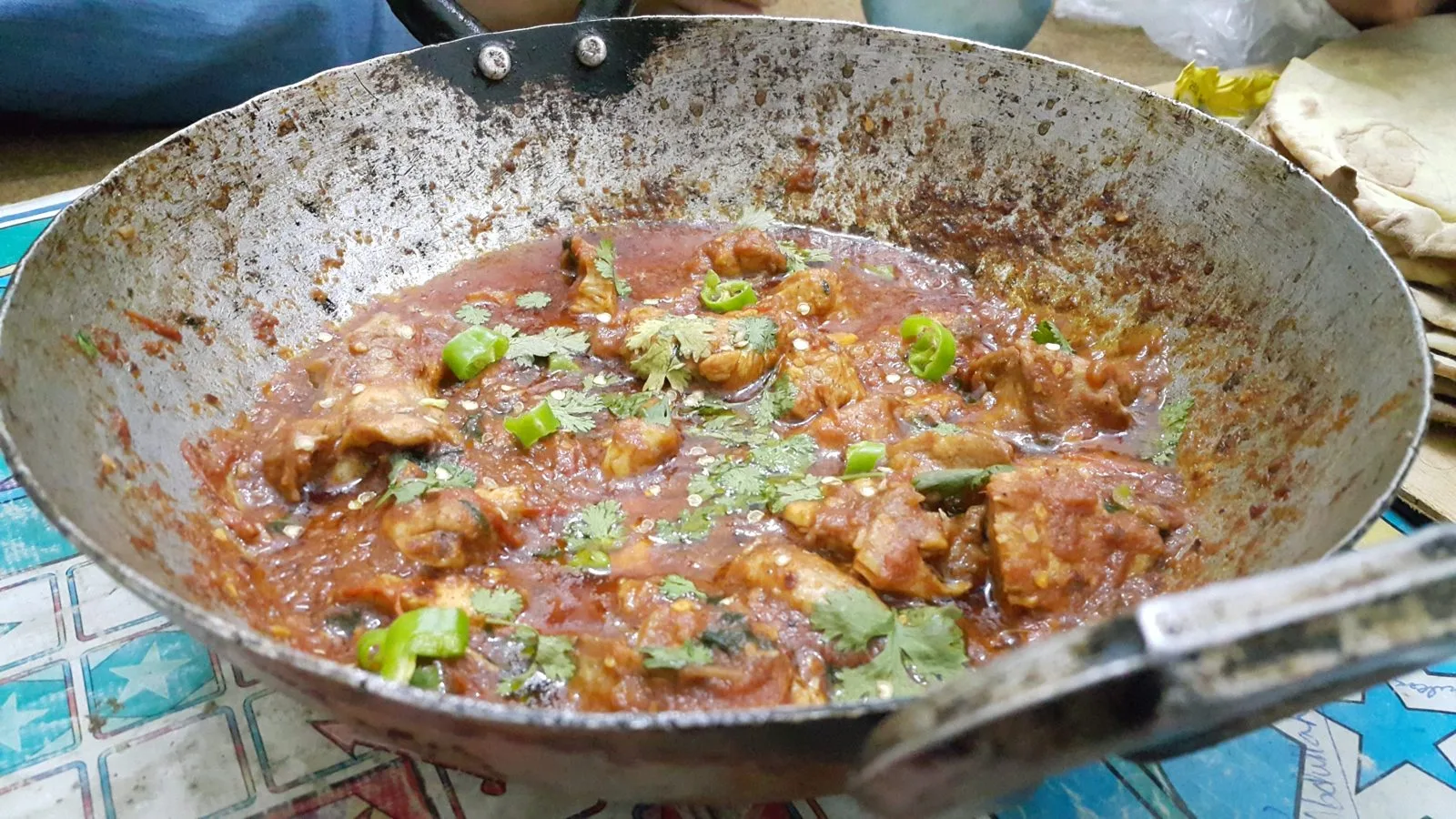
Photo: Kskhh / CC BY-SA 4.0
Karahi: How to Tell the Oil Has Separated and It Is Done
Karahi recipes keep saying "cook until the oil separates", and nobody says what that looks like. So you stop too early, the gravy is watery and pale, and the chicken tastes like tomato soup. Or you wait too long and it catches on the pan.
This guide walks through our chicken karahi recipe with the visual cue at every stage. The recipe serves 4: 800 g (1.75 lb) of bone-in chicken, 4 tomatoes, 5 tablespoons of oil, a tablespoon each of ginger and garlic paste, 5 green chillies and a teaspoon of red chilli powder. No onion and no added water.
Stage 1: the oil and paste (about 30 seconds)
Heat the oil in a karahi or wide heavy pan over high heat until it shimmers, then stir in the ginger-garlic paste for 20 to 30 seconds. The cue is smell. The raw sharpness goes and it smells toasty. Longer and the garlic browns and turns bitter.
Stage 2: searing the chicken (6 to 7 minutes)
Add the chicken and cook on high, stirring every minute. The cue: no pink on the outside and the pan starts to release juices. The recipe tip says that hard searing builds the char and the depth, so do not rush this by lowering the flame.
Use bone-in chicken cut small. Crowding the pan makes the meat steam and turn grey, so use a wide pan.
Stage 3: tomato and chillies (about 15 minutes, covered)
Add the tomatoes, slit green chillies, chilli powder and salt. The recipe says do not add water. Cover and cook on medium for about 15 minutes, stirring occasionally.
The cue here is the tomatoes breaking down. Early on you will see pieces of tomato skin floating in juice. By the end the pieces have collapsed and the liquid has thickened to a loose paste. Oil starts to float in a thin ring at the edge.
Stage 4: oil separation (3 to 4 minutes, uncovered, high heat)
Uncover, turn the heat to high and stir constantly for 3 to 4 minutes. This is the stage the recipe means by "oil separates". Here is the look:
- The gravy no longer sloshes. It clings to the chicken like a glaze.
- Small pools of clear red oil appear at the edges and shine on the surface.
- When you drag a spoon through the middle, the track stays open for a second before filling.
- The colour has gone from bright orange-red to deeper, darker red.
At this point the chicken should read 74 C (165 F) in the thickest piece. Check it with a thermometer, not by colour.
When it stays watery
The recipe tip points to the likely cause: watery or pale tomatoes give a thin gravy that takes far longer to dry down. Options:
- Keep going uncovered on high heat, stirring, for another few minutes. Watch for sticking.
- Next time, pick ripe, deep-red tomatoes. If only pale ones are available, chop them smaller.
- Do not add water to rescue a catching pan. Add a tablespoon of oil and stir hard instead. [VERIFY: whether oil helps loosen a catching pan better than water]
What the pan and the flame change
The cues above hold for any kitchen, but the timings stretch depending on what you cook on.
- Gas, wide karahi (about 30 cm / 12 in): the times in the recipe apply as written.
- Electric or induction hob: heat responds more slowly, so preheat the pan for 2 to 3 minutes before the oil goes in, and expect stage 4 to take a minute or two longer.
- A deep, narrow pot: moisture cannot escape, so the tomatoes stay wet. Either cook stage 3 with the lid ajar or plan on a longer uncovered finish.
- Non-stick pan: it will not give you the dark fond that a steel or cast-iron karahi does, so the gravy looks paler. Do not chase colour by adding more chilli powder; add a pinch of kashmiri chilli if you want redder gravy.
Fixing it at each point
| What you see | What is happening | Do this |
|---|---|---|
| Chicken grey, lots of liquid at stage 2 | Pan overcrowded or heat too low | Turn to high, cook in two batches next time |
| Gravy sour and sharp | Tomatoes underripe | Add a pinch of sugar, cook down longer |
| Oil floating but gravy still thin | Oil separated early, water remains | Keep stirring on high until the track holds |
| Gravy sticking and darkening | Heat too high for too long | Lower to medium, add 1 tablespoon of oil, scrape the base |
Oil can look separated while the gravy underneath is still wet. Judge by the cling and the open track, not the oil ring alone.
Salt, chillies and the final taste
Taste only after stage 4, when the water is gone. Salt tastes weaker in a wet gravy and stronger in a dry one, so a karahi salted at the start often ends up too salty. Start with 1 teaspoon for the 800 g batch and correct at the end.
Slit the green chillies lengthwise rather than chopping them. They release heat into the gravy but stay in large pieces, so a guest can set one aside. If you want milder heat, scrape out the seeds first.
Regional variations
The recipe tips note that Peshawari namkeen karahi uses little beyond salt, tomato and green chilli, while Lahori karahi adds more spice and yogurt. Mutton works too but needs about an hour of covered cooking, as in our mutton karahi guide.
If you prefer a creamier gravy, see the white karahi guide.
The finish
Take it off the heat and stir in fresh coriander and a few thin strips of ginger. Serve straight from the karahi with hot naan or roti. The gravy keeps thickening as it sits, so serve it quickly.
Quick cue card
| Stage | Time | Cue |
|---|---|---|
| Paste | 20 to 30 seconds | Raw smell gone |
| Sear | 6 to 7 minutes | No pink outside, juices appear |
| Tomato, covered | about 15 minutes | Tomato collapsed, thin oil ring |
| Uncovered, high | 3 to 4 minutes | Glossy cling, oil pools, track holds |
Degchi's cook mode can run these timers for you, so you are not guessing: degchi.matrixinn.net/#try.
Related recipes
Related posts
How to Control Heat in Chicken Karahi: Chillies Explained
Our chicken karahi uses 5 green chillies and 1 tsp red chilli powder for 800 g chicken. Here is what each one does, how to turn the heat up or down, and how to rescue a pot that went too far.
Handi vs Karahi: Which Pot, Which Dish?
A handi is a deep slow pot, a karahi a steep wok-like pan. The dishes follow the pot. Here is how our chicken handi and chicken karahi differ, and what to do without either pot.