 Degchi
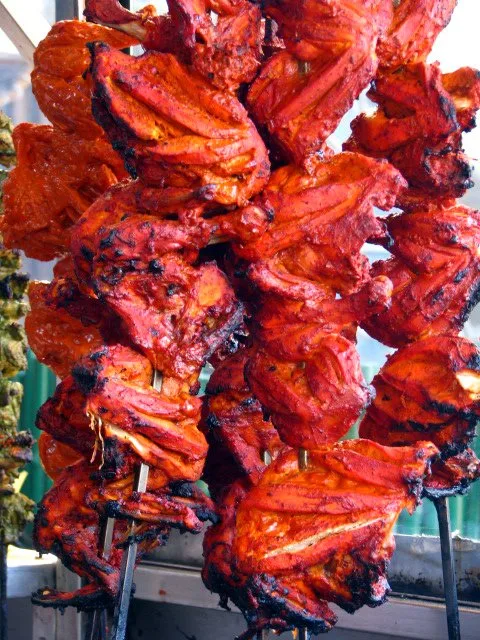
Photo: kspoddar / CC BY-SA 4.0
"Tandoori Chicken Red Without Food Colour: Does It Work?"
Your tandoori chicken tastes right and looks wrong. It came out of the oven a dull brownish orange, while the restaurant version is lipstick red. The gap is almost always food colour, not skill. This post is about tandoori chicken without food colour: what shade you can honestly expect, and the few things that push it as red as spices alone will go.
What our recipe does
Our tandoori chicken serves 4 from 1 kg (2.2 lb) of cut-up chicken with the skin scored. The marinade is yogurt (200 g, about 0.8 cup), lemon juice, ginger-garlic and spices, and it is thick. You marinate at least 4 hours, ideally overnight, then roast on a rack at 230 C / 450 F for about 25 minutes (bone-in thighs up to 35), turning once, until charred at the edges and the thickest piece reaches 74 C / 165 F. The recipe baste uses melted butter halfway.
The sister recipe, our chicken tikka, lists food colour as an ingredient. For both, colour is optional. Leave it out and you still get properly cooked, flavourful chicken; it just looks like what it is.
Why restaurant tandoori is so red
Two things combine: powdered or liquid food colour in the marinade, and a very hot clay oven that chars the surface fast. The dye does most of the work for the colour. Spices contribute some, but only the dye gives that uniform, almost glowing red.
<!-- VERIFY: Claim that restaurants typically use food dye is general food-industry knowledge, stated without a specific source. -->
What spices can do
You will get a deep orange to rust-red, not scarlet. The levers, in order of effect:
- Use Kashmiri chilli powder, not ordinary hot chilli powder. Kashmiri chilli is widely used for its colour more than its heat, so you can use more of it without burning anyone's mouth. Ordinary red chilli powder gives more heat and a duller colour per teaspoon.
- Add paprika if you have it. A teaspoon or two adds red without extra heat. Sweet paprika is milder than most chilli powders.
- Bloom the spice in oil. Stir the chilli powder into a tablespoon of hot oil off the heat, let it cool for a minute, then mix it into the yogurt. Oil-soluble pigments disperse better this way.
- Do not skip the turmeric entirely. A small amount gives a yellow-orange base that makes the red read warmer.
- A little tomato paste (1 tablespoon) deepens the colour and adds a slight tang. It is a home trick, not traditional.
<!-- VERIFY: Kashmiri chilli being colour-forward and the oil-bloom benefit are widely repeated cooking advice; not sourced here. The tomato paste and paprika quantities are suggestions, not from the recipe data. -->
What does not help
- Beetroot juice or powder. It gives a pink-purple tint that browns in heat and can taste earthy. Use it only for a small experiment.
- A longer marinade alone. It improves tenderness and flavour (our recipe says overnight is better), but not much colour.
- Cooking at a lower temperature for longer. It dries the chicken and gives a duller surface. Char and colour come from high heat.
- Adding more lemon. More acid can make the chicken surface tight and chalky, not redder. Our recipe uses 2 tablespoons for 1 kg.
A step-by-step with colour in mind
- Score the chicken, pat it dry. Dry skin and surfaces hold marinade better.
- Make the marinade thick. Thin marinade slides off and leaves pale patches. If your yogurt is watery, hang it in a cloth for 30 minutes; see yogurt types and hung curd.
- Mix the spice-oil paste into the yogurt, taste for salt, and coat every surface including the slits.
- Refrigerate at least 4 hours, ideally overnight.
- Shake off pooled marinade but do not wipe it off. A coat should cling.
- Roast on a rack at the highest sensible setting, 230 C / 450 F, turning once.
- Baste with melted butter or oil halfway. Fat helps browning.
- Finish the last 2 to 3 minutes under the broiler if edges need char, watching closely.
- Rest 5 minutes and check 74 C / 165 F in the thickest piece.
Reading the colour in the oven
- Pale orange with wet glossy patches: too much surface moisture, rack too low. Blot, move the rack up.
- Dark brown edges, pale centre: high sugar in the marinade or the rack is too close to the element. Move down one level, or cover edges with foil.
- Even russet-red: you have it.
If the surface darkens before the inside reaches 74 C / 165 F, move the tray lower and finish with the oven door closed rather than pulling it early. Never trust colour for doneness; use a thermometer.
Setting expectations
Home tandoori without dye is closer to a burnished orange-red with black char spots. It looks more like cooked food and less like a poster. Many people find that fine once they taste it. If the family wants the glossy red for a party, a pinch of food colour is a personal choice; our recipe does not require it.
A quick colour test
Make half a batch with plain hot chilli powder and half with Kashmiri chilli and paprika. Roast them on the same tray, side by side. You will see the difference in one cooking session, and you can note which one your family prefers. Write the winner on the fridge door so next time you know, then open the tandoori chicken recipe in Degchi to plan the shopping.
Related recipes
Related posts
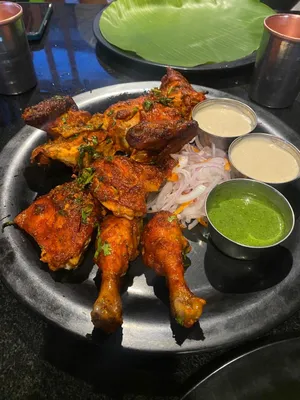
"Skewers for Seekh Kabab and Tikka: Flat, Round or Wooden?"
"Round skewers make seekh kabab spin and wooden ones burn. A short buying and using guide for the most underrated kebab tool."
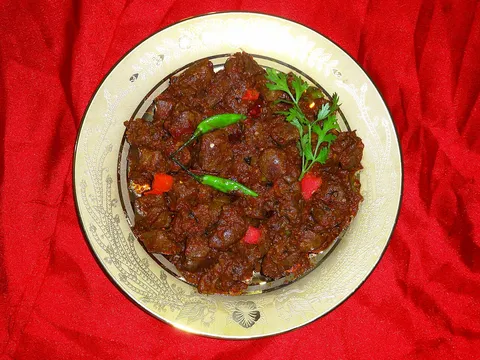
"Katakat at Home: Tawa Timing, Liver and the Chop"
"The clanging spatulas are half the appeal. Here is how to get katakat right on a home tawa without turning the liver to rubber."