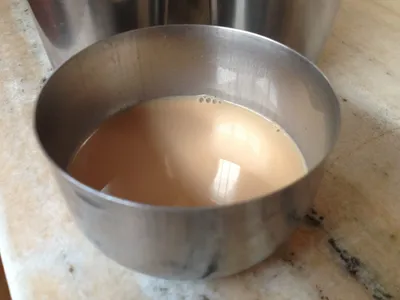
Degchi

Photo: E4024 / CC BY-SA 4.0
Sahlab at Home: Thick, Smooth and Lump-Free
Cornflour in hot milk turns to rubber if you rush it
You tip cornflour into warm milk, and within seconds there are pale lumps the size of peas. Or you cook it for too short a time, and what you get is sweet hot milk with a floury taste. Sahlab at home depends on one habit: dissolve the starch cold, add it slowly to hot milk, and keep stirring.
What sahlab is, and what the home version uses
Sahlab (also written sahlep or salep) is a thick, hot winter drink popular across the Levant, Turkey and the Gulf. The traditional thickener is a flour made from certain orchid tubers. Many home recipes outside those regions use cornflour instead, which is what our sahlab recipe does. It sits close to a drinkable pudding: thick, sweet and scented with cinnamon.
<!-- VERIFY: salep being made from orchid tubers and its common substitution by cornflour/starch are widely stated but not in our recipe data; our research sources are Wikipedia "Sahlab" and TasteAtlas. -->
If you buy a box labelled sahlab or sahlep, read the ingredient list. Some are salep powder with sugar, others are mostly starch and flavour. Follow the packet if you use one, because the amounts differ from the cornflour version below.
The amounts
Our recipe makes four small cups from:
- 500 ml (2 cups) milk
- 2 tablespoons cornflour
- 3 tablespoons sugar
- 1/2 teaspoon ground cinnamon
- 2 tablespoons crushed nuts
- 1 tablespoon desiccated coconut
That is a thick drink, so serve it in small cups or glasses rather than mugs.
Method, with the reason for each step
- Whisk the cornflour with a few spoonfuls of cold milk taken from the 500 ml, until it looks like thin cream with no specks. Cornflour clumps in hot liquid because the outer grains swell and seal the inside. Cold milk lets every grain spread out first.
- Heat the rest of the milk with the sugar in a pot until steaming, about 4 minutes per our recipe. Do not let it boil hard yet.
- Pour in the slurry in a thin stream while stirring, then keep stirring for about 4 minutes, until it coats the back of a spoon. Use a whisk for the first minute, then a spoon.
- Stir in the cinnamon and pour into cups.
- Top with nuts, coconut and a dusting of cinnamon and serve hot.
Give the slurry a quick stir right before pouring, because the starch settles to the bottom of the bowl within a minute or two.
How thick is thick enough?
Lift the spoon out and draw a line across the back with a finger. If the line holds and the milk runs slowly off the edges, stop. It will thicken a little more as it cools in the cup. If it still runs like milk after 4 minutes, simmer on low for another minute or two, stirring.
If you overshoot and the pot turns into pudding, whisk in a splash of hot milk until it loosens.
Rescuing lumps and skin
- Small lumps: pour the pot through a fine sieve into a clean pan or jug, pressing with a spoon, then reheat gently.
- Many lumps: use a hand blender for ten seconds. This is faster than sieving and the texture ends up smooth.
- Skin on top: a skin forms from milk protein as it cools. Stir occasionally while the cups wait, or cover the surface with a sheet of baking paper cut to size.
- Scorched taste: milk catches on the bottom when starch settles on thin metal. A heavy-bottomed pot and low heat prevent it. Our heavy-bottom pot guide explains why.
<!-- VERIFY: hand blender and baking-paper-on-surface fixes are general kitchen techniques, not tested in our recipe. -->
Toppings that earn their place
Crushed pistachios and almonds are the classic pairing. Coconut adds a dry sweetness against the smooth base. Cinnamon is already in the pot, so a dusting on top is for the smell as you lift the cup. A drizzle of honey or date syrup works if you cut the sugar in the pot, but decide before you cook so the drink is not cloying.
Scaling, reheating and serving
Doubling the recipe works if you double both the milk and the cornflour, but use a wider pot so the surface area grows too, and allow a minute or two more for the thickening step. Do not try to halve it into a very small pan, because a thin layer of milk scorches before the starch finishes.
Sahlab sets firmer as it cools, so reheating leftovers needs a splash of milk and low heat while you stir. Keep leftovers in the fridge and eat them within a day, in the same way you would treat any milk pudding. Serve it hot but not scalding, especially for children, because the thick texture holds heat longer than plain milk.
<!-- VERIFY: "eat within a day" is a cautious home rule for milk puddings, not a figure from our recipe data. -->
Sahlab next to its neighbours
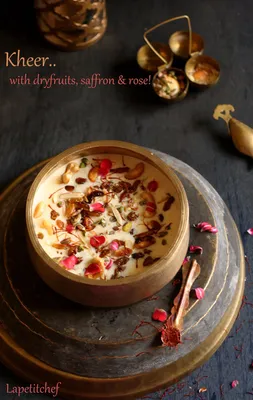
Sahlab is not tea and not coffee, so it fits a different moment in the day. Our cold-evening drinks post compares it with chai and gahwa, and the gahwa and dates post covers the opposite end: bitter coffee served with something sweet. If you want a dessert version, kheer uses a similar idea with rice.
A winter night plan
- 6:30 pm: whisk slurry, measure toppings, put cups on a tray.
- 8:30 pm: heat milk, cook the sahlab for about 8 minutes in total.
- Serve right away while a spoon still stands in it briefly.
Degchi's pantry tracker can flag cornflour and cinnamon as Low, so a cold night does not end with an empty tin.