 Degchi
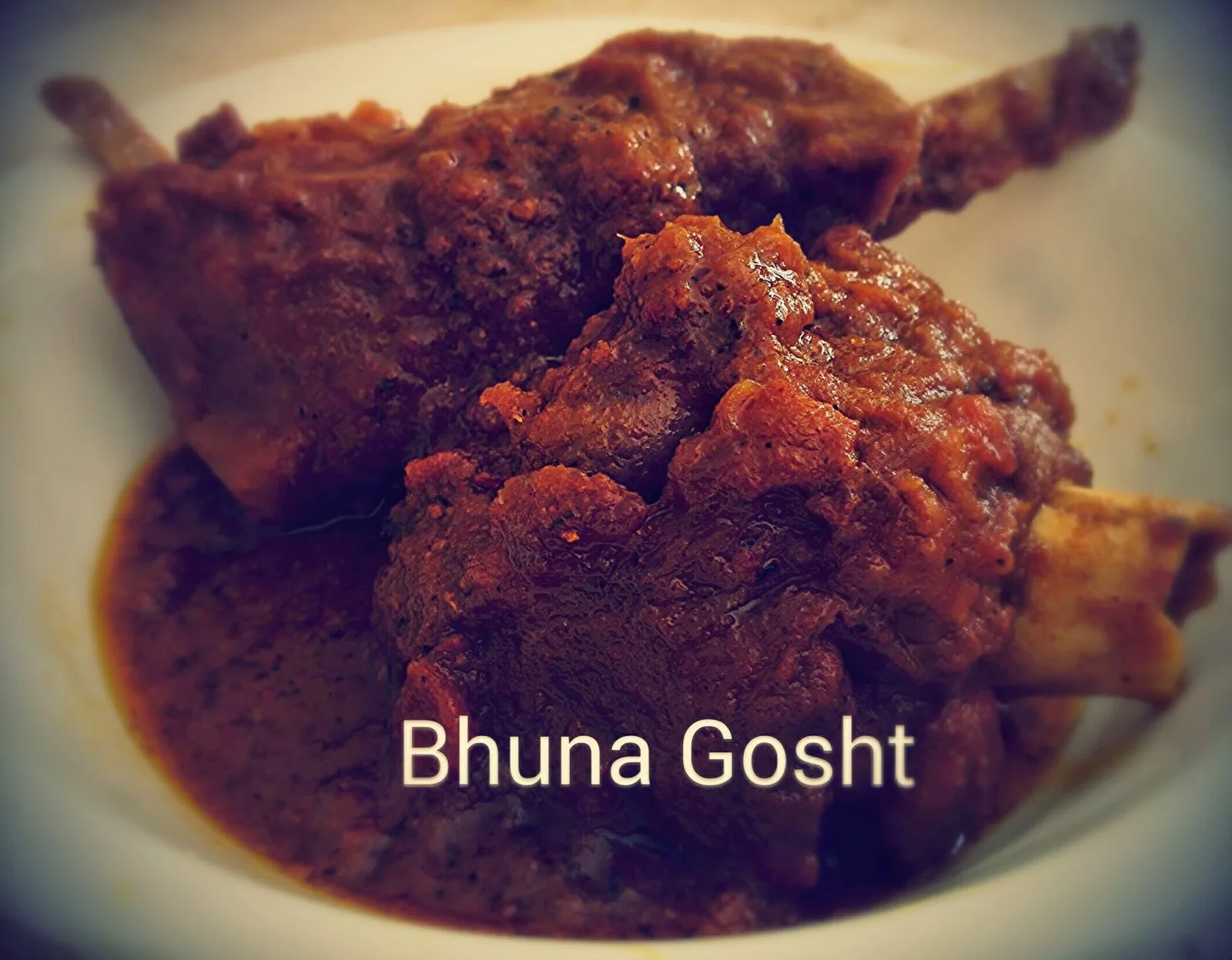
Photo: Rupak76 / CC BY-SA 4.0
Bhuna Gosht: How to Bhunno Without Burning
The onions went dark, the meat went in, and now there is a brown crust welded to the bottom of the pot. The smell is somewhere between roasted and bitter. This is the classic bhuna gosht mistake, and it comes from not understanding what the word actually asks you to do.
Bhunna means to fry and stir a masala until the water is gone and the fat comes back out. A bhuna gosht is the dish where that stage is the whole point: little sauce, meat coated in a dark, concentrated masala. Our bhuna gosht uses 750 g (1.65 lb) of mutton, 2 sliced onions, 2 tomatoes, 150 g (about 2/3 cup) of yogurt and 4 tablespoons of oil. That is not much oil, so you have to manage the heat yourself.
What bhunno actually means in the pot
Think of three states. First the masala is wet and the bubbles are big and lazy. Then it thickens, and the bubbles shrink and spit. Finally the surface turns glossy and a thin ring of oil appears at the edges, sometimes pooling in the middle. That ring is your signal, not the clock.
You will go through this cycle twice in a single bhuna gosht. Once after the tomato and yogurt go in, and again at the very end after the covered cooking.
Stage one: onions that brown, not blacken
Heat the oil and fry the sliced onion for about 7 minutes on medium heat. You want the same deep golden brown all over, not a mix of pale and burnt pieces. The recipe tip says it plainly: slow frying builds most of the colour and flavour.
Too dark is easy to spot. The slices curl, go brittle and smell sharp. If that happens, start again with fresh onions. Burnt onion cannot be fixed with extra spice, and it will taste bitter for the rest of the pot.
Stage two: meat on high heat
Add the ginger-garlic paste and the mutton, then turn the heat up. Fry for around 7 minutes, stirring, until the meat changes colour on the outside. Do not cover. The meat should sizzle, not simmer in its own juices. If the pot is crowded, the meat steams and turns grey, so use a wide pot with a heavy base.
A heavy base matters more here than in almost any other dish. Thin steel gets hot spots, and the paste sticks and scorches within seconds. If you only have a thin pot, keep the heat at medium and add a splash of water whenever you hear a hard crackle.
Stage three: tomato, yogurt and the first oil separation
Add the chopped tomato, the whisked yogurt, 1.5 teaspoons of red chilli powder and 1.5 teaspoons of garam masala. Cook on medium for about 10 minutes, until the oil separates.
Whisk the yogurt well before it goes in, and stir constantly for the first minute afterwards. Cold yogurt hitting a hot pot can split into grains. It looks ugly but tastes fine, and it usually cooks back together once the water evaporates.
| What you see | What it means | What to do |
|---|---|---|
| Large slow bubbles, thin and watery | Still wet | Keep cooking, stir every minute |
| Small spitting bubbles, thick paste | Water almost gone | Stir constantly, lower the heat slightly |
| Glossy surface, oil ring at the edges | Ready to move on | Add water and cover |
| Dark brown crust on the base | Catching | Splash of water, scrape, lower the heat |
The long cover, then the second bhunna
Add a little water, cover and cook on low for about 40 minutes until the mutton is fully tender. "A little" means roughly half a cup (120 ml) to start, not enough to drown the meat. Check after 25 minutes. Thick cuts and tougher meat can need more time, so poke a piece with a fork: it should give without shredding.
Then uncover, raise the heat and dry-roast for about 5 minutes, stirring often, until the masala coats each piece and the oil surfaces. This is the real bhunna. The recipe tip: a splash of water during this stage loosens the bits stuck to the pot without thinning the gravy. Scrape them in, stir, and let it dry again. That brown layer is flavour, as long as it is brown and not black.
When it goes wrong
If the base has caught during the dry-roast, take the pot off the heat at once and let it sit for 2 minutes. Move the meat and masala to a clean pot without scraping the burnt layer, add a tablespoon of water and stir on low heat. You will lose a little, but the dish survives.
If the masala looks pale and oily instead of dark, you probably skipped the final high-heat stage or stopped early. Give it another 3 or 4 minutes on high with constant stirring.
If the gravy is too thin at the end, keep the lid off and keep stirring. Do not add flour or besan.
How bhuna differs from its neighbours
Karahi is a fast, high-heat dish with no onion, done in about 30 minutes. Aloo gosht is a looser curry meant to be eaten with roti and a spoon. Chicken qorma is a yogurt-and-ghee dish that stays smooth. Bhuna sits between them: onion-based, long-cooked, dry at the finish. If you are choosing a pot, our guide to handi vs karahi helps.
A timing sheet for a weeknight start
- 0:00 slice onions, whisk yogurt, make the paste
- 0:10 onions in oil, medium heat
- 0:17 paste and mutton in, heat up
- 0:24 tomato, yogurt and spices in
- 0:34 water in, lid on, heat low
- 1:14 lid off, high heat, dry-roast
- 1:19 coriander, serve
That matches the recipe's 20 minutes of prep and 65 of cooking, give or take. A pressure cooker can shorten the covered stage, but the final dry-roast still needs an open pot. The pantry planner on Degchi can tell you whether the yogurt and mutton are already in your kitchen before you start. <!-- VERIFY: tougher/thick mutton cuts can need longer covered cooking; pressure cooker shortens covered stage -->
Recipes with yogurt Recipes with tomatoes Recipes with ghee Recipes with flour
Related recipes
Related posts
Tamarind Block vs Paste vs Concentrate: Which to Buy
Three jars, one word on the label, very different strength. Here is how to tell tamarind block, paste and concentrate apart and how to swap them in imli recipes.
Hilsa Substitutes Abroad: What to Use for Shorshe Ilish
Fresh hilsa is hard to find and expensive outside Bengal. Several fish can carry the mustard sauce. None is identical, and it is better to say so.
A Lentil-and-Rice Week: Seven Dinners on a Tight Budget
Lentils and rice can feed a family well and stay interesting for a week, if you change the dish, the spice and the texture. Here is a plan that does.
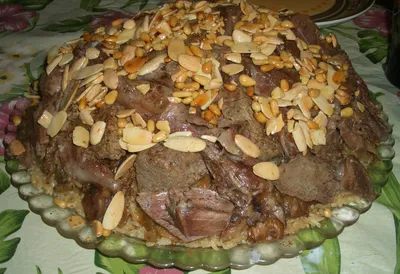
How to Make Maqluba: The Upside-Down Rice Dish
Maqluba means upside down. Fried vegetables, chicken and rice are layered in a pot and flipped onto a platter. Here is how to build it so it holds together.