Degchi
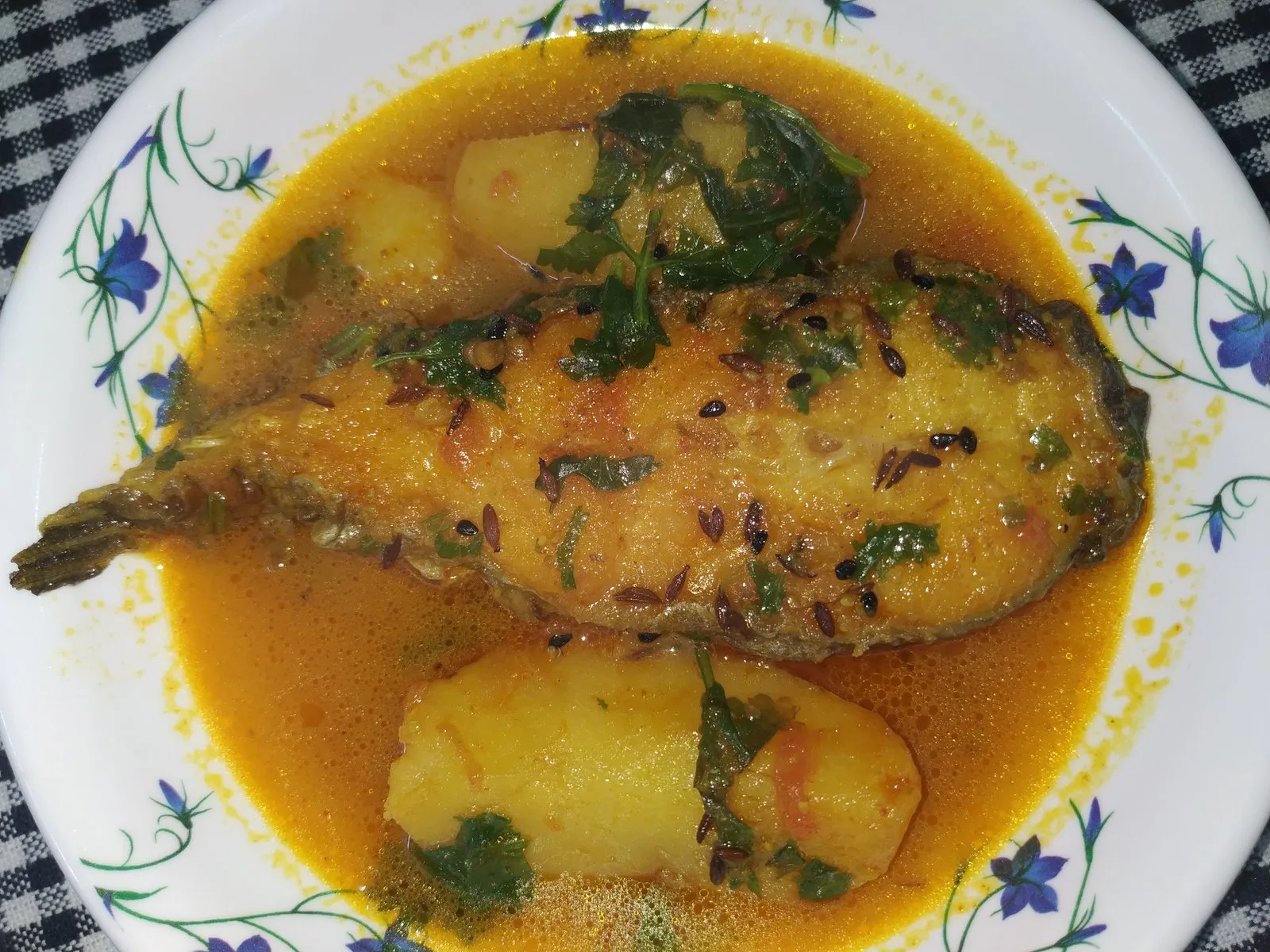
Photo: Atudu / CC BY-SA 4.0
Bengali Fish Curry With Frozen Fish (US and UK)
The fish counter near you does not sell fresh rohu, and the frozen steaks in the Asian grocery have ice crystals on them. You can still make a decent Bengali fish curry. The trouble is not the fish being frozen. The trouble is the water that comes out of it.
Which frozen fish to buy
Our Bengali fish curry uses 600 g (1.3 lb) of fish cut into steaks, for 4 servings. The recipe does not insist on one species, and what matters is that the pieces are thick enough to hold together in a simmering gravy.
- Frozen rohu or katla steaks. The closest match, usually sold in South Asian shops, often with bones. Bone-in steaks keep their shape better than boneless.
- Tilapia or basa fillets. Easy to find in US and UK supermarkets. They are thinner and softer, so handle them more gently and cut them into larger pieces rather than small ones.
- Cod or haddock portions. Firmer and widely sold. Fine in a curry, though the flavour is milder.
If you are looking for a substitute for the prized hilsa, see our post on fish for shorshe ilish. This one is for everyday rohu-style curry.
Thaw it properly
Move the fish from freezer to fridge the night before, on a plate or in a bowl. If you are short of time, seal it in a bag and sit it in cold water for about an hour. Avoid warm water, which starts to cook the outside.
Then do the step that decides the result: dry the pieces on paper towels. Press, flip, press again. Frozen fish releases liquid for a while after it thaws, and wet fish in hot oil spits and steams instead of browning.
The method, with our timings
- Rub and rest. Rub the steaks with turmeric and salt and let them sit 15 minutes. For frozen fish, pat dry again after this, since salt draws out even more moisture.
- Fry the fish. Heat the mustard oil (4 tbsp in the recipe) until it smokes lightly, then shallow-fry the pieces until golden on both sides, about 8 minutes in total. Set them aside.
- Fry the potato. Two potatoes in wedges, in the same oil, until lightly golden, about 6 minutes. Set aside.
- Make the base. Sliced onion and 1 tsp ginger paste in the same oil for about 4 minutes, then one chopped tomato with the rest of the turmeric and chilli powder for 3 minutes.
- Simmer. Add 3 cups of water, the potatoes and three slit green chillies. Bring to a boil and simmer 10 minutes.
- Return the fish. Slide it back in and simmer gently for 5 minutes. Serve with steamed rice.
Mustard oil abroad
Mustard oil is the signature flavour. In some countries it is sold with an "external use" label, and rules differ by place, so check what your local shops and regulations say and choose what you are comfortable with. If you prefer another cooking oil, the curry will be milder and less sharp, but it will still work.
Fish-specific adjustments
| Fish | Change |
|---|---|
| Rohu or katla steaks, bone-in | Follow the recipe as written |
| Tilapia or basa fillets | Fry 2 to 3 minutes per side, simmer only 3 minutes at the end |
| Cod or haddock | Fry briefly, simmer 4 minutes, do not stir with a spoon |
| Very ice-glazed steaks | Rinse off the glaze under cold water before thawing |
The frying step is what keeps pieces from breaking in the gravy. Our recipe's tip says a short fry before simmering stops the fish falling apart, and that matters even more with softer frozen fillets.
Two mistakes worth avoiding
- Stirring after the fish goes in. Tilt and swirl the pan instead.
- Simmering for 15 minutes "to be safe." The fish is already fried. Five minutes is enough to share flavour. Cook fish until it is opaque and flakes easily, and eat leftovers within a day, reheated until steaming hot.
A shopping list for one batch
- 600 g (1.3 lb) frozen fish steaks or fillets
- 2 potatoes, 1 onion, 1 tomato, 3 green chillies
- 1.5 tsp turmeric total, 1 tsp chilli powder, 1 tsp ginger paste
- 4 tbsp mustard oil or another cooking oil
- Rice for 4
Check what you already have in the cupboard on the Degchi home page before you shop, and add only the missing items. Pair it with aloo posto if you want a second Bengali dish on the table.
Serving it the Bengali way
Plain steamed rice is the default partner, and it does a job: the thin gravy soaks into the grains. Put the rice in the bowl first and ladle the curry over it so the potato wedges and a piece of fish land on top. A wedge of lime and a few raw green chillies on the side are common at the table, though they are optional. If you want a second plate, bhuna khichuri is a heavier one-pot option, while fish fry uses the same frozen fish without the gravy at all.
Storing leftovers
Cool the curry quickly, move it into a shallow container and refrigerate. Eat it within a day, reheated gently until steaming hot. Fish that has been fried, simmered and then reheated will be softer than on day one, so do not stir it hard. Freezing a curry that was made from frozen fish is not something we recommend, since refreezing tends to leave the texture mushy.
Why the potato is not optional
Many people see the potato as filler. In this curry it does two jobs. It thickens the gravy slightly as it simmers, and it gives a softer bite against the firmer fried fish. The wedges are fried first so they hold their shape for the full 10-minute simmer. If you are cutting down on frying, parboil them instead, but expect a paler, softer result.
Recipes with potatoes Recipes with rice