 Degchi
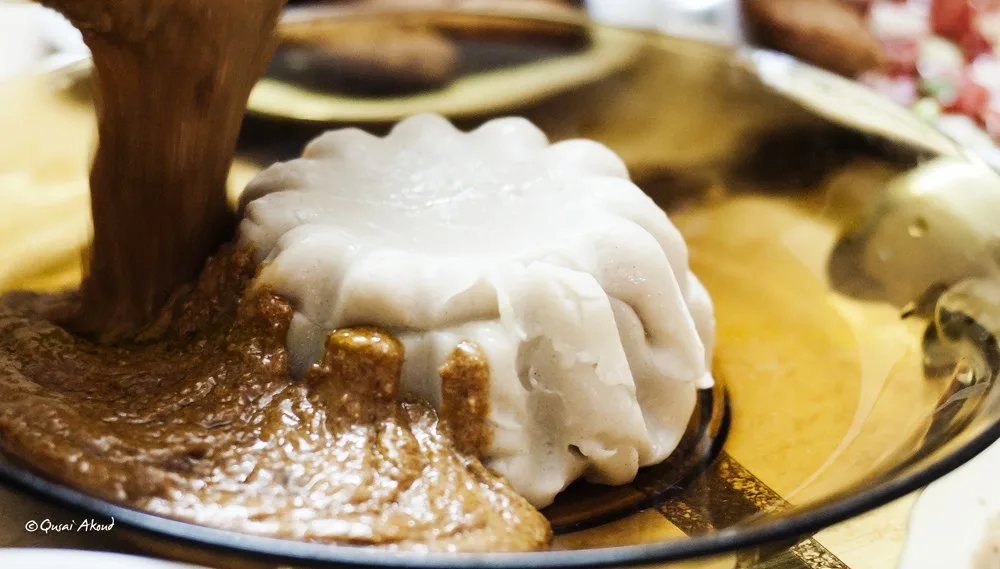
Photo: Qusai Akoud / CC BY 4.0
Aseeda: Smooth Gulf Flour Porridge Without Lumps
Four ingredients, one wooden spoon, and the dish still comes out in lumps. That is aseeda. In the Gulf and Yemen it is a warm, stretchy porridge of flour and water, eaten with ghee and date syrup or honey, often for breakfast or in cooler weather. It is closer to a soft dumpling than to oatmeal, and it is one of the quickest dishes in our library: aseeda is rated Easy, serves four and takes 20 minutes, with 5 for preparation and 15 for cooking.
The ingredient list
| Ingredient | Metric | US |
|---|---|---|
| Plain flour (maida) | 150 g | 1 1/4 cups |
| Water | 500 ml | 2 cups, about 1 pint |
| Salt | a pinch | a pinch |
| Ghee, melted | 2 tbsp | 2 tbsp |
| Date syrup or honey | 3 tbsp | 3 tbsp |
Regional versions use whole wheat flour, sorghum or a mix, and the texture changes accordingly. Our recipe uses white flour, which gives a pale, stretchy result. VERIFY: regional flour variations (wheat, sorghum, barley) are widely described, but we have not cited a specific source.
The method, with what you should see
- Boil the water. Bring 500 ml water with a pinch of salt to a rolling boil in a heavy pot. The recipe sets a 3-minute timer. A rolling boil matters: flour thrown into warm water clumps instantly.
- Add the flour gradually. Lower the heat and sprinkle the flour in with one hand while stirring with the other. Do this over about 5 minutes. A fistful dumped at once makes lumps that are almost impossible to break afterwards.
- Beat, do not stir. Press and fold the mixture against the pot wall with a sturdy wooden spoon. After another 5 minutes it should turn smooth, thick and stretchy, and pull away from the sides in one mass. A whisk is not strong enough once it thickens.
- Shape it. Spoon it into a bowl, smooth the top with a wet spoon and make a well in the middle.
- Finish. Pour melted ghee and date syrup or honey into the well and serve warm.
Why lumps happen and what rescues them
Raw flour hits hot water and the outside gelatinises into a skin, trapping dry flour inside. That is a lump. Prevention is slow addition and constant stirring.
If you already have lumps, there are two options:
- Beat harder. Squash lumps against the side of the pot with the back of the spoon. A few minutes of this often works.
- Sieve and re-cook. If it is badly lumpy, scoop the mass into a sieve with a little hot water added, press through with the back of a spoon, then return it to the pot to cook for 2 minutes.
Another trick is to mix part of the flour with 100 ml of cold water into a smooth slurry first, then pour it into the boiling water. It is a common method for lump-free porridges, though not what our recipe does. VERIFY: this is a general technique we have not tied to a specific aseeda source.
Texture: thin, stiff or just right
Aseeda is meant to be soft and slightly sticky, firm enough to hold a shape and tear with a spoon. A good test: lift a spoonful. It should stretch and fall in a heavy ribbon.
- Too thin: keep beating over low heat for 2 to 3 minutes. The flour is not fully cooked.
- Too stiff: add 2 to 3 tablespoons of hot water and beat again.
- Tastes floury: it needs more cooking time. Raw flour tastes pasty. Keep beating until the smell changes from raw dough to something closer to bread.
Scorching
The base of the pot sets quickly. Use a heavy pot, keep the heat low once the flour is in and scrape the bottom every minute. A thin pot will leave a layer stuck to the base, which tastes burnt and is hard to clean. Soak it in warm water for 20 minutes before washing.
How people eat it
Traditionally with the hand: tear off a piece, dip it in the ghee and date syrup in the well. Savoury versions are served with a meat or vegetable stew, which is much closer to what thareed does with bread. For a sweeter table, aseeda sits comfortably next to harees and a pot of tea. For a hot drink to go with it, look at hot drinks for a cold evening.
Eat it warm. It firms up as it cools. Reheat leftovers with a splash of water in a pot or microwave until steaming hot, though it never quite returns to the freshly beaten texture.
What to buy and have ready
If you want to cook it tonight, you need flour, ghee and something sweet: date syrup, honey or even sugar melted into ghee. Most people already have them. Degchi can check these against your pantry list and tell you what is missing before you start; open the recipe from the home page.
Mistakes to avoid
- Water not at a rolling boil.
- Flour added all at once.
- Stirring with a whisk instead of a spoon.
- Stopping too soon, leaving it floury.
- Using a thin pot on high heat.
Recipes with ghee Recipes with flour

Related posts
Ghee, Makhan, Butter and Desi Ghee: What the Labels Mean
Makhan is butter. Ghee is cooked-down butter. Desi ghee is a marketing phrase. And vegetable ghee is not dairy at all. Here is how to read the jar.
Shakshuka Recipe: Runny Yolks, No Watery Sauce
Shakshuka goes wrong in two directions: pink, watery sauce or hard yolks. This guide follows our 30-minute recipe and shows where each problem starts.
Ghee vs Oil: What to Use for Everyday Desi Cooking
You do not have to pick a side. Learn which dishes shine with ghee, which are better with oil, and how to keep both without waste.