Degchi
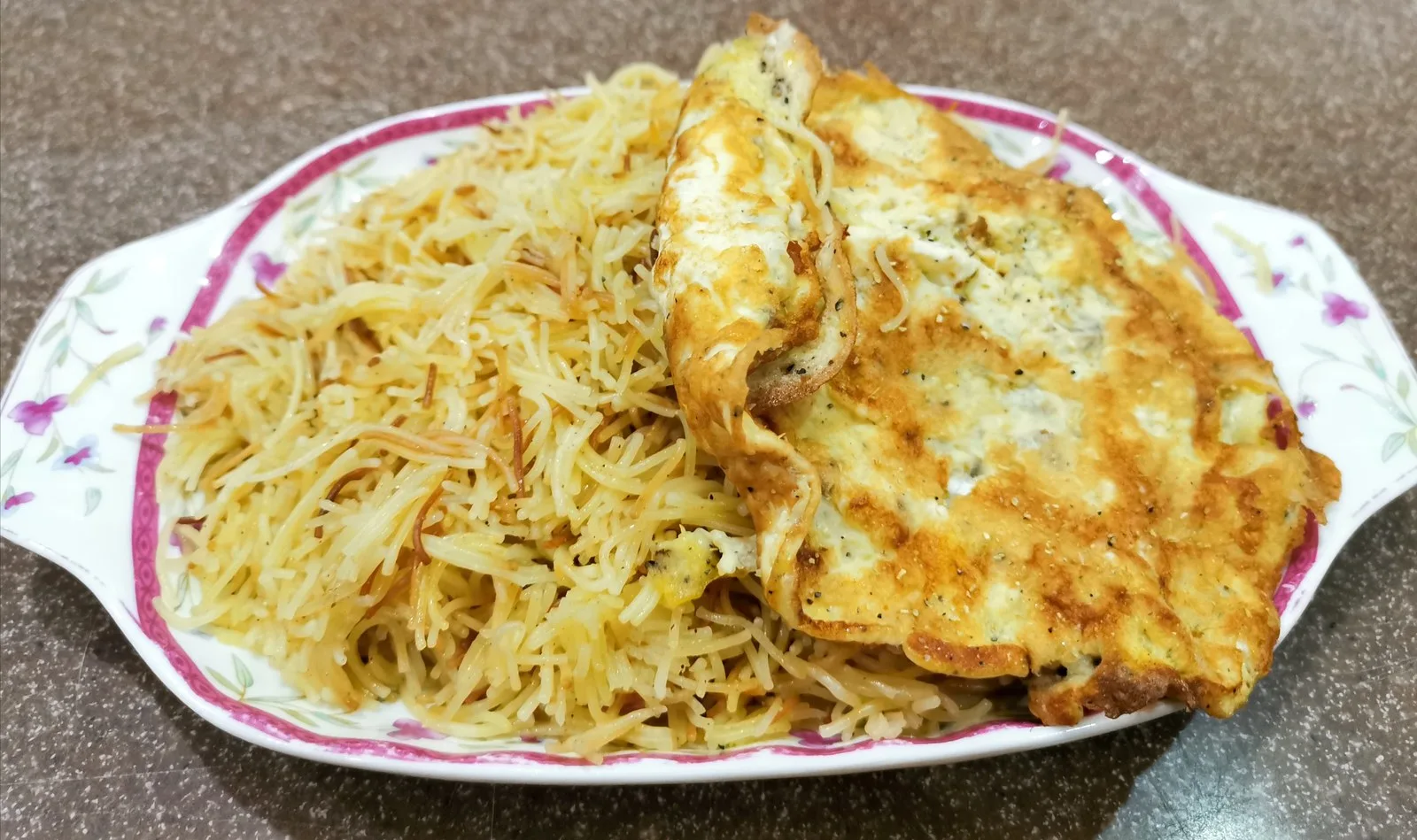
Photo: Droodkin / CC BY-SA 4.0
Gulf Weekend Breakfast: Balaleet, Chebab and Khameer
Weekend brunch in a Gulf-style home is rarely one dish. It is a table of small things: something sweet, something savory, warm bread, tea. The trick for anyone cooking it abroad is not the recipes, it is the order. Here is a plan for a Gulf-style weekend breakfast for four, built from recipes in our library, with timings so nothing goes cold.
A note first: Gulf food varies by country, family and season, and one table cannot represent all of it. This is a sensible spread, not a rulebook.
The five dishes and what each one does
| Dish | Role on the table | Active time |
|---|---|---|
| Balaleet | Sweet vermicelli with a savory egg on top | 25 min |
| Chebab | Soft, sweet saffron pancakes | 25 min |
| Mutabbaq | Savory stuffed folded pastry | 50 min |
| Khameer bread | Soft, slightly sweet bread | 120 min (mostly rising) |
| Khubz raqaq | Paper-thin flatbread | 35 min |
You would not make all five on the same morning. Pick three: one sweet, one savory, one bread. The tea and dates take care of the rest.
Balaleet: the sweet-and-egg surprise
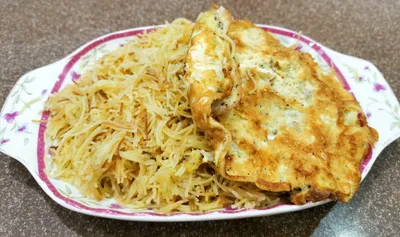
Balaleet confuses newcomers because the sweet vermicelli sits under a plain omelette. Our recipe uses 200 g (7 oz) vermicelli, 3 tablespoons sugar, 3 cardamom pods, a pinch of saffron, 2 tablespoons butter and 3 eggs, and takes about 25 minutes.
The point is the contrast: the vermicelli is sweet and perfumed, the egg is salted and plain. Do not sweeten the egg and do not salt the noodles heavily. Many families treat it as a breakfast for guests.
Chebab: pancakes that suit the same plate
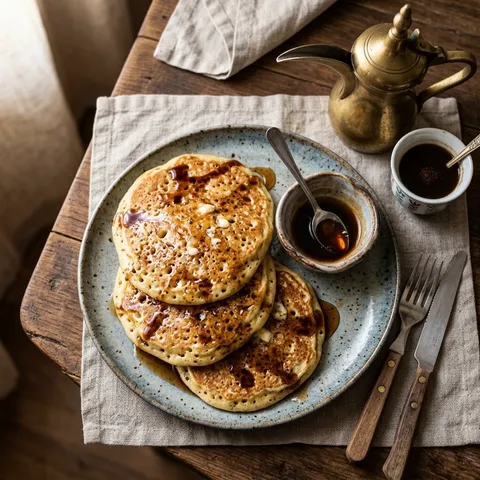
Chebab here is a batter of 200 g (1.6 cup) flour, 3 tablespoons sugar, cardamom, baking powder and saffron whisked with 250 ml (1 cup) milk and an egg. Rest the batter for 10 minutes, pour small rounds on a lightly oiled hot griddle, and flip when bubbles form on top, about 2 minutes. The second side takes about a minute. Serve with date syrup or honey.
The batter can be mixed the evening before and covered in the fridge, but stir it before cooking. If it has thickened, add a spoonful of milk.
Mutabbaq: the savory one that needs a plan
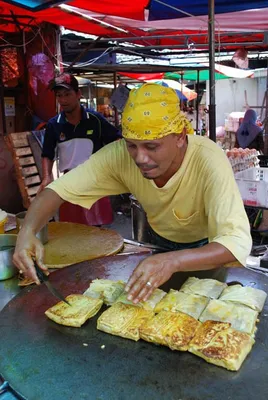
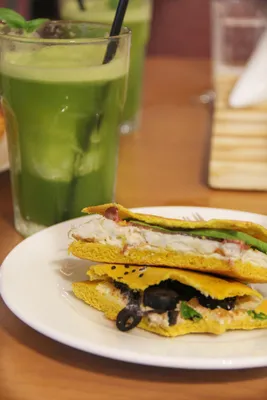
Mutabbaq is a thin dough folded around a filling and pan-fried. Our version uses 250 g (2 cup) flour for the dough and 300 g (about 0.65 lb) minced meat cooked with onion and baharat (a Middle Eastern spice mix) until browned and dry, then mixed with raw beaten egg and coriander once cooled slightly.
Food safety matters here. Cook the mince until it reaches 71 C / 160 F before it goes into the filling. Because the egg is mixed in raw and the parcel is then pan-fried, make sure the fried parcels are cooked all the way through, hot in the middle and golden outside, and don't leave them sitting out for hours.
The dough rests for 30 minutes, so start it first. Stretch each piece thin on an oiled surface, fold into a square parcel and fry in oil over medium heat, turning once.
Khameer or khubz raqaq: choose your bread
Khameer bread in our recipe is 300 g whole wheat flour, 100 g white flour, yeast, sugar, cardamom, butter and saffron. It rises 60 minutes, rests 15 more after shaping into 6 rounds, and bakes at 200 C (about 400 F) until golden. Brush with melted butter and serve split with cheese or honey.
If you do not have 2 hours, make the khubz raqaq instead: flour, salt, oil and water, rested 20 minutes, stretched paper-thin on a hot griddle for 30 to 45 seconds each. It is faster but needs practice and a very hot surface.
A timeline for four people
Aim to eat at 10:00.
- Day before: mix chebab batter, cover, refrigerate. Cook and cool the mutabbaq filling mince.
- 08:00: start khameer dough. Knead, cover, leave in a warm place.
- 08:30: shape and fold the mutabbaq, keep under a towel.
- 09:00: shape the bread, rest, then bake at about 09:15.
- 09:30: fry the mutabbaq.
- 09:45: vermicelli for balaleet, then the egg, then pancakes last.
- 10:00: tea. A karak chai or a coffee with dates works; for the difference between karak and doodh patti, see karak chai vs doodh patti.
If that is too much, drop mutabbaq and add hummus or mutabbal as a cold side.
Shopping for the spread
Most of this table comes from the pantry: flour, sugar, eggs, milk, butter, cardamom and oil. The items worth checking before the weekend are saffron (a pinch goes into both the balaleet and the chebab), baharat for the mutabbaq filling, thin vermicelli, and yeast for the bread. Date syrup or honey for the pancakes is a nice extra rather than a requirement. Buy minced meat the day before and keep it cold; freeze it if you will not cook within a day. Two eggs per person is a fair estimate across balaleet, chebab and the mutabbaq filling.
Leftovers
Mince-filled parcels are the item to watch. Cool within about 1 hour, refrigerate, eat within 1 day, and reheat until steaming hot. Pancakes and bread keep well covered for a day. Balaleet is best fresh.
You can drop these dishes into a plan with Degchi's pantry tool, which flags the saffron or cardamom you might be missing before breakfast.
Recipes with eggs Recipes with minced meat Recipes with milk