 Degchi
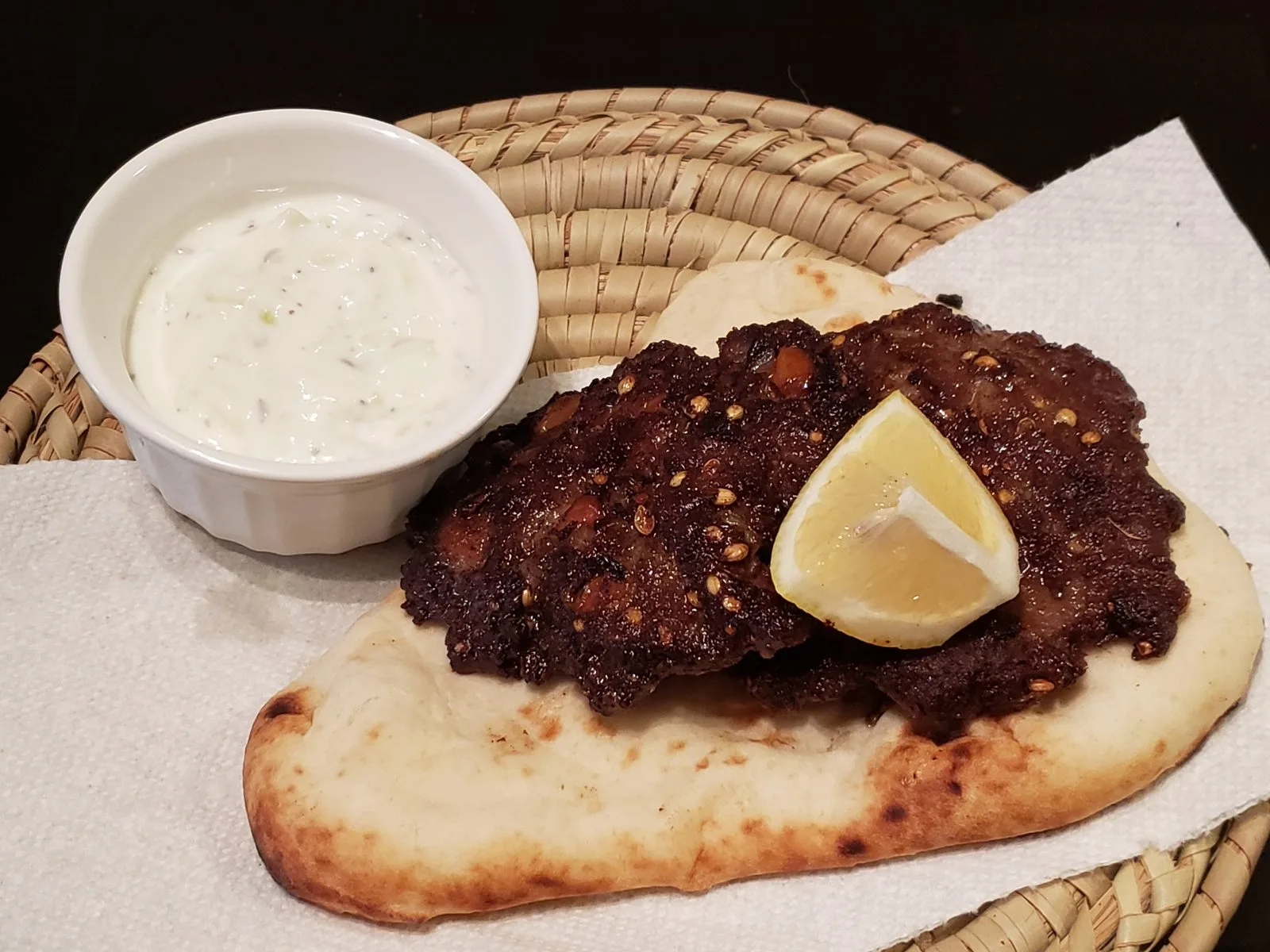
Photo: Sholokov / CC BY-SA 4.0
Chapli Kabab: Crispy Edges, No Breaking
You lift the spatula and half the chapli kabab stays behind. Or it holds, but the edge is soft and pale, and it tastes like a flat meatloaf. A good chapli kabab has a lacy, crunchy rim and a juicy centre, and it lifts cleanly.
The causes are almost always the same four: mince grind, wet vegetables, pan heat and impatience. This guide covers each, using the amounts from our chapli kabab recipe.
Start with the mince, not the spices
The recipe uses 500 g (1.1 lb) of beef mince, and the tip is blunt: keep it coarse. Fine, paste-like mince packs tight and behaves like a seekh mixture. Coarse mince has gaps that fill with onion, tomato and fat, and those gaps give chapli its crumbly bite.
Ask the butcher for a single coarse grind, not a double. If yours is already fine, you cannot undo it, so stir in a few 1 cm (3/8 in) cubes of hand-cut beef to bring back some texture.
Fat helps too. Our seekh kabab recipe recommends mince with 15 to 20 percent fat so kababs do not turn dry. The same logic applies here, because a chapli is shallow-fried and the rendered fat crisps the rim.
Wet vegetables are the biggest cause of breaking
The mix holds 150 g (5 oz) of very finely chopped onion and 200 g (7 oz) of tomato, half chopped into the mix and half sliced for topping. That is a lot of water. Chop the onion fine, then press it in a clean cloth or sieve for a minute. For the chopped tomato, scoop out the seeds and wet pulp.
You are balancing two things. Enough moisture keeps the kabab juicy. Too much turns the patty into a soft, steamy pancake that cannot survive a flip.
Binders: gram flour, cornflour, egg
The recipe uses 2 tablespoons of gram flour (besan), a small amount that absorbs a little surface moisture. Regional versions differ. Peshawari-style chapli often uses cornflour and an egg, and the Pakhtun version uses wheat flour. All of them work. Pick one and stay with it.
If your patty still breaks, work in this order: squeeze more water from the onion, rest the mix longer, then add 1 more tablespoon of besan. Reach for egg last, since it firms the texture and makes it less crumbly. For a broader look at binders, see our kebab binders guide.
Rest the mixture, then shape with wet hands
Mix gently by hand, just until combined. Overworking tightens the meat and gives a rubbery patty. Then rest the bowl in the fridge for 30 minutes. Cold mince is firmer, easier to flatten and less likely to tear in the pan.
Divide into 8 portions. With wet hands, flatten each into a wide, thin, ragged patty about 10 to 12 cm (4 to 5 in) across and 1 cm thick, like a sandal sole. Thin matters: thick patties brown outside before the centre cooks. A rough edge is welcome, because ragged bits fry into crisp lace.
Press a thin tomato slice onto one side so it sticks firmly. That side goes down first.
The pan: heat, oil and patience
Use a wide, flat pan and 4 tablespoons of oil in total. Many cooks use beef fat, which is traditional, but oil works. Heat over medium-low until a small piece of mince sizzles gently, not furiously. Too hot and the outside burns. Too cool and the patty soaks up oil and falls apart.
Lay the kababs in tomato-side down, 3 or 4 at a time, without crowding. Fry 4 to 5 minutes per side, pressing gently with a spatula after the flip. The most important rule is in the last recipe tip: do not move the patties until a crust forms. When the underside is deep brown, it lets go of the pan on its own. If it sticks, it is not ready.
Cooked through means at least 71 C (160 F) for beef mince.
| Symptom | Likely cause | Fix |
|---|---|---|
| Breaks when flipped | Moved too early, or mix too wet | Wait for the crust, squeeze the onion |
| Soft, pale edge | Pan too cool or crowded | Medium heat, fewer patties |
| Dry and crumbly inside | Lean mince, overcooked | Add fat, cook 30 seconds less |
| Burnt outside, raw inside | Too thick, heat too high | Flatten more, lower the flame |
Serving, storing, reheating
Drain briefly on paper towels, then serve with naan, raw onion rings and a lemon wedge. Chapli is best straight from the pan, because the rim softens within about 15 minutes. If you cook ahead, reheat in a dry pan or a hot oven until steaming hot rather than in the microwave, which softens the crust.
Mistake list for next time
- Using fine, double-ground mince
- Skipping the 30-minute rest
- Adding raw wet tomato pulp
- Cooking all eight patties in one go
- Flipping before the crust lets go
- Making the patty thicker than 1 cm
Compare this approach with the skewered seekh kabab or the soft, spiced shami kabab. If you want to check what is in the pantry before you shop for mince, the Degchi pantry tool shows what you can cook with what you already have. <!-- VERIFY: egg makes chapli texture firmer and less crumbly; regional binder details taken from recipe tips -->
Recipes with minced meat Recipes with tomatoes Recipes with flour Recipes with onions
Related recipes
Related posts
Oven, Pan or Grill: Which Method for Which Kabab
Three kababs, three right ways to cook them. Seekh grills in 10 to 12 minutes, chapli fries 4 to 5 minutes a side, shami shallow-fries 3 to 4. Here is the method map, with oven fixes.

What Can I Cook With Minced Meat (Keema)? 8 Dishes and Safe Handling
Minced meat is the fastest meat in the freezer. Eight dishes from our recipes, from a 40-minute shimla keema to chapli kabab, with safe temperatures and storage.